What is a 180 Rotation Rotary Actuator and How Does It Work?
The 180 Rotation Rotary Actuator is a vital component in various industrial applications. Its ability to facilitate precise movements makes it essential in robotics, automotive, and aerospace industries. According to a recent market study by Research and Markets, the rotary actuator market is expected to grow significantly, projected to reach USD 15 billion by 2026. This growth underscores the increasing reliance on automation and the need for efficient actuating systems.
Understanding how a 180 Rotation Rotary Actuator functions can illuminate its importance. These devices typically use electric, hydraulic, or pneumatic power to generate motion. With their capacity to deliver over 180 degrees of rotation, they are often used in steering systems and valve control. However, the challenge lies in selecting the right actuator for specific tasks. Many users may overlook compatibility and torque requirements, leading to inefficiencies.
Furthermore, while the technology promises reliability, there have been instances of premature wear and failure in harsh environments. Industry data points to an average failure rate of 5% in certain applications. This statistic urges manufacturers and engineers to critically assess their choice of actuators. Optimizing design and maintenance routines is key to enhancing performance. Understanding these nuances is crucial for leveraging the full potential of the 180 Rotation Rotary Actuator.
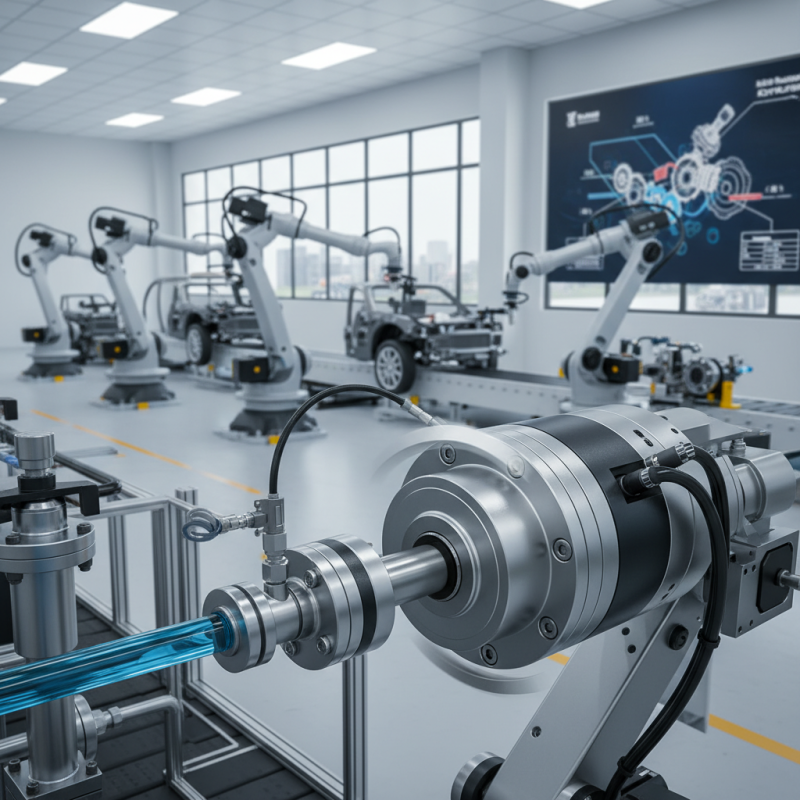
What is a 180 Rotation Rotary Actuator?
A 180 Rotation Rotary Actuator is a type of device designed to control angular movement. It typically facilitates rotation of up to 180 degrees, making it ideal for various industrial applications. These actuators are widely used in machinery, robotics, and automation systems. According to a recent industry report, the demand for rotary actuators is expected to grow significantly, with a projected market size reaching over $6 billion by 2025.
The core functionality of a 180 rotation actuator relies on converting energy into mechanical motion. This can be achieved through electric, pneumatic, or hydraulic power sources. Electric rotary actuators, for instance, offer precise control and responsiveness. This is crucial in applications where accuracy is essential. Despite their benefits, some actuators may experience limitations in speed and torque. Furthermore, improper mounting can lead to inefficiencies in operation.
Design considerations play a vital role in the performance of these actuators. Manufacturers must account for load capacity and environmental factors. The choice of materials affects durability and temperature resistance. A report from a reputable engineering journal highlights that nearly 30% of actuator failures are linked to incorrect specifications. Failing to address these issues can lead to costly downtime and repairs in industrial settings.
Key Components of a 180 Rotation Rotary Actuator
A 180 rotation rotary actuator is a device that allows precise movement through a half-circle rotation. Key components play critical roles. The main parts include the motor, gear train, input shaft, and output shaft. Each element must work seamlessly to achieve effective operation.
The motor provides the power needed for rotation. It converts electrical energy into mechanical motion. The gear train is vital. It increases torque and adjusts the speed of the output shaft. This combination of power and control is essential for accurate positioning.
Tips: Consider the environment where the actuator operates. Extreme temperatures can affect performance. Maintenance matters too. Regularly check for wear and tear to prevent breakdowns. Sometimes, overlooked issues become significant problems.
Another crucial component is the limit switch. This feature prevents over-rotation, protecting the actuator from damage. Without it, the actuator risks malfunctioning, leading to unexpected outcomes. Keep this in mind during setup and maintenance. Remember, understanding these components is vital for effective use. Reflect on how each part contributes to overall functionality.
Principle of Operation for 180 Rotation Rotary Actuators
Rotary actuators are essential in various systems, providing precise control. A 180-degree rotation rotary actuator is designed to rotate an object or mechanism within a 180-degree range. This functionality is crucial for applications that require controlled movements without complete rotation. The actuator typically operates using either electric or pneumatic power, translating input signals into mechanical motion.
The principle of operation for these actuators revolves around converting energy into motion. When energized, the actuator's internal mechanism shifts, allowing for smooth rotational movement. The design is often simple, which helps in maintenance. They facilitate efficient operation in tasks like valve control and robotic arms. Notably, their reliability can be impacted by factors like friction or wear over time, necessitating regular checks.
Tip: Regularly inspect your rotary actuator. Look for signs of wear or irregular movement. Keeping the actuator clean can significantly enhance its lifespan. Additionally, ensure that the power supply is consistent to avoid glitches in motion. Awareness of these factors can lead to better performance and efficiency.
Applications of 180 Rotation Rotary Actuators in Various Industries
180 Rotation Rotary Actuators are widely used in various industries. These devices allow for precise, controlled movement of components. For example, in robotics, they facilitate smooth motion in robotic arms. They also play a key role in packaging machinery, where accurate movements are crucial for efficiency.
In the automotive industry, these actuators are integral in valve control systems. They enable quick adjustments, enhancing engine performance. They are also used in assembly lines, ensuring that parts align correctly. This ensures that the production process runs smoothly.
Tips: Regular maintenance is crucial for actuators. Regular checks can prevent unexpected failures. Consider monitoring performance metrics to identify issues early. This can save time and reduce repair costs. Always evaluate your specific needs before selecting an actuator. Not every actuator is suitable for all applications. This reflection helps in choosing wisely.
Applications of 180 Rotation Rotary Actuators in Various Industries
Advantages of Using 180 Rotation Rotary Actuators in Automation
180 Rotation Rotary Actuators play a crucial role in automation. They enable precise movement and control of equipment in various applications. These actuators can rotate 180 degrees, making them ideal for tasks that require a simple yet effective motion. The straightforward design allows for easy installation and maintenance.
One key advantage is their efficiency. They save time and increase productivity in robotic systems. These actuators are often compact. Their small size means they fit into tight spaces. Many systems benefit from this feature.
Tips: Always consider the weight of the load. An actuator too weak may struggle. Proper alignment is essential for smooth operation. Double-check angles before initiating movement. Adjustments may be necessary for optimal performance. A little fine-tuning can lead to big improvements. Lastly, observe the actuator during initial use. Look for signs of strain or error. These observations will guide you to better performance.
