
Superabrasive

7 Tips for Choosing an Industrial Filling Machine

Choosing an Industrial Filling Machine is a production decision, not just a purchase. The wrong filler can leave operators wiping drips from bottle shoulders, correcting inconsistent fill levels, or waiting through slow changeovers. Small details matter. Product viscosity, foaming, container shape, target speed, and cleaning needs all affect machine selection.

The International Federation of Robotics’ World Robotics 2024 report recorded 541,302 industrial robot installations worldwide in 2023. That figure covers all industrial sectors, not filling machines alone, but it shows how widely manufacturers are investing in automation. PMMI’s 2024 State of the Industry reporting also highlights labor availability and automation as important packaging-sector concerns. The lesson is practical: compare equipment against real production conditions, not brochure speeds.

PMMI President and CEO Jim Pittas has emphasized the value of aligning automation with workforce and operating needs. A concise paraphrase of that guidance is: “Choose automation to support the people and process on your line.” It is a paraphrase, not a verbatim quotation. Fit comes first. This guide’s seven tips will help you assess filling accuracy, machine format, materials, sanitation, changeover time, service support, and room for future growth. No checklist predicts every sticky syrup or awkward bottle shoulder. Ask for a product trial, inspect the machine, and verify performance with your own containers before committing.
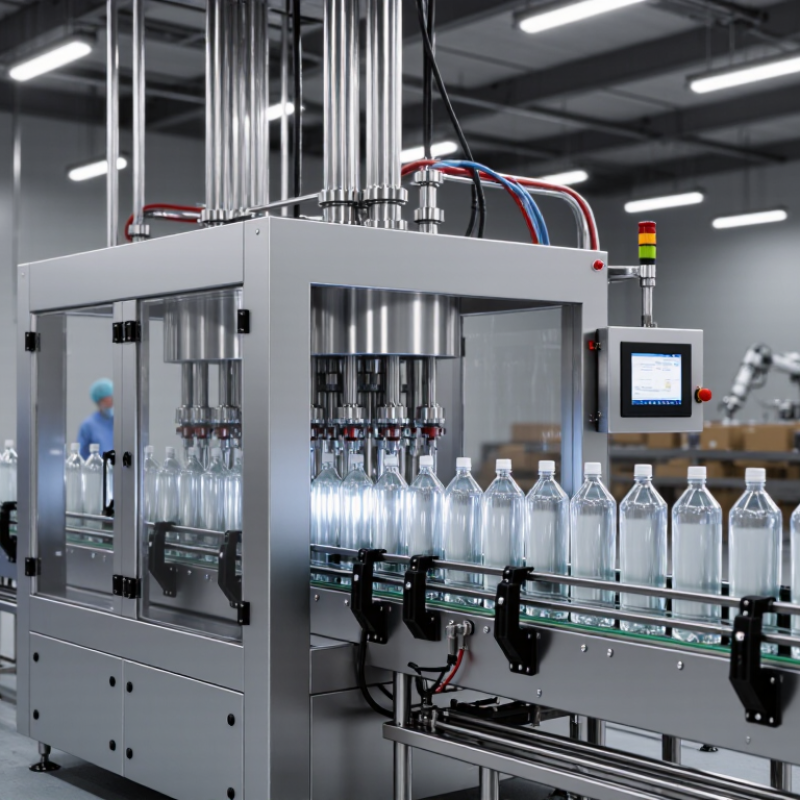
7 Tips for Choosing an Industrial Filling Machine

Define Production Capacity and Filling Requirements

Choosing a filling machine starts with the containers you need to fill each hour—not the machine’s advertised maximum. Calculate required good units per hour from planned demand and actual production time. Then allow for changeovers, cleaning, maintenance, and rejected containers. A line rated for 120 bottles per minute may not deliver that rate across a full shift. Grand View Research estimated the global filling-machines market at USD 6.5 billion in 2023, reflecting broad demand across industries; that figure does not indicate the right capacity for your specific plant.

Tip: Record product and package details before requesting quotes. Note viscosity, foaming, temperature, target fill volume, container shape, and required accuracy. A thin liquid may fill quickly, while a viscous product can slow the cycle. Neck size and bottle stability matter, too. Ask suppliers to test your actual product and containers, then review measured output and fill variation. Small details count.

I have seen capacity estimates miss the mark when teams use best-case speed instead of shift-level output. That is easy to do. Check the assumptions. Include the slowest product and the longest changeover in your calculation. If demand may rise, compare the cost of a faster machine with the cost of adding operating hours or another line. Leave a realistic buffer, but avoid buying capacity that sits idle.

Match the Machine to Product and Container Properties

Tip 1: Start with the product, not the machine catalog. A thin, free-flowing liquid may suit a gravity filler, while syrup often needs controlled pumping. Measure viscosity at the actual filling temperature. A sample that pours easily in a warm room may move slowly on a cool production floor. Does the product contain pulp, powder, or fragile pieces? Those details affect nozzle size and shear. Small details matter.

Tip 2: Match the filling method to the product’s behavior. Foaming liquids may need bottom-up filling or slower flow to limit bubbles. Thick creams can require wider passages and positive-displacement dosing. For products that settle, gentle agitation may help, but excessive mixing can change texture. These are starting points, not guarantees. Run trials with the real product.

Tip 3: Check the container as carefully as the contents. A narrow neck, flexible pouch, or lightweight bottle can shift or splash during fast filling. Confirm nozzle clearance, container stability, and the target fill level. Consider whether the container tolerates heat, pressure, or contact with cleaning agents. It is easy to focus on rated speed and overlook awkward neck geometry. Revisit that choice after a trial. Test a small batch under normal operating conditions before committing.

Compare Filling Technologies, Accuracy, and Speed

An industrial filling machine should match the liquid, container, and target output—not just the advertised speed. Compare piston, peristaltic, and gravimetric systems using the actual product. Piston fillers handle many thicker liquids; peristaltic systems can suit smaller, controlled batches. Gravimetric filling measures product by weight. Each has trade-offs. There is no universal winner.

Accuracy depends on more than the filler. Product temperature, viscosity, foam, and container position can change results. Test with your own liquid and packaging. Watch the first and last containers in a run. Check fill levels, drips, and weight variation. Small differences matter. A water-like liquid may run cleanly, while a foaming drink can slow the line or leave inconsistent levels. Ask suppliers how they measure accuracy, and under what conditions.

Speed figures need the same scrutiny. A machine’s maximum rate may not include cap placement, changeovers, or cleaning. Count completed, acceptable containers per minute during a realistic trial. Also check how quickly operators can adjust settings when bottle sizes change. Faster is not always better. A line that runs quickly but needs frequent correction may lose more time than it saves. One assumption may still prove wrong after installation, so leave room in your evaluation for actual production data.

Check Hygiene, Safety, and Production-Line Compatibility

Hygiene starts with the surfaces operators cannot easily see. For food and beverage lines, the CDC estimates about 48 million foodborne illnesses occur in the United States each year. That estimate is not a measure of filling-machine failures, but it shows why cleanable equipment matters. Look for smooth product-contact surfaces, accessible seals, and fittings that can be removed without awkward tools. Ask how the machine handles rinse water and cleaning chemicals. A polished exterior is not enough.

Safety deserves the same close inspection. The U.S. Bureau of Labor Statistics reported 2.6 million nonfatal workplace injury and illness cases in private industry in 2023; this figure covers all causes, not filling machines alone. Check for fixed guards, accessible emergency stops, and interlocks that prevent hazardous motion during access. Ask how routine jam clearing works. If operators must reach past a guard, reconsider the layout. Small detail, big difference.

Then test the machine against the actual production line. Compare container sizes, conveyor height, filling speed, and control signals with upstream and downstream equipment. Request a trial using your own containers and product, where practical. Watch changeovers, drips, and operator reach—not just the advertised output rate. I would also ask maintenance staff to review cleaning and service access; they often spot a practical flaw sales documents miss. A rushed review here can become an expensive lesson.

Evaluate Total Cost, Maintenance, and Supplier Support

7 Tips for Choosing an Industrial Filling Machine

A machine’s purchase price is only one part of its cost. Include installation, operator training, changeover parts, utilities, and expected downtime in your estimate. Ask suppliers to separate one-time expenses from recurring costs. That makes comparisons more useful. A low quote may leave out a conveyor interface or format parts needed for your actual containers.

Maintenance affects production long after installation. Request a service schedule, a list of wear parts, and realistic replacement intervals. Check whether your team can clean and inspect product-contact areas without specialized tools. A few minutes saved during each changeover can add up across a busy shift. Still, don’t assume the quickest machine will be the cheapest to maintain; ask how cleaning, calibration, and repairs affect availability.

Supplier support should be specific, not just reassuring. Ask who handles troubleshooting, what response times are typical, and whether remote help is available during your operating hours. Confirm spare-part lead times and the training provided to operators and technicians. Ask for references from facilities with similar products and container sizes. Ask for specifics. One detail is easy to miss: support quality can vary after commissioning, so agree on service expectations in writing and revisit them before signing.

7 Tips for Choosing an Industrial Filling Machine

Example buyer ratings for key selection criteria (1 = lower priority, 5 = higher priority). These illustrative scores are not an industry benchmark; assess each machine using your own cost estimates, maintenance records, and supplier response data.

How to use this chart: Compare the total cost of ownership, including purchase, installation, operation, and maintenance. Check service requirements and spare-parts availability, and confirm supplier support capabilities before making a decision.

All search results