China Best Aluminum Die Cast Mold Supplier?
Choosing the China Best Aluminum Die Cast Mold Supplier requires more than comparing prices or factory photos. A reliable partner must understand tooling design, aluminum alloys, casting pressure, cooling channels, and production tolerances. The right supplier can turn a detailed drawing into a stable mold that performs through repeated production cycles.
Experience becomes visible in small details. Ask how the team manages gate design, ejector-pin wear, polishing marks, and difficult draft angles. Review previous projects with similar part sizes and wall thicknesses. Request steel specifications, mold-flow analysis, trial-shot records, and dimensional inspection reports. These documents reveal more than promotional claims.
Communication matters just as much. Clear English drawings, revision control, sample feedback, and realistic delivery updates reduce expensive misunderstandings. A dependable supplier should explain risks before manufacturing begins. For example, a thin rib may fill unevenly, while an unsupported core may deform during heat treatment. Those warnings show practical knowledge.
No supplier is perfect.
Early samples may expose assumptions. That is not always failure; it can become useful evidence for improving the design. A professional team records corrections and verifies them through another trial. It should also protect customer drawings and maintain consistent quality procedures.
This guide examines how to evaluate a China Aluminum Die Cast Mold supplier through technical capability, communication, quality control, and long-term reliability. The best choice is rarely the cheapest quotation. It is the partner that provides traceable work, honest limitations, and repeatable results.
What Is an Aluminum Die Cast Mold Supplier?
China Best Aluminum Die Cast Mold Supplier?
What Is an Aluminum Die Cast Mold Supplier?
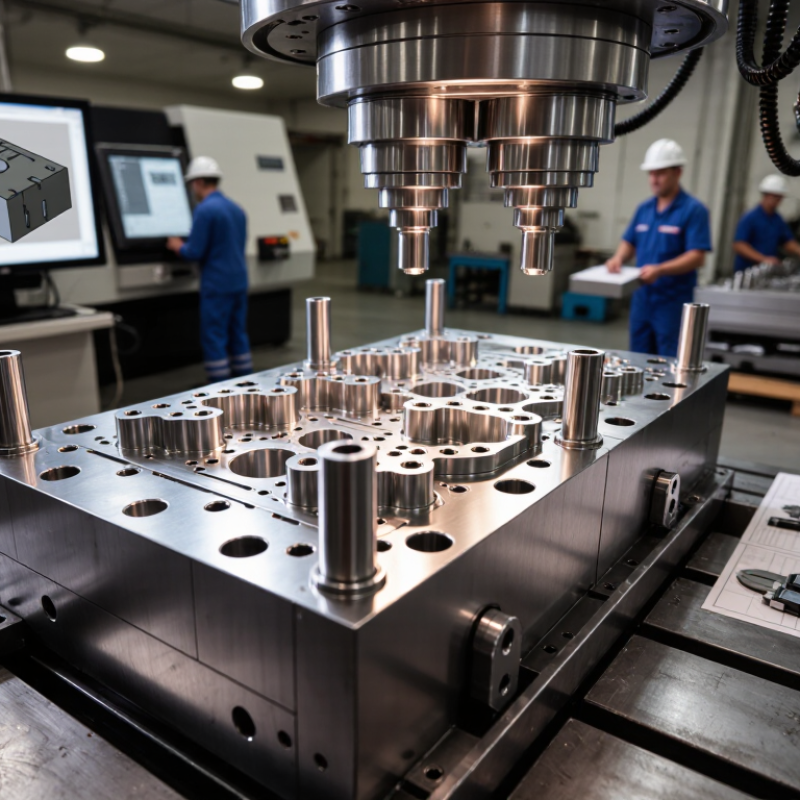
An aluminum die cast mold supplier designs and manufactures the steel die used to form molten aluminum under high pressure. The work includes flow simulation, mold machining, cooling-channel design, trial casting, and maintenance support. A capable supplier also checks shrinkage, air entrapment, parting lines, and ejector marks before mass production. The mold is not simply a metal block. Small cooling errors can create warpage, short shots, or early tool failure.
Industry data shows why this role matters. The U.S. Department of Energy reports that a 10% vehicle weight reduction can improve fuel economy by roughly 6% to 8%. This supports growing demand for lightweight aluminum castings in transport applications. The International Aluminium Institute also states that recycled aluminum requires about 95% less energy than primary aluminum. Suppliers should therefore control alloy traceability, runner recycling, and process records carefully.
A reliable supplier provides measurable evidence, not only attractive samples. Ask for dimensional inspection reports, mold-life estimates, steel certificates, and documented trial results. Experience with thin walls and complex cooling circuits is valuable. Still, no supplier can promise unlimited tool life. Actual performance depends on alloy temperature, injection speed, lubrication, and maintenance discipline. That point is often underestimated. A practical audit should include factory capability, inspection equipment, corrective-action records, and communication during design changes.
How to Define the Best Supplier in China
The best aluminum die cast mold supplier in China is not simply the cheapest or largest. It is the supplier that controls quality from design review to stable production.
The World Foundry Organization’s 2023 Census reported about 181.4 million tonnes of global castings in 2022. China produced approximately 51.9 million tonnes. This scale shows strong manufacturing capacity, but capacity alone proves little. A reliable supplier should provide mold-flow analysis, documented steel certificates, dimensional inspection reports, and traceable process records. Ask for evidence, not polished presentations.
Toolmaking details matter. Check cooling-channel design, venting, ejector alignment, and die-life testing. Request sample parts from comparable aluminum alloys. Review porosity results through X-ray or computerized tomography when the application demands it. The International Aluminium Institute identifies primary aluminum production as a significant source of industrial emissions. Therefore, responsible suppliers should also explain scrap recovery, energy monitoring, and material traceability.
A low quotation can hide expensive corrections. I have seen schedules fail because polishing standards were never defined. That mistake is easy to repeat. The best supplier communicates risks early, accepts design feedback, and documents corrective actions. ISO certification helps, but it cannot replace process knowledge, skilled technicians, and honest reporting. A practical evaluation should compare total mold cost, maintenance support, trial accuracy, delivery reliability, and measurable quality data.
How to Define the Best Aluminum Die Cast Mold Supplier in China
A reliable supplier should be evaluated using measurable procurement criteria rather than price alone. This weighted model gives the highest priority to mold quality, dimensional accuracy, production consistency, and after-sales support, while still considering cost and delivery performance.
How to Check Quality, Materials, and Production Standards
Choosing the best aluminum die cast mold supplier in China requires more than comparing prices. Ask for evidence from real production projects, not polished photographs. Review mold drawings, tolerance records, and trial-shot reports. A reliable supplier should explain how they control flash, porosity, parting lines, and cooling performance. Small defects become expensive after thousands of cycles.
Material selection deserves close attention. Request steel certificates, heat-treatment records, and hardness results for inserts, cores, and mold bases. The material should match the expected pressure, temperature, alloy, and production volume. Check whether the supplier uses standardized components and maintains complete batch traceability. It helps to inspect a sample mold personally, if possible. Feel the surface finish. Examine corners, ejector pins, sliders, and cooling channels. Details reveal habits.
Production standards should be visible on the factory floor. Look for documented inspections, calibrated measuring equipment, controlled machining processes, and clear revision management. A coordinate measuring machine report is useful, but it cannot replace practical testing. Ask to observe mold assembly and a full die-casting trial. Confirm cycle time, dimensional stability, release performance, and maintenance access. ISO certification may support credibility, yet certification alone proves little. No supplier is flawless. I have seen attractive samples hide weak venting and difficult repairs. That lesson still matters. Leave room for questions, corrective actions, and an independent inspection before shipment.
How to Compare Suppliers for Your Project Needs
China Best Aluminum Die Cast Mold Supplier?
Choosing an aluminum die cast mold supplier requires more than comparing quotations. Review mold steel, cavity design, cooling channels, machining accuracy, and documented trial results. The 2021 NADCA Product Specification Standards emphasize process capability, dimensional control, and inspection records. Ask for actual Cpk data, not only promised tolerances.
Project cost also includes maintenance, cycle time, scrap, and shipping risk. The International Aluminium Institute reports that recycled aluminum uses about 5% of the energy required for primary aluminum. A supplier with controlled scrap separation can support both cost and environmental targets. Request material certificates, heat-treatment records, and a sample inspection report with measured dimensions. One weakness remains: some suppliers present excellent samples but provide limited evidence of long-term mold life.
Tips: Compare three suppliers using one technical checklist. Check mold steel grade, expected shot count, cooling layout, spare inserts, repair response, and ownership of drawings. Ask for a video of the mold trial. A clear answer matters.
Do not select the lowest price automatically. A cheaper mold may show flash after repeated production or require frequent polishing. For high-volume parts, calculate cost per acceptable casting across the planned shot count. For complex housings, review air entrapment risks and ejection marks with an experienced process engineer. The 2023 Global Aluminium Recycling Report also highlights recycling’s role in reducing material demand, but recycling data cannot replace verified production controls. That distinction is easy to miss.
