
Superabrasive

7 Best Automotive Battery Testers for Global Buyers?

A weak battery can turn a routine morning into a roadside delay. Yet a voltage reading alone rarely tells the whole story. An Automotive Battery Tester can help assess battery condition, starting performance, or charging output, depending on its design. Small differences matter.

This guide introduces seven testers for buyers comparing products across regions and vehicle types. It considers practical details: supported battery chemistries, voltage ranges, cold-cranking amp standards, and whether the unit uses conductance testing or a load test. Display readability matters too. A bright workshop screen is helpful, but menus and instructions should remain clear in different languages and settings.

Global buyers also need to check compatibility before ordering. Some models support 12-volt systems only; others can test 24-volt systems used in commercial vehicles. Connector quality, replaceable leads, warranty terms, and access to local support may affect long-term value. No tester suits every garage. A compact tool may work well for quick checks, while a repair shop may need printable reports or broader diagnostic functions. Specifications can look impressive on a product page, but real-world accuracy depends on correct setup and battery condition. That deserves a closer look. The comparisons ahead focus on useful features, limitations, and buyer considerations, helping readers narrow their choices without treating any single device as a universal solution.
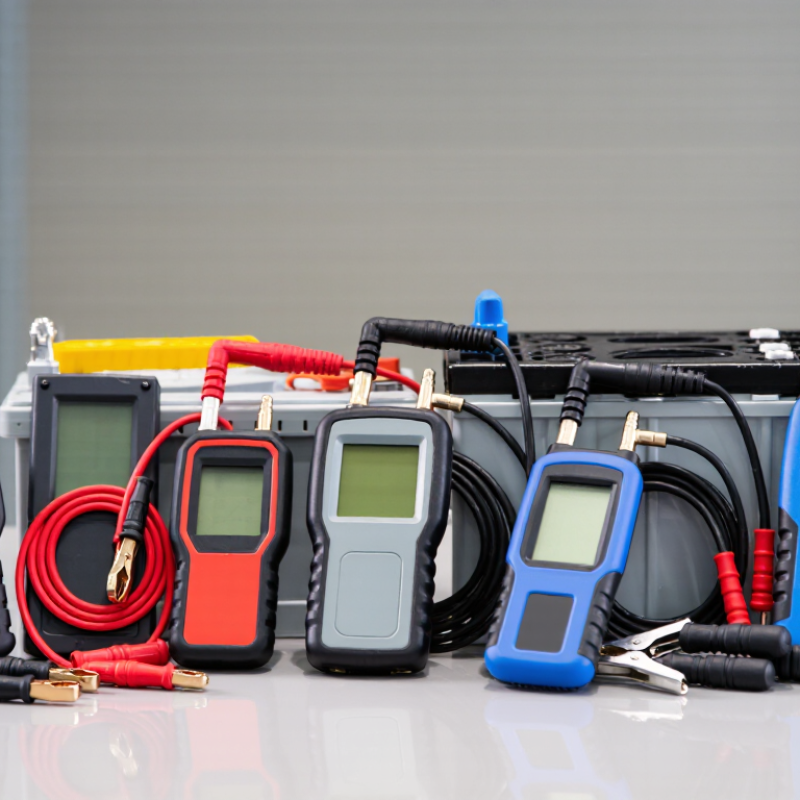
7 Best Automotive Battery Testers for Global Buyers?

What Automotive Battery Testers Measure and How They Work

Automotive battery testers do more than display voltage. They assess state of charge, estimated state of health, cranking ability, and sometimes charging-system performance. A resting 12-volt lead-acid battery may show about 12.6 volts when fully charged, but voltage alone cannot reveal whether it can start an engine. A weak battery can look healthy after charging. That is the catch.

Many handheld testers send a small electrical signal through the battery and measure its response. From conductance or estimated internal resistance, the device calculates a cranking-current estimate, often shown as CCA. This is quicker than applying a heavy load, but it remains an estimate. SAE J537 describes a controlled cold-cranking test: at -18°C, a 12-volt battery must maintain at least 7.2 volts for 30 seconds to meet the specified test condition. A handheld tester does not recreate that full cold test.

For a useful reading, enter the battery’s rated CCA and correct type, then test clean, secure terminals. Watch for temperature and charge level; both can affect results. Some testers also check alternator output and starter draw, helping separate a tired battery from a charging fault. Still, a single number is not a diagnosis. Real-world testing can be messy. Recheck after charging if the result seems inconsistent.

Key Features to Compare Before Buying a Battery Tester

A battery tester should match the vehicles and batteries you actually handle. Check its supported voltage, battery chemistry, and testing range before comparing extra features. Many passenger vehicles use 12-volt batteries, while some commercial applications require 24-volt support. Confirm that the tester covers common battery types, including flooded, AGM, and gel designs. It should also support the rating standard printed on the battery, such as CCA or EN. Standards vary by market. This matters. A mismatch can make a result difficult to interpret, even when the screen looks precise.

Consider what the tester measures. Conductance models are often quick for routine checks, while load testing can reveal behavior under a heavier demand. Useful functions may include cranking and charging-system checks, clear result explanations, and temperature compensation. Look for sturdy clamps with enough cable length to reach awkward battery terminals, plus a readable display in a dim workshop. For global buyers, menu languages and measurement units deserve a glance too. Small details matter. A long feature list is not proof of accuracy; check the stated operating limits and follow the battery maker’s test procedure. If you only service a few vehicles, a simpler tester may be easier to use consistently. I would still leave room for doubt: a single reading cannot explain every intermittent starting problem.

7 Best Automotive Battery Tester Types for Global Buyers: Key Features to Compare Before Buying
Tester Type Typical Battery Coverage How It Tests Best Suited For Key Features to Compare Important Limitations
1. 12 V Conductance Tester Most conventional 12 V lead-acid starting batteries, subject to the tester’s supported battery types and rating range. Applies a small electrical signal to estimate battery condition and available starting capability. Routine checks in workshops, service centers, and home garages. Supported CCA range; selectable rating standard; flooded, AGM, or gel compatibility; result display; clamp quality. Results depend on correct battery-type and rating-standard selection. It does not replace a full capacity test.
2. 12/24 V Heavy-Duty Conductance Tester 12 V and 24 V systems, often including commercial-vehicle starting batteries when explicitly supported. Uses conductance-based testing and may test individual batteries or a battery bank, depending on the model. Fleet maintenance and shops working with cars, vans, trucks, or buses. 12/24 V support; maximum battery-rating range; single-battery versus system testing; long, durable leads; vehicle-system tests. 24 V vehicle systems commonly use multiple batteries; follow the tester’s instructions for isolating or testing each battery.
3. Carbon-Pile Load Tester Primarily 12 V lead-acid starting batteries within the tester’s rated capacity. Applies a substantial adjustable electrical load while the user monitors voltage. Experienced technicians who need a direct load test and can follow the specified test procedure. Maximum test current; supported voltage; clear voltage scale or display; clamp and cable rating; overheat protection. Generates heat and draws significant current. Correct test duration and load are essential; it is not suitable for every battery type.
4. Battery and Starting/Charging-System Analyzer Usually 12 V vehicle batteries; some models also support 24 V systems. Combines a battery assessment with checks of cranking voltage and alternator charging performance. Service visits where the cause of a starting or charging complaint needs to be narrowed down. Separate battery, cranking, and charging results; supported vehicle voltage; test sequence; readable reporting; safety protections. Charging-system readings are diagnostic indicators, not a complete alternator or vehicle electrical-system diagnosis.
5. 6/12 V Powersports Tester Selected 6 V and 12 V motorcycle, scooter, ATV, and other small-vehicle batteries. Typically uses conductance or voltage-based assessment, depending on the design. Motorcycle and small-engine service, especially where compact batteries are common. 6 V support; low-capacity battery range; compatible battery chemistries; compact clamps; clear instructions for small batteries. Some automotive testers have a minimum rating or clamp size that makes them unsuitable for small powersports batteries.
6. Start-Stop Battery-Compatible Tester 12 V start-stop vehicle batteries, including AGM or EFB batteries when specifically listed as supported. Tests the battery using the selected battery construction and its rated starting specification. Workshops servicing vehicles equipped with start-stop systems. Explicit AGM and EFB support; correct rating-standard options; battery registration or reset guidance where relevant. AGM and EFB are different battery designs. A tester’s compatibility does not mean it can register a replacement battery in every vehicle.
7. Multi-Standard Digital Battery Analyzer Battery types and voltages stated by the manufacturer; coverage varies by model. Uses electronic measurements and lets the user select a battery rating standard such as SAE, EN, IEC, or DIN when supported. International buyers and workshops handling batteries labeled to different regional standards. Available rating standards; supported battery chemistries; measurement range; menu languages; replaceable leads; update and support options. Rating standards are not interchangeable. Select the standard printed on the battery and confirm the tester supports it.
Buying note: These are selection profiles, not ranked product models. Confirm voltage, battery chemistry, rating range, and rating standard against the battery label and the tester’s manual before purchase. A battery test result is one diagnostic input and should be interpreted alongside vehicle symptoms and test conditions.

Seven Automotive Battery Testers for Different Global Markets

Global buyers need battery testers matched to local vehicle fleets, climates, and rating systems. ADAC’s 2024 breakdown statistics identify starter batteries as the largest fault category, at roughly 45% of recorded roadside failures. That makes reliable testing useful across markets, not just in winter. Seven practical options cover different needs: a basic 12-volt conductance tester for workshops; a load tester for conventional batteries; an AGM/EFB tester for start-stop vehicles; a lithium-compatible unit for suitable auxiliary batteries; a 24-volt tester for trucks and buses; a compact handheld model for mobile technicians; and a diagnostic analyzer with data storage for fleet records. Check that the tester supports the battery’s chemistry and rating standard, such as SAE, EN, DIN, or JIS. Similar-looking batteries can require different test settings.

Tips: In cold regions, test after the battery has rested and enter its rated cold-cranking amps accurately. In hot climates, inspect terminals for corrosion and retest weak results. For mixed vehicle fleets, confirm the tester handles both 12- and 24-volt systems before purchase. A low reading is a clue, not a full diagnosis; charging faults or poor connections may also be responsible. One limitation: no single tester suits every market, and model coverage can be uneven. Verify the manual against the batteries commonly sold in your region.

7 Best Automotive Battery Testers for Global Buyers?

Typical workflow time by automotive battery tester type

The ranges show indicative workflow times, not a standardized performance ranking. Actual test duration varies with the tester, battery condition, vehicle setup, and test procedure. Follow the tester’s instructions and the battery manufacturer’s specifications.

How to Match a Tester to Battery Types and Vehicle Systems

A battery tester should match the chemistry and design printed on the battery label. Flooded lead-acid, AGM, and EFB batteries may need different test modes. Some testers also support lithium batteries, but do not assume compatibility. Check the label. Enter the battery’s rated cold-cranking amps and the matching standard, such as SAE or EN. A wrong rating standard can produce a misleading result.

Vehicle systems matter just as much. A basic 12-volt tester suits many passenger cars, while commercial vehicles may require 24-volt support. For start-stop vehicles, choose a tester that recognizes AGM and EFB batteries and can assess charging-system performance. Some models offer in-vehicle testing; others require the battery to be disconnected. Follow the tester’s instructions, since vehicle loads or a recent charge can affect readings.

Hybrid and electric vehicles need extra care. A standard 12-volt battery tester does not evaluate a high-voltage traction battery. Use equipment specifically designed for that system, and follow the vehicle service procedure. Details matter. Compare the tester’s supported chemistries, voltage range, test standards, and available functions against the vehicles you actually service. The specification chart can be unclear, and that is worth questioning before purchase. A clear display helps, but correct setup matters more.

Safety, Compatibility, and Maintenance for Reliable Testing

A dependable automotive battery tester should match the vehicle’s voltage and battery type, such as flooded, AGM, or EFB. Check its supported testing range and battery rating system before buying; cold-cranking values may be listed in different standards. A conductance tester is quick for routine checks, while a load tester can reveal weakness under demand. Follow the vehicle or battery maker’s stated procedure. Do not test a cracked, leaking, or frozen battery. Wear eye protection, keep sparks away, and work in a ventilated area. Safety comes first.

Compatibility is only part of the decision. Test results can shift with temperature, charge level, and poor contact, so clean the terminals and attach clamps firmly. Small details matter. I still find it easy to overlook the tester’s own condition: frayed leads or corroded clamps can produce unreliable readings. Store the unit dry, inspect cables regularly, and follow its calibration or self-check guidance. For buyers serving different regions, clear instructions, readable units, and replaceable leads are practical advantages. No tester is infallible; compare a surprising result with a properly charged battery and, when needed, a qualified technician’s assessment.

All search results