Who Makes the Best Custom Tractor Trailers in China?
Choosing who makes the best Custom Tractor Trailers in China depends on what the trailer must carry, where it will travel, and how often it will work. There is no single manufacturer that suits every fleet. A low-bed trailer for construction equipment has different demands from a heavy-duty flatbed or extendable trailer. Start with the details. Check payload, axle configuration, deck height, kingpin dimensions, and compatibility with the tractor unit. These figures matter more than polished product photos.
A credible manufacturer should explain its design choices and provide clear specifications, production details, and inspection records. Ask how the company checks welds, hydraulic systems, braking components, and load-bearing structures. Request drawings and a written configuration before comparing prices. If available, review customer references or arrange a factory inspection. Small details count. A well-finished ramp or accessible spare-wheel mount can save time during daily use. Still, a checklist cannot tell the whole story; real performance depends on maintenance, road conditions, and operator habits. That part is easy to overlook.
This guide examines how to compare Chinese trailer makers by engineering capability, customization options, build quality, communication, and after-sales support. It also highlights questions buyers can ask before placing an order. The “best” choice is the one whose documented capabilities match your actual operating needs—not simply the one with the lowest quote or broadest catalog. Be cautious of claims that sound impressive but lack supporting evidence. A careful comparison takes time, and even a good supplier may not fit every project.
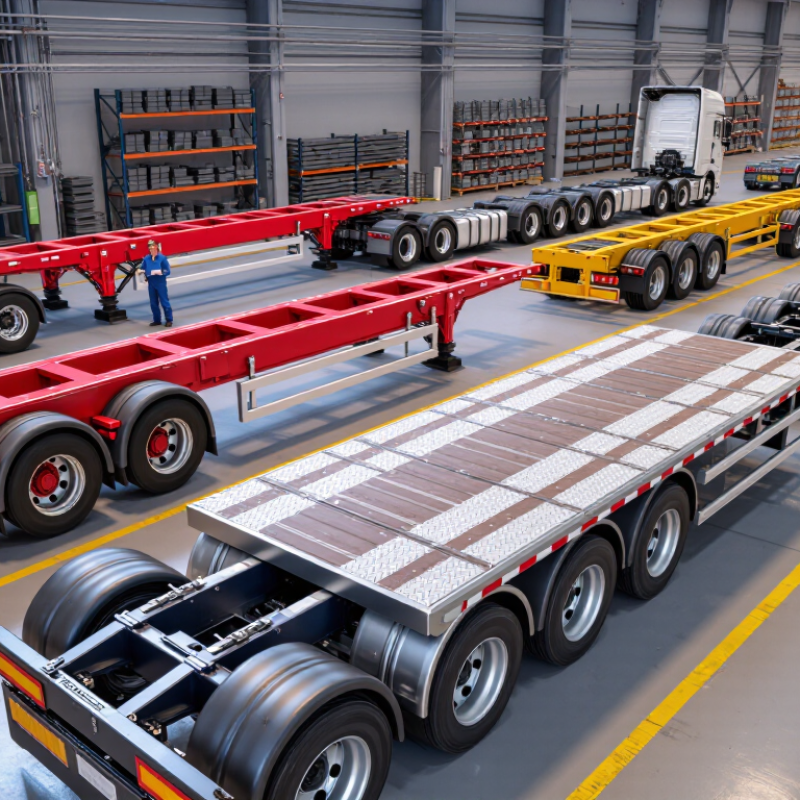
What Defines a Custom Tractor Trailer in China?
What Defines a Custom Tractor Trailer in China?
A custom tractor trailer is not simply a standard trailer with a different body. It is a matched vehicle system, designed around the tractor’s fifth-wheel height, kingpin position, axle loads, and intended cargo. In China, specifications may also reflect loading equipment, road surfaces, delivery routes, and operating conditions. Small mismatches matter. A poorly matched coupling height can change load distribution and tire wear.
China’s logistics scale helps explain the range of requirements. The China Federation of Logistics and Purchasing reported total social logistics value of RMB 352.4 trillion in 2023, up 5.2% year on year. The China Association of Automobile Manufacturers recorded 3.872 million commercial-vehicle sales in 2024. These figures describe a broad transport market, not custom-trailer demand specifically. Still, they show why one configuration rarely suits every fleet.
A sound specification details deck length, payload target, axle layout, suspension, braking interfaces, tires, lighting, and corrosion protection. It should also document how the trailer will be loaded and maintained. That sounds tidy. Real loading is messier. A design that works on paper may fail when a forklift approaches at an awkward angle. Before production, buyers should review drawings, weld quality, and a loaded test run. Route and vehicle requirements should be checked against current applicable standards.
How Are Chinese Trailer Manufacturers Evaluated?
Evaluating a Chinese custom tractor trailer manufacturer starts with how well it turns operating needs into clear engineering requirements. Share the intended load, route conditions, tractor specifications, and loading method. Then compare the proposed design against those details, not just its appearance. Ask for dimensioned drawings, axle and suspension specifications, and a written list of included components. The answers should be specific and consistent. Details matter.
A factory visit can reveal practical clues: weld consistency around frame joints, tidy cable routing, and protective coating inside hard-to-reach corners. Request inspection records and ask how fit, braking, and lighting systems are checked before delivery. If a visit is not possible, request dated production photos and a live video walkthrough. Neither replaces independent inspection, though. Also examine how the team handles design changes, spare parts, and after-sales questions; response quality is part of the product. A polished catalog can hide gaps in documentation, while a less impressive presentation may come with careful engineering. That is worth checking, rather than assuming either way. Compare written quotations line by line, including material grades, testing scope, packaging, and delivery milestones.
Which Manufacturers Specialize in Custom Tractor Trailers?
Specialists in custom tractor trailers are usually semi-trailer manufacturers with in-house engineering, fabrication, and testing teams. They tailor frame dimensions, axle layouts, coupling positions, and deck heights to a buyer’s tractor and cargo. Some focus on low-bed or extendable trailers; others build refrigerated, curtain-side, or bulk-cargo units. Details matter. A capable supplier should explain its material choices and provide drawings, load calculations, weld inspection records, and a prototype review—not just a price quote.
Market scale gives useful context, but it does not prove custom expertise. The China Association of Automobile Manufacturers reported 4.031 million commercial vehicles sold in 2023; that figure covers multiple vehicle types, not semi-trailers alone. The Ministry of Transport’s 2023 statistical bulletin reported about 40.31 billion tonnes of road freight, a reminder that trailer durability and payload planning have practical consequences. Ask manufacturers how they validate frame strength, braking compatibility, and weight distribution for the intended route and tractor. Ask for proof. A polished brochure is not enough, and buyers can overlook service access when comparing specifications. One limitation: custom designs may need more engineering time, so confirm revision schedules and spare-part availability before production begins.
What Standards and Customization Options Should Buyers Consider?
When comparing custom tractor trailers from China, start with the operating conditions, not the paint color. Confirm the trailer’s gross vehicle weight, axle ratings, coupling type, braking system, and lighting match the tractor and intended routes. Ask for drawings, material specifications, weld inspection records, and load-test documentation. Standards vary by destination, so have a qualified local professional verify applicable requirements before production. Paperwork matters.
Customization should solve a real transport problem. A low-bed deck may need ramps, tie-down points, and clearance for the equipment being carried. For bulk loads, check whether the body shape allows practical unloading and cleaning. Buyers can also specify deck dimensions, suspension, tire configuration, toolboxes, spare-wheel mounts, and corrosion protection. Give the manufacturer actual cargo measurements and loading methods; estimates can lead to awkward gaps or inaccessible fittings.
Inspect sample welds and finish quality where possible, especially around joints, brackets, and areas exposed to road spray. Request a clear inspection plan, delivery checklist, spare-parts list, and written warranty terms. A thicker frame is not automatically better if it adds weight without improving the required capacity. I would be cautious about approving a design from a brochure alone. Small details get missed. Even a misplaced socket can slow roadside repairs.
China Tractor-Trailer Buyers: Key Dimensional Limits
Maximum overall dimensions for an articulated vehicle under China’s GB 1589-2016 standard.
What to consider: Treat these limits as the legal envelope, not recommended design targets. When specifying a custom trailer, discuss cargo dimensions and payload, axle configuration, suspension, braking and lighting, loading equipment, and operating routes with the manufacturer. Confirm current requirements and any applicable exceptions before ordering.
Source: GB 1589-2016, Limits of Dimensions, Axle Load and Masses for Motor Vehicles, Trailers and Combination Vehicles. Values shown are overall vehicle limits; verify applicability to the intended configuration.
How Do Buyers Compare Quality, Cost, and After-Sales Support?
Who Makes the Best Custom Tractor Trailers in China?
China sold about 4.03 million commercial vehicles in 2023, up 22.1% year over year, according to the China Association of Automobile Manufacturers. That figure describes market scale, not trailer quality. Buyers should compare drawings, material specifications, weld inspection records, and axle ratings against the intended load. Ask for photos of the actual chassis and a clear list of included components. A polished brochure proves little.
Cost needs a wider lens. Compare the quoted price with freight, customization charges, spare parts, and expected maintenance. A low quote can still be expensive. Check warranty coverage in writing, especially exclusions for wear, corrosion, and modifications. Ask how quickly common parts can be shipped and who handles technical questions after delivery. I would not judge support by promises alone; request response-time targets and a sample service process. Details matter.
Tips: Ask for a factory inspection checklist, serial-numbered component records, and references from buyers with similar operating conditions. Verify that delivery documents match the agreed specifications. One caveat: a remote inspection may miss problems hidden beneath fresh paint, so independent checks can be worthwhile.
