
Choosing a Portable Ring Light in 2026 is not just about finding the brightest model. A light that looks impressive online may feel awkward on a crowded desk or wobble when clipped to a phone. Photographer and educator Chase Jarvis is known for the line, “The best camera is the one that’s with you.” His quote is about cameras, not ring lights, but its practical point applies here: useful equipment must fit the moment. For buyers, that means checking portability alongside brightness, power, and setup.
This guide to the 10 best portable ring lights for buyers in 2026 will compare features that matter during everyday use. We’ll look at adjustable color temperature, dimming controls, battery options, phone mounts, and how easily each light packs into a bag. We’ll also consider whether a compact stand stays steady during a video call, and whether the light creates a harsh reflection in glasses. Small details count. A control button that is hard to reach can become surprisingly annoying.
Specifications help, but they do not tell the whole story. A larger light may spread illumination more evenly, while a smaller model may be easier to carry between rooms. Neither choice suits everyone. Some product claims also deserve a closer look; advertised battery life can vary with brightness and use. Our comparisons aim to make those trade-offs clearer, so you can choose a Portable Ring Light that suits your space, routine, and budget—not just the product photo.
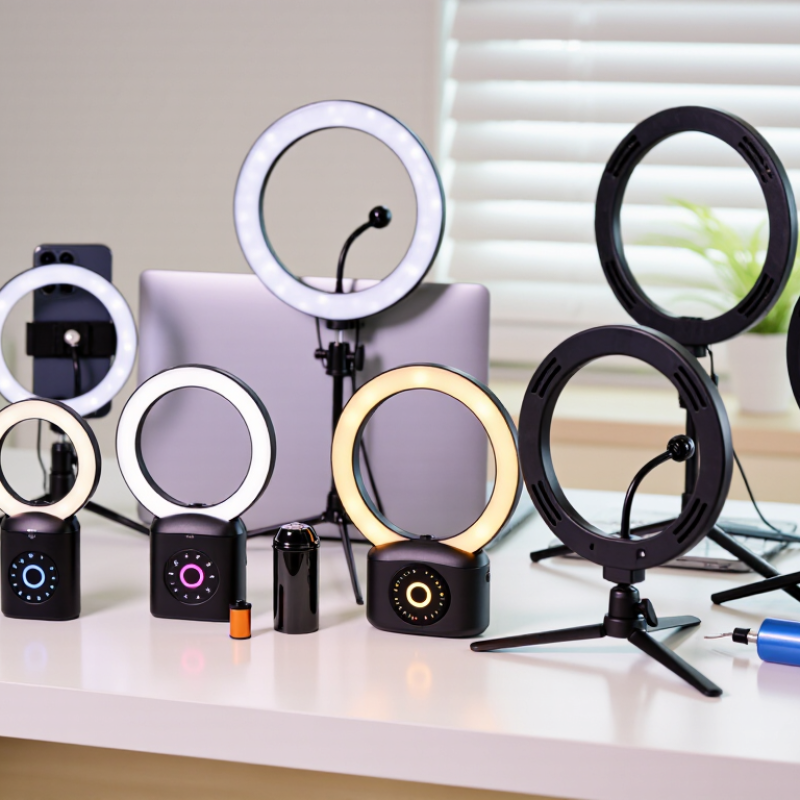
A portable ring light is a compact LED lamp arranged in a circle, usually around a phone or camera. Its shape places light close to the lens, producing even, front-facing illumination and a small catchlight in the eyes. It can soften harsh shadows, but it will not erase them. Distance, room lighting, and the subject’s position still matter.
Inside, many small LEDs spread light around a diffuser. A dimmer changes brightness; some models also adjust color temperature, shifting from warm indoor tones to cooler daylight-like light. The U.S. Department of Energy says LEDs use at least 75% less energy and last up to 25 times longer than incandescent lighting. That is a general LED comparison, not a guarantee of any ring light’s battery life. Check brightness, color accuracy, and runtime separately. Small details matter. A light can look bright in a dim bedroom yet appear weak beside a sunny window. I have found that moving it slightly off-center often makes faces look less flat, though the result can feel uneven. That trade-off is easy to overlook.
A useful comparison starts with light quality, not the number of brightness settings. Check illuminance at a stated distance, such as 0.5 metres; maximum brightness alone can be misleading. For skin tones and product colours, look for a published CRI rating and, when available, TM-30 results. The Illuminating Engineering Society’s TM-30-20 method assesses colour using 99 samples, while general CRI uses eight. Small details matter. A high rating still cannot guarantee flattering light in every room.
Next, weigh portability against runtime. Compare battery capacity, charging method, and the maker’s stated runtime at a specified brightness. A small light may fit beside a laptop, yet its narrow diameter can create sharp reflections in glasses. Check whether the head tilts securely and whether the clamp grips your desk without slipping. The U.S. Department of Energy’s LED lighting guidance says LEDs use at least 75% less energy than incandescent lighting; that broad comparison is useful context, not a ring-light runtime test.
Tips: Test the light at your usual camera distance. Lower brightness can reveal uneven colour or flicker that a quick shop-floor demo misses. Note the room’s existing light, too. Mixed lighting can shift skin tones, even with a capable lamp.
Portable ring lights vary more than their circular shape suggests. A compact clip-on light suits video calls, but it may block part of a phone screen. A foldable tabletop model gives small product shots softer, steadier illumination. A rechargeable phone-mounted light works well for quick portraits away from an outlet. A travel tripod kit adds height for full-face framing, though its legs take up bag space.
A magnetic-back ring light can attach to compatible stands or metal surfaces, making setup quick. Check what the magnet can actually hold. A mirror-mounted model helps with makeup details, while its fixed position limits other uses.
A USB-powered desk ring is reliable for long sessions, but needs a nearby power source. A compact dual-color light lets users shift between warmer and cooler tones; the controls can feel fiddly at first.
For broader coverage, consider an eight- to ten-inch travel ring with a collapsible stand. It can light two people more evenly than a tiny clip-on. A flexible-arm ring light is useful for overhead crafts or close-up demonstrations, though its arm may wobble on a light desk.
Finally, a ring light built into a handheld selfie grip is easy to carry and fast to deploy. Small matters. Compare brightness levels, battery life, mounting options, and weight before choosing. No portable design handles every setting equally well.
Choose a ring light for the distance and space you actually have. A compact 6–8-inch model can suit a laptop desk, while a larger diameter spreads light more evenly across your face from farther away. Check the stand’s height, phone-mount range, and whether the light tilts without wobbling. For travel, compare packed size and power options, not just the product’s weight. A light that needs a nearby outlet may be awkward in a hotel room. Small detail, big difference.
Color quality matters, too. The IES TM-30-20 method evaluates light sources using 99 color evaluation samples, offering a broader view than the traditional CRI score based on eight samples. Look for published CRI or TM-30 data, adjustable color temperature, and smooth dimming; then test your skin tone on camera. Put the light slightly above eye level, and avoid placing it so close that glasses catch a bright circle. I still find “daylight” labels easy to overtrust. Your camera, room walls, and distance all change the result, so check a short video recording before choosing.
Place a portable ring light slightly above eye level, then tilt it toward your face. This angle softens shadows under the chin without making eyes look unnaturally bright. Keep it about an arm’s length away to start. Move it closer for more even illumination, or farther back for a gentler effect. Small changes matter.
Match the brightness to the room instead of turning the light up automatically. Near a window, lower the output and check your face on camera; at night, increase it gradually. A neutral color setting often keeps skin tones more consistent, though screens can display color differently. Watch for glare on glasses by shifting the light a little to one side. The perfect position can feel awkward at first.
Before packing the light, switch it off and let it cool. Let it cool. Wipe the frame and diffuser with a soft, dry cloth; avoid spraying cleaner directly onto the device. Keep the light, cable, and stand in a padded pouch, away from damp surfaces and heavy objects. Charge it according to its instructions, and inspect the cable for damage before use. I have sometimes packed mine too quickly and found fingerprints on the diffuser later. Not a disaster, but they can show up as hazy spots in a close-up.
This guide compares ten common portable ring-light formats rather than named products. Size, power, and runtime figures are representative ranges; actual specifications vary by model, brightness setting, battery capacity, and accessories.
| No. | Portable Ring Light Type | Typical Size | Power and Portability | Best Suited For | How to Use | Care and Maintenance |
|---|---|---|---|---|---|---|
| 1 | Clip-on phone ring light | About 2–4 in (5–10 cm) across | Usually rechargeable or powered by a small built-in battery; clips directly to a phone. | Quick selfies, video calls, and close-up phone videos. | Center the light near the front camera, then use a low or medium setting to reduce harsh facial shadows. | Wipe the diffuser with a soft, dry microfiber cloth. Check that the clip does not press on the camera lens. |
| 2 | Compact tabletop ring light | About 6–8 in (15–20 cm) across | Commonly USB-powered; some versions include a small stand or rechargeable battery. | Desk-based video calls, online lessons, and product close-ups. | Place it near eye level and slightly behind or around the camera so the light falls evenly on the subject. | Keep the stand joints dry and free of dust. Disconnect USB power before cleaning. |
| 3 | Foldable travel ring light | Typically 6–10 in (15–25 cm) across when open | Folding parts make it easier to pack; power may be supplied by USB or a rechargeable battery. | Travel, temporary workspaces, and creators who need compact storage. | Open and lock each hinge before use; position the light on a stable surface to avoid tipping. | Fold it only as designed, without forcing hinges. Store it in a padded case to protect the LEDs and diffuser. |
| 4 | Rechargeable handheld ring light | About 3–6 in (8–15 cm) across | Built-in battery allows use without a nearby outlet; runtime depends on brightness and battery capacity. | Mobile filming, short shoots, and situations where a stand is inconvenient. | Hold it close to the camera, but angle it slightly to one side if direct light creates reflections. | Recharge with the specified cable and adapter. Avoid leaving the unit in hot cars or damp bags. |
| 5 | USB-powered mini ring light with stand | About 6–10 in (15–25 cm) across | Draws power from a compatible USB source; it may not contain a battery. | Home desks, streaming, and longer sessions near a power source. | Confirm that the power source supplies the current required by the light; adjust the stand before switching it on. | Unplug by holding the connector rather than pulling the cable. Coil the cable loosely for storage. |
| 6 | Battery-powered tabletop ring light | About 8–10 in (20–25 cm) across | Battery operation supports use away from outlets; many designs can also operate while connected to power. | Portable interviews, tabletop demonstrations, and flexible room setups. | Set the light just above camera height and test exposure before recording; reduce brightness if the face looks overexposed. | Follow the maker’s charging guidance. If stored for a long period, check the battery periodically and keep it partially charged when recommended. |
| 7 | Adjustable-color ring light | Often 6–10 in (15–25 cm) across | USB or battery power; color-temperature options vary by model. | Matching a room’s warm or cool ambient lighting and creating different on-camera looks. | Choose a color temperature that matches nearby light sources, then adjust brightness separately to balance exposure. | Use the same color setting for consistent shots. Clean controls gently and avoid spraying liquid onto the light. |
| 8 | Ring light with flexible phone holder | Commonly 8–12 in (20–30 cm) across | Usually USB-powered; a flexible holder allows phone-position adjustments. | Hands-free tutorials, video calls, and portrait-oriented recording. | Secure the phone before adjusting the holder. Keep the camera centered in the ring where practical. | Do not overtighten the phone clamp. Inspect the holder and mounting points for looseness before each session. |
| 9 | Small ring light with tabletop tripod | About 6–10 in (15–25 cm) across | USB or rechargeable power; the tripod folds for storage and transport. | Portable content creation, product demonstrations, and low-angle tabletop shots. | Spread the tripod legs fully and place them on a level surface; aim the light toward the subject, not directly into the lens. | Remove grit from tripod joints before folding. Store the light and tripod together to prevent scratches. |
| 10 | Compact ring light with remote control | Typically 8–12 in (20–30 cm) across | Power may be USB or battery-based; a remote can control compatible functions from a short distance. | Solo filming, group photos, and setups where the light is placed out of reach. | Test the remote before recording and position it within the operating range specified for the device. | Replace or recharge the remote battery as needed. Keep the remote and receiver area clean and unobstructed. |
General use and maintenance: Start at low brightness and increase only as needed. Keep the light stable, allow ventilation around it, and switch it off before cleaning. Use a dry or slightly damp microfiber cloth on the exterior; never immerse the light or allow moisture into ports. For battery care, follow the instructions supplied with the specific device.
| Cookie | Duration | Description |
|---|---|---|
| cookielawinfo-checkbox-analytics | 11 months | This cookie is set by GDPR Cookie Consent plugin. The cookie is used to store the user consent for the cookies in the category "Analytics". |
| cookielawinfo-checkbox-functional | 11 months | The cookie is set by GDPR cookie consent to record the user consent for the cookies in the category "Functional". |
| cookielawinfo-checkbox-necessary | 11 months | This cookie is set by GDPR Cookie Consent plugin. The cookies is used to store the user consent for the cookies in the category "Necessary". |
| cookielawinfo-checkbox-others | 11 months | This cookie is set by GDPR Cookie Consent plugin. The cookie is used to store the user consent for the cookies in the category "Other. |
| cookielawinfo-checkbox-performance | 11 months | This cookie is set by GDPR Cookie Consent plugin. The cookie is used to store the user consent for the cookies in the category "Performance". |
| viewed_cookie_policy | 11 months | The cookie is set by the GDPR Cookie Consent plugin and is used to store whether or not user has consented to the use of cookies. It does not store any personal data. |