
Choosing the best Square Pipe Making Machine in China requires more than comparing catalog prices. Production results depend on steel grade, tube dimensions, weld stability, forming accuracy, and service response. A machine may look impressive on paper. The factory floor tells the truth.
The World Steel Association reported approximately 1.88 billion tonnes of crude steel production worldwide in 2023. China produced about 1.02 billion tonnes, confirming its central role in global steel manufacturing. Industry reports from ResearchAndMarkets and Mordor Intelligence also identify continued demand for welded steel tubes in construction, infrastructure, automotive, and energy applications. These figures matter because higher demand increases pressure for stable output, lower scrap rates, and shorter changeover times.
David Wolff, a recognized tube-and-pipe tooling specialist at Roll-Kraft, has stated, “The tooling is the heart of a tube mill.” This principle remains practical when evaluating Chinese suppliers. A strong Square Pipe Making Machine should offer rigid forming stands, precise rolls, reliable high-frequency welding, automatic sizing, and accessible spare parts. Ask for production samples, dimensional inspection records, and references from similar projects. Do not trust speed alone.
The fastest line is not always the best line.
Real performance can change with material thickness, operator skill, and maintenance discipline. Energy consumption and after-sales training also deserve closer attention. Some comparisons remain incomplete because suppliers publish different testing conditions. That weakness should be acknowledged. This guide examines the evidence carefully, while recognizing that the “best” machine depends on your product range, budget, and long-term production goals.
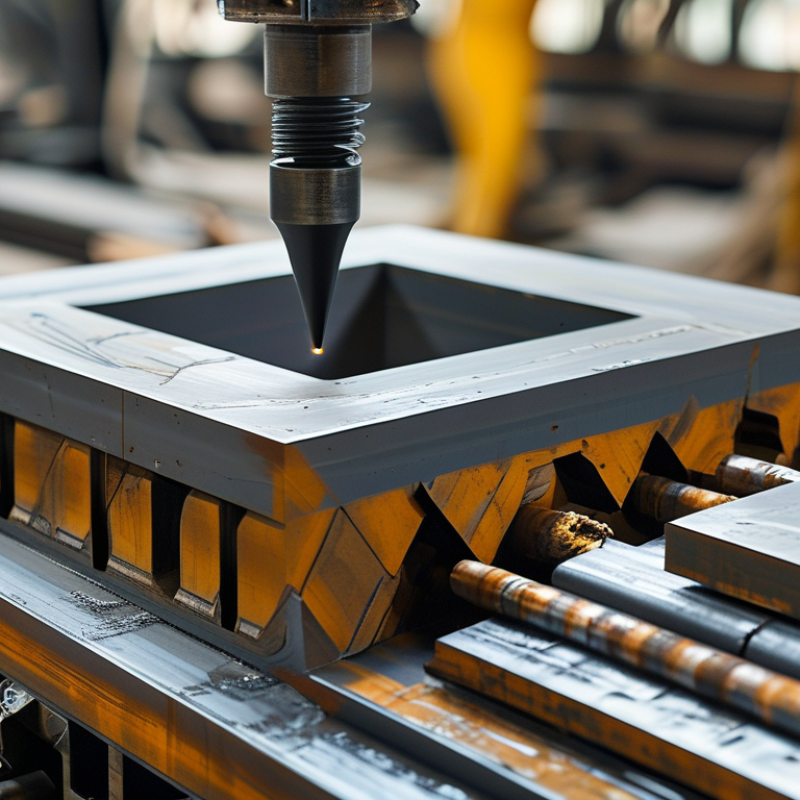
The best square pipe making machine in China should deliver accuracy before impressive speed. Key features include rigid forming stands, precise roll alignment, and stable strip feeding. These details reduce twisting, uneven corners, and frequent adjustments. A reliable high-frequency welding unit should maintain consistent heat and pressure. Automatic seam tracking also protects weld quality during long production runs.
The World Steel Association’s World Steel in Figures 2024 reports global crude steel output of about 1.9 billion tonnes in 2023. This scale creates strong demand for repeatable tube production. The machine should support stable dimensions, low scrap, and quick size changes. Servo-driven controls can improve positioning. Closed-loop monitoring can record temperature, speed, and welding current. The IEA’s Energy Efficiency 2024 report keeps industrial energy performance in focus. Therefore, buyers should examine motor efficiency, standby consumption, and compressed-air losses. A fast line is not always an efficient line.
Tips: Ask for sample pipes made from your actual steel grade. Measure corner radius, wall thickness, weld strength, and straightness. Check production data for at least one full shift. Do not accept speed claims without scrap-rate evidence. I would not choose automation alone. A perfect control panel can still hide weak tooling. This is an easy mistake. Supplier training, spare-part access, and documented testing deserve equal attention. In practice, the best machine is the one that keeps quality stable after the factory floor becomes busy.
Comparing Chinese square pipe machine manufacturers requires more than checking online prices. Start with the required tube size, wall thickness, steel grade, and production speed. A suitable machine should form the pipe evenly, control welding heat, and maintain accurate sizing after cooling. Ask for production records, inspection reports, and sample pipes made from similar material.
Visit the factory, if possible. Observe the assembly area, electrical cabinet, testing process, and spare-parts storage. Reliable manufacturers explain their design choices clearly. They should provide drawings, installation support, operator training, and a practical maintenance schedule. Check whether key components have stable supply channels. A low purchase price may become expensive when rollers, sensors, or welding parts fail early.
Tips: Compare complete quotations, not only machine prices. Request a video test using your actual steel specifications. Measure pipe corners, surface marks, weld strength, and dimensional tolerance. Contact recent customers and ask about delivery delays and after-sales response. A polished video proves little. Factory impressions can also mislead. I would still verify every technical promise in writing, because assumptions often become production problems. Ask whether the machine can be upgraded later, but do not pay for features your line will never use.
Choosing the best square pipe making machine in China starts with production capacity, not advertised speed. World Steel Association data reports China produced 1,019.1 million tonnes of crude steel in 2023. That scale supports strong demand for efficient tube-forming equipment. However, real output depends on pipe size, wall thickness, coil weight, and changeover time.
A practical machine should handle common carbon steel grades, galvanized steel, and stainless steel when required. Typical specifications may include 20–200 millimeter square pipes, 0.8–8 millimeter wall thickness, and forming speeds of 30–80 meters per minute. The line should include an uncoiler, leveling unit, forming stands, high-frequency welding, sizing, cutting, and automatic length control. EN 10219 and ASTM A500 are useful references for structural hollow sections. Material testing still matters.
In factory evaluations, I would check stable weld quality at low speed before trusting the maximum rating. A claimed 80 meters per minute can lose value during frequent size changes. A six-meter cutting tolerance within ±1 millimeter is more useful than impressive speed alone. Energy consumption, roller design, and spare-part availability also affect production costs. The International Energy Agency notes that steelmaking remains highly energy intensive, so efficient motors and controlled welding systems deserve close attention. My own concern is simple: some specifications look precise, yet ignore operator skill and maintenance discipline. That gap can quietly reduce daily output.
Production capacity, materials, and technical specifications
Chart interpretation: The figures show indicative production speeds for modern high-frequency welded tube mills when producing square hollow sections. Carbon steel generally allows higher line speeds than stainless steel because stainless grades require tighter control of forming, welding, and cooling conditions.
Typical material range: Low-carbon steel, galvanized steel, and stainless steel such as 304 or 316 can be processed, subject to the mill configuration, strip width, thickness, welding system, and tooling.
Key technical specifications to compare: tube size range, compatible strip thickness, maximum coil weight, forming and sizing accuracy, high-frequency welding power, automatic cutting length, material utilization, changeover time, and finished-tube tolerance.
The capacity values are practical industry benchmark ranges rather than brand-specific guarantees. Actual output depends on tube dimensions, steel grade, thickness, coil quality, tooling design, and operator settings.
What Is the Best Square Pipe Making Machine in China?
How to Choose the Best Square Pipe Making Machine for Your Needs
Choosing the best square pipe making machine starts with your production target, not its advertised speed. Define the pipe sizes, wall thicknesses, steel grades, and monthly output you actually need. A machine designed for thin carbon steel may struggle with thicker, high-strength material.
Inspect the forming method, welding unit, sizing section, and cutting system. Ask for measured tolerances, not attractive estimates. For example, check whether the finished tube keeps consistent corners after continuous production. Request sample pipes made from your steel coil. Small defects often appear only after several hours of running.
Look closely at changeover time. If your factory produces many sizes, adjustable tooling can save labor and reduce idle hours. However, complicated adjustment systems may require better operators and more maintenance. Keep that trade-off visible.
The electrical system should match your local power supply. Confirm spare-part availability, training, remote support, and on-site service terms. Technical documents should state applicable standards, testing methods, and safety requirements for your market.
I have seen buyers focus too heavily on maximum speed. That choice can increase scrap when alignment is unstable. A slower machine with reliable weld quality may earn more over a year. Still, one checklist cannot fit every factory. Your material, workers, floor space, and maintenance habits must shape the final decision. Get references from users with similar pipe specifications. Inspect their production records when possible.
| Evaluation Dimension | Typical Industry Range or Option | What It Means in Practice | Recommended Choice |
|---|---|---|---|
| Forming Method | Direct forming, round-to-square forming, or separate square-tube forming | Direct forming can reduce forming passes for specific sizes, while round-to-square lines provide broader production flexibility. | Choose a round-to-square line for mixed orders; choose direct forming for stable, high-volume production of selected sizes. |
| Square Tube Size Range | Approximately 15 × 15 mm to 400 × 400 mm, depending on the line configuration | The maximum outside dimension determines the required forming stands, roll diameter, drive capacity, and floor space. | Select a machine whose normal working range covers the target sizes without operating continuously at its maximum limit. |
| Compatible Strip Width | Commonly about 30–1,250 mm, subject to tube size and wall thickness | The strip width must match the developed perimeter of the square tube and the welding allowance. | Confirm the minimum and maximum strip widths using actual production drawings before ordering. |
| Wall Thickness | Approximately 0.8–16 mm; many general-purpose lines cover about 1.5–8 mm | Thicker materials require greater forming torque, stronger welding equipment, and slower operating speeds. | For frequent heavy-wall production, specify a reinforced forming section and a welding system rated for the required thickness. |
| Material Type | Carbon steel, galvanized steel, stainless steel, and selected low-alloy steels | Material strength, surface coating, and corrosion resistance affect roll design, welding parameters, and maintenance frequency. | Provide the exact grade, yield strength, tensile strength, and surface condition when requesting a quotation. |
| Nominal Production Speed | Approximately 20–120 m/min for many ERW square-tube lines | Actual output depends on tube dimensions, wall thickness, steel grade, welding method, cutting length, and quality requirements. | Compare guaranteed production speed at your specific size and thickness, not only the advertised maximum speed. |
| Welding System | High-frequency electric resistance welding, commonly using solid-state or vacuum-tube equipment | The welding system influences line speed, weld consistency, energy consumption, and the range of materials that can be processed. | Use solid-state high-frequency welding when energy efficiency, process control, and reduced routine maintenance are priorities. |
| Size Changeover | Manual roll change: often several hours; quick-change or shared-cassette systems: typically shorter | Changeover time directly affects productivity when a plant produces many sizes in small batches. | Choose quick-change tooling or automated adjustment for frequent size changes and diversified orders. |
| Length Cutting Accuracy | Typical cold-saw or flying-saw tolerance: approximately ±1–3 mm, depending on setup and product length | Cutting accuracy affects downstream fabrication, bundling, and material waste. | Specify the required tolerance, cutting length, and whether burr-free or low-burr cutting is necessary. |
| Automation Level | Basic manual control, PLC control with touch screen, or integrated automatic line control | Higher automation can improve repeatability, reduce operator workload, and record production parameters. | Use PLC-based automatic control with recipe storage when multiple products or continuous production are required. |
| Dimensional Accuracy | Common control targets include outside-dimension, corner-radius, straightness, and twist tolerances defined by the applicable standard | Accuracy depends on roll machining, stand rigidity, alignment, welding stability, and final sizing design. | Request sample tubes and dimensional inspection records produced with the same material and size as your application. |
| Power Requirement | Approximately 80–500 kW for the main line, depending on size, thickness, speed, and welding capacity | Total plant demand also includes the high-frequency welder, cooling system, air supply, hydraulic equipment, and auxiliary units. | Confirm the complete connected load, operating load, voltage, frequency, and transformer requirements before installation. |
| Cooling System | Closed-loop industrial water cooling with filtration and temperature control | Stable cooling protects welding components, improves process consistency, and limits scale or contamination. | Specify water quality, flow rate, temperature range, filtration, and heat-dissipation capacity for the installation site. |
| Floor Space | Often approximately 30–100 m in line length, excluding storage and packing areas | The full layout must include coil loading, uncoiling, welding, forming, sizing, cutting, run-out, inspection, and finished-product handling. | Approve a complete factory layout before purchase, including operator access, maintenance clearance, and material flow. |
| Quality Inspection | Visual weld inspection, dimensional checks, eddy-current or ultrasonic testing, and mechanical testing as required | Inspection requirements depend on the product standard, structural application, customer specification, and certification needs. | Select online weld monitoring and a documented inspection process when tubes are used for structural or safety-related applications. |
| Best Fit by Production Goal | Small-batch, mixed-size, general fabrication, structural tubing, or high-volume production | There is no universally best machine; the optimal configuration depends on product range, annual tonnage, labor cost, and changeover frequency. | Choose the machine that meets your required sizes, quality standard, output, changeover time, and total operating cost. |
| Note: The figures shown are typical planning ranges for industrial ERW square and rectangular tube lines. Final specifications vary with tube dimensions, steel grade, wall thickness, production standard, automation level, and plant conditions. Request a technical proposal based on your actual product list and required output. | |||
| Cookie | Duration | Description |
|---|---|---|
| cookielawinfo-checkbox-analytics | 11 months | This cookie is set by GDPR Cookie Consent plugin. The cookie is used to store the user consent for the cookies in the category "Analytics". |
| cookielawinfo-checkbox-functional | 11 months | The cookie is set by GDPR cookie consent to record the user consent for the cookies in the category "Functional". |
| cookielawinfo-checkbox-necessary | 11 months | This cookie is set by GDPR Cookie Consent plugin. The cookies is used to store the user consent for the cookies in the category "Necessary". |
| cookielawinfo-checkbox-others | 11 months | This cookie is set by GDPR Cookie Consent plugin. The cookie is used to store the user consent for the cookies in the category "Other. |
| cookielawinfo-checkbox-performance | 11 months | This cookie is set by GDPR Cookie Consent plugin. The cookie is used to store the user consent for the cookies in the category "Performance". |
| viewed_cookie_policy | 11 months | The cookie is set by the GDPR Cookie Consent plugin and is used to store whether or not user has consented to the use of cookies. It does not store any personal data. |