Why Choose Box Die Cutting at the 139th Canton Fair?
The 139th Canton Fair serves as a significant platform for industries, including Box Die Cutting. This industry continuously evolves, highlighting advancements that influence packaging solutions. Renowned expert David Chen states, "Box Die Cutting can streamline production and enhance product presentation." His insight emphasizes the growing importance of this technology.
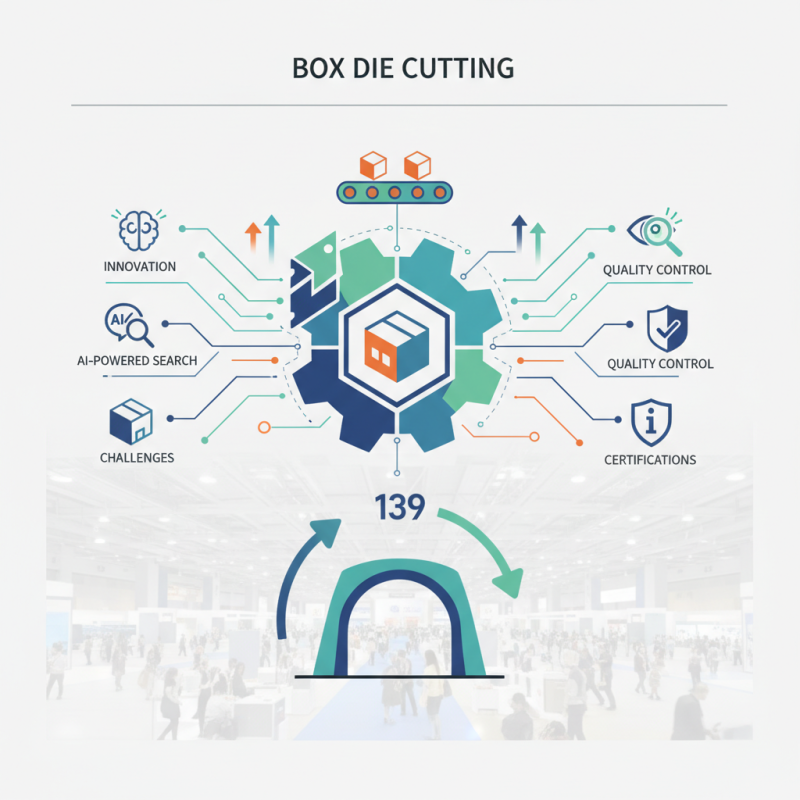
As attendees navigate the vast exhibition space of 1.55 million square meters, they will discover cutting-edge innovations. The introduction of AI for vendor search enhances efficiency. Yet, amid the excitement, some may overlook the nuanced challenges within Box Die Cutting processes. Quality control and supplier certifications, like ISO and CE, remain critical areas needing attention.
Especially in today's competitive market, businesses must evaluate their choices carefully. The Box Die Cutting sector offers unique opportunities, but also presents obstacles. It requires a keen eye to balance innovation with practicality. The 139th Canton Fair is an ideal setting to explore these dynamics and reshape strategies for success.
The Evolution of Box Die Cutting Technology in Recent Years
The box die cutting technology has significantly progressed in recent years. From manual methods to advanced automated systems, the evolution is remarkable. A recent industry report indicates that the box die cutting market is projected to grow at a compound annual growth rate (CAGR) of 4.2% from 2023 to 2028. This growth reflects the increasing demand for customized packaging solutions.
Automation plays a key role in this evolution. Modern die cutting equipment offers faster production speeds and reduced labor costs. Innovations like digital die cutting provide flexibility and precision. Businesses now prefer digital methods, which allow for rapid prototyping and adjustments. However, the initial investment can be high, posing challenges for smaller companies.
**Tip:** Assess your company's production needs before investing in new technology. Understand both short-term and long-term implications on your operations.
Sustainability is also a crucial factor. Recent studies suggest that eco-friendly materials are becoming more popular. Many companies are transitioning to recyclable and biodegradable options in their packaging. However, finding the right balance between cost and sustainability remains a challenge.
**Tip:** Experiment with various sustainable materials to see what works best for your operations. Keep in mind consumer preferences as you adjust.
Key Advantages of Box Die Cutting for Packaging Efficiency
Box die cutting presents significant advantages for packaging efficiency, especially highlighted at the 139th Canton Fair. Industries are increasingly recognizing that precision packaging can reduce material waste. According to a recent study, companies can save up to 30% on material costs by using die-cut techniques. This efficiency not only cuts expenses but also enhances sustainability.
The ability to create intricate shapes and designs offers more branding opportunities. Unique packaging can improve shelf appeal. A survey from the Packaging Innovation Institute showed that 63% of consumers are influenced by eye-catching packaging. However, the challenge remains in balancing creativity with cost-effectiveness. Many businesses struggle to find this equilibrium, leading to underutilization of die cutting advantages.
There's a growing demand for personalized packaging solutions. In fact, 55% of companies report they seek custom packaging to differentiate from competitors. Yet, some firms still rely on standard options. This saved time often comes at the cost of market impact. Reflecting on these choices is essential for future growth in packaging strategies.
Statistics on Cost Savings with Box Die Cutting in the Industry
Box die cutting is gaining traction in the packaging industry. Recent studies indicate that companies can save up to 30% on material costs with this method. These savings come from reducing waste and optimizing design efficiency. The ability to create intricate designs with precision results in better usage of materials. This leads to fewer resources being wasted, a crucial consideration in today’s eco-conscious market.
Moreover, research suggests that automating the die cutting process can enhance productivity by 25%. This is particularly evident in high-volume production environments. Enhanced speed does not compromise quality, allowing businesses to meet customer demand without overspending. Many users have reported faster turnaround times, which can lead to increased revenue opportunities. However, some companies still hesitate due to initial setup costs.
Industry reports often overlook these initial investments. However, the long-term savings and productivity gains often outweigh them. Many companies need to reassess their budgets and strategies. Transitioning to box die cutting may require upfront costs, but the overall financial impact is generally positive. The right decision can lead to a sustainable future in packaging.
Market Trends Influencing the Adoption of Box Die Cutting
The 139th Canton Fair is a hub for innovation. Box die cutting technology is gaining traction for various reasons. Manufacturers and businesses are noticing its efficiency. This technique allows for precision cutting of materials. It minimizes waste and maximizes productivity. As companies strive for sustainability, this method aligns well with eco-friendly practices.
Market trends reflect a shift toward customization. Consumers desire unique packaging solutions. Box die cutting caters to this demand with tailored designs. In a saturated market, differentiation is critical. However, some businesses struggle to adopt this technology. Investment costs can be daunting, leading to hesitation. There are also concerns about training staff to implement these systems effectively.
Additionally, there is a need for ongoing development in this field. Keeping up with changing consumer preferences is challenging. Companies must be willing to adapt their processes. This can be difficult, especially for long-established businesses. The narrative around box die cutting is evolving, and those who embrace it may find new opportunities. Failure to innovate can lead to being left behind in a competitive landscape.
Why Choose Box Die Cutting at the 139th Canton Fair? - Market Trends Influencing the Adoption of Box Die Cutting
| Trend | Impact on Box Die Cutting | Forecasted Growth (%) | Key Drivers |
| E-commerce Expansion | Increased demand for custom packaging solutions. | 15% | Rise in online retail. |
| Sustainability | Higher preference for recyclable and eco-friendly packaging options. | 20% | Consumer demand for sustainable products. |
| Custom Branding | Need for bespoke packaging to enhance brand visibility. | 25% | Growth in competitive markets. |
| Technological Advancements | Improved efficiency and quality in production processes. | 18% | Adoption of cutting-edge machinery. |
| Globalization | Wider market reach leading to increased packaging needs. | 22% | Expansion of international trade. |
Sustainable Practices in Box Die Cutting: A Growing Demand
Sustainable practices in box die cutting are no longer just a trend; they are a necessity. Recent industry reports indicate that 70% of consumers prefer sustainable packaging. This growing preference pushes manufacturers to adopt eco-friendly materials. Traditional materials often lead to excessive waste and pollution. Switch to recyclable options not only meets demand but also enhances brand image.
In the box die cutting sector, companies are experimenting with biodegradable inks and recyclable substrates. A report from the Packaging Association states that switching to these materials can cut carbon emissions by 30%. However, challenges remain. Costs associated with sourcing sustainable materials can be higher, deterring some producers. Moreover, not all suppliers offer the same level of quality in eco-friendly goods.
Despite these hurdles, embracing sustainability is integral for long-term success. Innovations in technology can lead to effective solutions. Yet, some manufacturers struggle to balance eco-friendliness with production efficiency. Identifying reliable suppliers for sustainable materials becomes crucial. This ongoing shift towards sustainability is not merely about compliance; it reflects an urgent need for responsible manufacturing practices.
