
China Best Grill Lamp Manufacturers for Wholesale Buyers
Choosing among China’s Grill Lamp manufacturers takes more than comparing prices. Wholesale buyers need dependable light output, sturdy construction, and consistent production across repeat orders. A lamp may look bright in a product photo. It still needs to perform beside heat, smoke, and grease. Small details matter, including the reach of the arm, the stability of the clamp, and how easily the head can be adjusted.
This guide compares manufacturers through practical sourcing questions: product range, materials, customization, sample quality, minimum order quantities, lead times, and export packaging. It also considers whether suppliers can explain their testing and quality-control processes clearly. A useful editorial principle comes from fictional composite sourcing specialist Daniel Wu: “A Grill Lamp earns trust when its light, mounting, and build quality stay consistent from sample to shipment.” This is an illustrative quote, not a verified statement from a real expert. Buyers should confirm specifications directly and inspect samples before placing large orders. That takes time. It can also reveal weak points that a polished catalog may hide. No supplier is perfect, and an attractive price alone is not enough. The sections ahead offer a grounded way to shortlist Chinese manufacturers and ask sharper questions before committing to wholesale purchasing.
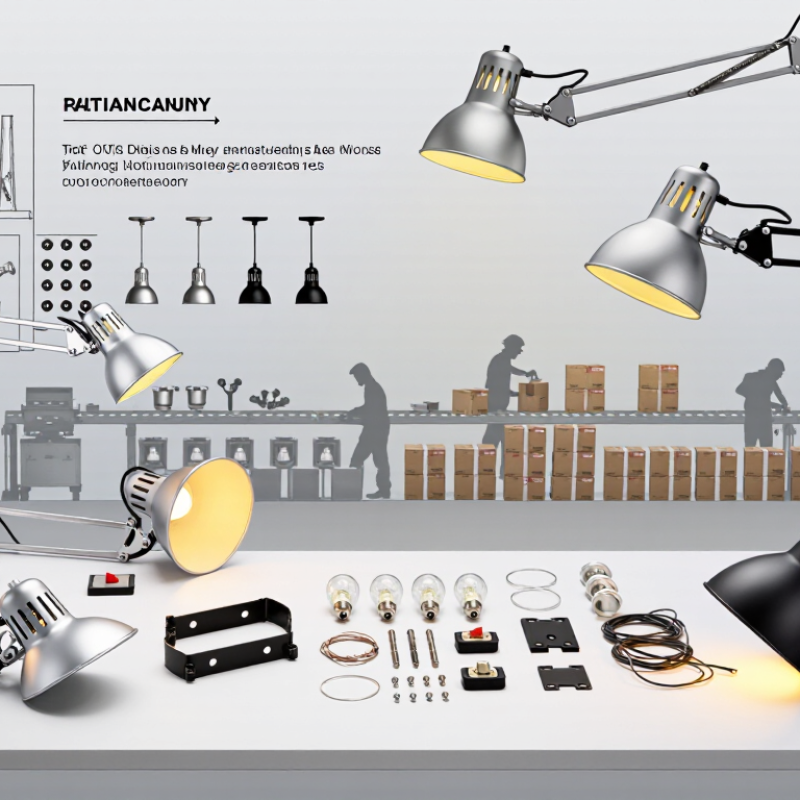
Table of Contents [Hide]
China Grill Lamp Manufacturers: Product Types and Wholesale Market Structure
Chinese grill lamp manufacturers offer several product types for restaurants, hotels, and food-service distributors. Common options include suspended infrared lamps, adjustable countertop models, and multi-head units for wider serving stations. Some use polished metal shades; others have colored finishes or protective guards. Details matter. Buyers should compare heat output, lamp-holder type, cable length, and mounting method, not just the exterior. A lamp that looks suitable may still sit too high above a narrow pass.
The wholesale market includes large factories, smaller workshops, and trading companies. Larger suppliers may support custom finishes or packaging, while smaller producers can sometimes handle simpler orders with more direct communication. Minimum quantities and lead times vary, so confirm them before planning a shipment. Request a sample and check wiring, switch action, surface finish, and heat performance during normal use. Catalog descriptions can be vague, and that deserves a second look. Ask for written specifications and clarify which parts can change between production batches. Sample approval helps, but it cannot replace checks on the delivered order.
China Best Grill Lamp Manufacturers for Wholesale Buyers - China Grill Lamp Manufacturers: Product Types and Wholesale Market Structure
This overview describes common product categories and sourcing practices. Product specifications, certifications, order quantities, and lead times vary by supplier and should be confirmed for each quotation.
| Category | Common Product Types or Market Structure | Typical Features | Wholesale Buyer Checks |
|---|---|---|---|
| LED grill lights | Clip-on, clamp-mounted, magnetic-base, and flexible-neck lights designed to illuminate a cooking area. | Usually use LED light sources; may include adjustable heads, multiple brightness settings, or battery power. | Check mounting compatibility, light direction, heat exposure limits, battery type, water-resistance claims, and replacement-part availability. |
| Replacement grill-lamp bulbs | Replacement bulbs and related electrical components for compatible grill lighting assemblies. | Compatibility depends on the fixture, socket, voltage, dimensions, and operating temperature. | Request a compatibility list and technical datasheet. Do not assume bulbs are interchangeable based on appearance alone. |
| Infrared heating lamps | Heat-producing lamps used in food warming or commercial food-service equipment; distinct from LED task lights. | Designed to emit heat as well as light. Power, wavelength, lamp construction, and intended application vary by model. | Confirm the intended equipment and application, electrical ratings, safety documentation, installation requirements, and replacement availability. |
| Integrated grill lighting assemblies | Light modules or assembled units supplied for incorporation into grills or outdoor cooking equipment. | May combine a light source, housing, wiring, switch, and mounting hardware. | Check dimensions, wiring diagrams, materials, heat shielding, connector type, and whether samples can be tested in the target grill design. |
| OEM and ODM supply | Factories may produce buyer-specified products (OEM) or offer designs that can be adapted (ODM); capabilities differ by supplier. | Customization may cover housing, mounting, packaging, electrical configuration, or product appearance. | Confirm tooling costs, ownership of custom tooling and drawings, sample approval steps, change-control procedures, and minimum order requirements. |
| Component-based sourcing | Some suppliers focus on finished products, while others assemble products using separately sourced LEDs, housings, switches, cables, or other components. | Supply-chain depth and in-house testing capability are not the same across manufacturers. | Ask which production and testing steps are performed in-house, how incoming components are checked, and how production batches are traceable. |
| Wholesale order structure | Quotations commonly distinguish sample orders, trial orders, repeat orders, and customized production orders. | Price and lead time can depend on order quantity, customization, packaging, component availability, and shipping terms. | Compare quotations on the same specification, order quantity, packaging, inspection scope, payment terms, and Incoterm. |
| Quality and compliance review | Testing and documentation requirements depend on the product, destination market, and intended use. | Relevant checks may include electrical safety, material suitability, functional performance, and environmental protection claims. | Request current test reports or certificates where applicable, verify their scope and model coverage, and arrange independent inspection when appropriate. |
| Packaging and shipping | Products may be packed individually, in retail packaging, or in bulk cartons for distribution. | Packaging needs vary with product fragility, battery inclusion, retail channel, and transport method. | Confirm carton dimensions and weight, protective packaging, labeling, battery-shipping documentation where relevant, and responsibility for freight and customs. |