China Best FEP PTFE Manufacturers and Suppliers?
Choosing a reliable Fep Ptfe manufacturer or supplier takes more than comparing prices. Buyers need to understand the application, operating temperature, chemical exposure, and required component dimensions. FEP and PTFE share valuable chemical resistance, but they are not interchangeable. FEP can be melt-processed, while PTFE usually requires specialized forming and sintering methods. That difference affects product design, lead times, and cost.
The search for China’s best FEP PTFE manufacturers should begin with evidence, not promises. Request current technical data sheets, grade details, quality records, and traceability information. Ask how suppliers control thickness, surface finish, and dimensional tolerances. For tubing, films, liners, or molded parts, samples can reveal practical issues that brochures miss. Details matter. So does consistency between batches. A polished website alone proves little.
Roy J. Plunkett, the chemist credited with discovering PTFE, is often quoted as saying, “I was not trying to invent anything. I was just trying to solve a problem.” That practical mindset suits supplier evaluation: define the real operating problem before selecting a material or factory. A capable partner should explain trade-offs clearly, support application testing, and communicate realistic production limits. This guide compares manufacturers and suppliers through those criteria, including technical capability, documentation, responsiveness, and supply reliability. No ranking can replace a well-run trial. I would still verify every important claim independently.
FEP and PTFE Basics: ASTM D2116 and D4894 Material Standards
ASTM D2116 covers FEP fluorocarbon materials intended for molding and extrusion. ASTM D4894 addresses granular PTFE materials used in molding and ram extrusion. These specifications set criteria for classifying and evaluating materials. They give buyers a shared basis for comparison. They do not make FEP and PTFE interchangeable. That distinction matters.
When comparing a supplier’s data, check the exact ASTM edition and material grade. Review the required properties and test results, not just a headline claim. Ask for lot-specific documentation, and confirm whether each figure is a specification limit or a typical value. A datasheet can look reassuring. It is not the whole story.
The resin standard alone cannot predict how a finished part will perform. Consider the component’s shape, processing route, temperature, chemical exposure, and electrical requirements. A material may meet its specification yet prove unsuitable for a particular design. That is easy to overlook. It is worth asking the supplier how the quoted grade was tested and whether the test conditions match the intended application.
FEP vs PTFE: Typical Continuous-Use Limits of 200°C and 260°C
China Best FEP PTFE Manufacturers and Suppliers?
For buyers comparing FEP and PTFE, continuous-use temperature is a practical starting point. Common engineering data sheets place FEP near 200°C and PTFE near 260°C, though exact limits depend on grade, load, and exposure time. That 60°C gap matters around hot pipes, seals, and chemical-transfer lines. It does not tell the whole story. FEP can be melt-processed and offers useful transparency; PTFE generally tolerates higher service temperatures but is harder to melt-process. ASTM D2116 covers FEP materials, while ASTM D4894 covers granular PTFE. These specifications help define material categories, not a universal safe operating temperature.
Thermal ratings need context. UL 746B evaluates long-term thermal aging and property retention; its Relative Thermal Index should not be treated as a direct maximum-use temperature. A fitting exposed to vibration or pressure may fail below a headline rating. Heat cycling can matter, too. I would verify the compound’s technical data, test conditions, and suitability for the actual fluid before choosing a supplier. Supplier claims are not always easy to compare.
Tips: Check the full assembly. Ask for grade-specific data and test details. Then review temperature, pressure, and chemical exposure together. A small mismatch can become a costly leak.
Key FEP and PTFE Applications in Wire, Linings, Seals, and Components
FEP and PTFE serve different needs in wire and cable systems. Both offer low-friction surfaces and strong electrical insulation, but operating temperature, flexibility, and installation method affect the choice. ASTM D150 provides a test method for dielectric properties; typical values near 2.1 are useful starting points, not universal specifications. Small differences matter.
In chemical-processing equipment, PTFE linings help protect metal vessels and pipework from corrosive fluids. FEP can be useful where a smooth, non-stick lining and melt-processable fabrication are priorities. Grand View Research estimated the global fluoropolymer market at about US$11.8 billion in 2023, reflecting broad demand across electrical and industrial uses. That market figure does not prove suitability for any one service.
For seals and components, engineers should check chemical exposure, pressure, temperature cycles, and compression set—not just a resin name. A seal that performs well on a drawing may leak after repeated heat cycles or poor installation. Fit matters. Ask suppliers for grade-specific test data and inspect finished parts for voids, uneven walls, and damaged edges. Material choice alone cannot fix a rough bore or incorrect assembly.
How to Assess Chinese Suppliers: ISO 9001, Traceability, and Product Testing
China Best FEP PTFE Manufacturers and Suppliers?
When evaluating Chinese FEP and PTFE suppliers, look beyond a displayed ISO 9001 certificate. Check its validity, covered site, and scope of activities. A certificate supports confidence in quality systems, but does not prove that every batch meets your specifications. Ask how the supplier links resin grade, production date, processing records, and finished-product lot numbers. Can they trace a sample tube back to its material batch? That detail matters.
Tips: Request a recent, redacted batch record and a sample certificate of analysis. Keep it specific. Confirm that reported tests match the material, dimensions, and intended use. For example, ask how wall thickness is measured and how often equipment is calibrated.
Product testing should be clear and repeatable. Review test methods, acceptance limits, sample identification, and actual results—not just a “pass” statement. Consider testing a pre-production sample, then compare it with the first production lot. Differences can reveal process variation. Records are sometimes incomplete; that is not automatic proof of poor quality, but it deserves a direct answer. A careful supplier should explain gaps and provide a practical corrective plan. Don’t rely on paperwork alone.
China’s FEP/PTFE Manufacturers by Resin, Film, Tube, and Finished-Part Expertise
China Best FEP PTFE Manufacturers and Suppliers?
China’s FEP/PTFE Manufacturers by Resin, Film, Tube, and Finished-Part Expertise
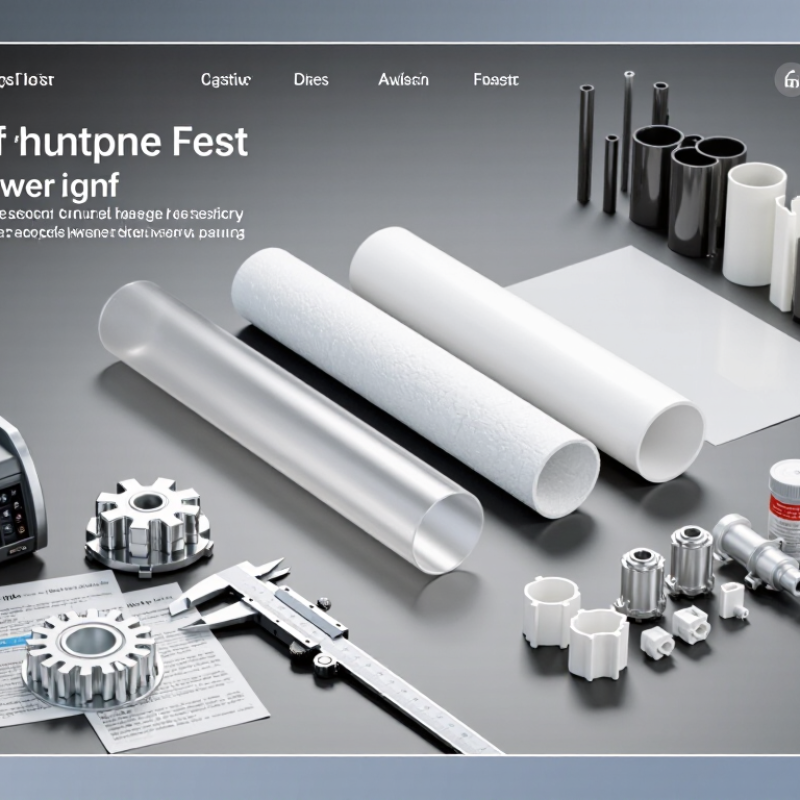
China’s FEP and PTFE suppliers differ by what they actually make. Resin producers focus on powder consistency, melt behavior, and batch documentation. Film converters must control thickness, surface quality, and roll-to-roll variation. Tube makers need stable wall dimensions and clean cut ends. Finished-part shops add machining, molding, or welding, where tolerances matter more than a broad product list.
The Grand View Research report on fluoropolymers estimated the global market at about US$11.8 billion in 2023. This indicates substantial demand, but market size cannot confirm a supplier’s process capability. Ask for resin specifications, dimensional inspection records, and sample parts made to your drawing. For film, check thickness measurements across the roll. For tubing, request inside-diameter and wall-thickness data. Small details matter.
FEP commonly suits melt-processable films and tubing; PTFE is often selected for low-friction, chemical-resistant components. The right choice depends on operating temperature, pressure, and the actual fluid or surface contact. A catalogue is only a starting point. Ask how the supplier handles tooling changes and rejects. Then review a production sample, not just a polished prototype. It may reveal more. Manufacturers can describe capability confidently, yet independent test records and repeat-order consistency deserve equal attention.
