China Best Fitted Baseball Caps Manufacturer?
Choosing China’s best manufacturer of Fitted Baseball Caps takes more than comparing prices or browsing polished product photos. Buyers need evidence of consistent sizing, reliable stitching, suitable fabrics, and clear communication throughout sampling and production. A cap may look sharp on a screen, yet feel tight at the temple or lose its crown shape after repeated wear. Small details matter.
A useful original observation for this article, voiced by fictional headwear specialist Daniel Wu, is: “A fitted cap earns trust through accurate sizing, clean construction, and a shape that holds up in daily wear.” This is an illustrative quote, not a verified statement from a real industry professional. It reflects practical checks buyers can make: request a size chart, inspect seam finishing, and compare a sample against the approved specifications.
Factory claims still need testing. Ask how sizing tolerances are checked, which materials are available, and how defects are handled. Examine the sweatband, embroidery, panel alignment, and underside of the brim. These details reveal more than a sales sheet can. No checklist catches everything. A first sample can differ from bulk production, so written specifications and pre-shipment inspections help reduce surprises. This guide explores how to assess Chinese manufacturers, weigh production capabilities, and choose a partner suited to your design, order volume, and quality expectations. The best fit is not always the lowest quote. It is the supplier whose process you can verify—and whose caps feel right when worn.
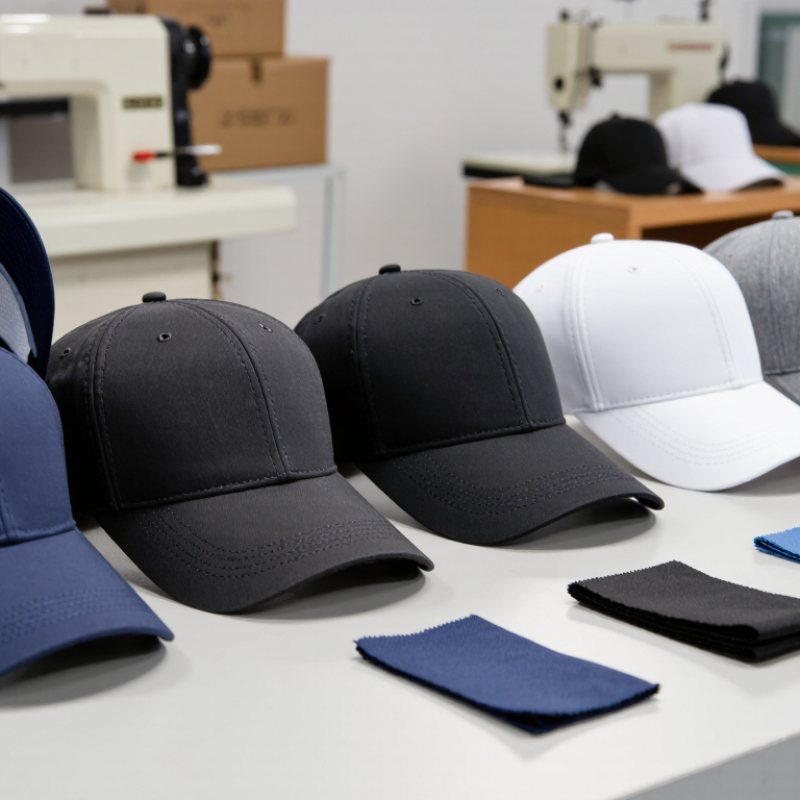
What Defines a High-Quality Fitted Baseball Cap?
China Best Fitted Baseball Caps Manufacturer?
What Defines a High-Quality Fitted Baseball Cap?
A fitted cap should feel secure without pressing hard against the forehead. Check the inside circumference, crown depth, and shape above the ears; small pattern changes can alter comfort noticeably. The sweatband should lie flat, with no twisted sections or rough seams. Stitching matters. Look for even rows around the brim and reinforced joins where panels meet, not just tidy surface embroidery. A clean appearance alone proves little.
Material choice affects breathability, shape retention, and color consistency. Textile Exchange’s Materials Market Report 2024 estimates that global fiber production reached 124 million tonnes in 2023, with polyester making up 57%. That figure highlights how widely synthetic fibers are used, but it does not guarantee a cap will perform well. Ask suppliers to identify fiber blends and document fabric testing. Colorfastness can be assessed with AATCC TM 8, while ASTM D5034 evaluates fabric tensile strength. These methods help compare samples; they do not replace wear testing.
Try the cap after several hours, not only during a quick fitting. Does the sweatband stay comfortable? Does the brim keep its curve after gentle handling? A firm crown may look premium, yet feel too stiff in daily use. That trade-off is easy to miss. Suppliers should check measurement consistency across sizes and inspect finished caps under steady lighting, since uneven panel tension can create subtle puckering. Even good specifications need real-world review.
What Defines a High-Quality Fitted Baseball Cap?
Accurate sizing is essential to a comfortable fitted cap. The chart shows approximate head circumference for common fitted sizes.
Circumferences are calculated using the traditional sizing convention: hat size × π inches, converted to centimeters. Actual fit can vary with cap shape and sizing practices. For a better fit, measure around the head where the cap will sit, and look for even seams and a crown that holds its shape.
How Chinese Manufacturers Design and Produce Fitted Caps
Designing a fitted baseball cap in China starts with accurate measurements, not decoration. Pattern makers turn head circumference and crown height into panel shapes, then check how those pieces sit together. Because a fitted cap has no adjustment strap, even a small sizing error can affect comfort. Small details matter. The bill’s curve, seam allowance, and placement of the inner sweatband all influence the final fit. Material choice matters too: firm fabric can hold a clean shape, while softer fabric may feel lighter but lose structure sooner.
Production usually moves from a paper pattern to a sewn sample, then to revisions and bulk cutting. During sampling, technicians check stitch consistency, panel alignment, and whether the cap stays comfortable after several minutes of wear. They may also test embroidery placement, since dense stitching can pull the front panel out of shape. Not every first sample fits well. That is useful information, not a reason to skip review. A reliable manufacturer records sizing changes and inspection results, so approved specifications can be followed across production runs. Even careful teams can miss a small mismatch, so final measurements deserve another check.
Materials, Sizing, Construction, and Customization Options
A fitted baseball cap is only as comfortable as its materials and pattern. Cotton twill offers a familiar, structured feel, while polyester blends can dry faster and hold color well. Textile Exchange’s Materials Market Report 2024 estimates global fiber production reached 124 million tonnes in 2023, with polyester accounting for about 57%. That scale makes fiber traceability worth asking about. Request fabric composition, weight, and colorfastness test details before approving bulk production.
Sizing needs more than a small, medium, or large label. Specify the target head circumference in centimeters, then check the inside circumference and crown depth on a physical sample. A first sample may fit neatly on paper and still feel tight at the temples. That is easy to miss. Test several sizes on different wearers, and record adjustments before grading the full size range.
Construction choices affect both appearance and durability. Ask for the panel count, seam reinforcement, visor material, sweatband fabric, and closure-free fitted design details. Inspect stitching around the crown and brim; uneven seams can distort the silhouette. Custom options may include embroidery, woven labels, underbrim colors, and contrasting eyelets. Keep artwork dimensions and thread colors documented. One detail still deserves reflection: extra decoration can make a cap heavier or less comfortable, so sample the finished version before confirming production.
How to Assess a Manufacturer’s Quality and Production Standards
China Best Fitted Baseball Caps Manufacturer?
How to Assess a Manufacturer’s Quality and Production Standards
Assess a fitted-cap manufacturer through a physical sample, not catalog photos alone. Check whether the crown holds its shape, the brim curves evenly, and the sweatband feels smooth against the skin. Inspect stitch lines around the panels and eyelets; uneven spacing can signal inconsistent production. Ask for measurements across several sizes, then compare them with your approved specifications. A neat sample is useful, but it cannot prove every production batch will match.
Material records matter, too. Textile Exchange’s 2024 Materials Market Report estimates global fiber production reached 124 million tonnes in 2023, with polyester representing 57%. This is a broad textile-market figure, not a cap-specific quality measure. Still, it makes clear why buyers should verify fiber composition and request supporting material documents. Ask how defects are logged, how measurements are checked during production, and whether the factory can share inspection records. ISO 2859-1 provides sampling procedures for lot inspection; agree on criteria before production begins. A good audit is not a guarantee.
Tips: Request a pre-production sample and a dated inspection report. Check five caps from different cartons, not just one. Look closely at the closure and inner seams. Small flaws count. My own checklist may miss details, so document concerns with photos and confirm corrective actions in writing.
Comparing Suppliers by Pricing, Capacity, and Export Services
China Best Fitted Baseball Caps Manufacturer?
Comparing Suppliers by Pricing, Capacity, and Export Services
A low unit price can hide costs. Compare like-for-like quotes for fabric weight, crown structure, embroidery, packaging, and sample fees. Ask whether prices include freight, and confirm the Incoterm in writing. Grand View Research estimated the global headwear market at USD 26.5 billion in 2023, projecting 6.5% annual growth from 2024 to 2030. That estimate covers headwear broadly, not fitted caps alone, but it signals a competitive market where small cost differences matter.
Capacity claims deserve evidence. Request monthly output for similar cap styles, available production slots, and recent quality records. A factory’s maximum capacity is not the same as the capacity reserved for your order. Details matter. If possible, inspect a pre-production sample for panel shape, stitching, and fit; measurements can look fine on paper yet feel wrong on the head. I would treat any supplier comparison as provisional until sample quality and delivery timing are tested.
Export service is part of the quote, not an afterthought. Check who prepares packing lists, commercial invoices, and shipping arrangements, and ask for recent examples with sensitive details removed. Confirm carton dimensions and dispatch lead time, since both affect landed cost. The World Trade Organization’s 2024 trade outlook projected merchandise trade volume growth of 2.6% for 2024, after a 1.2% decline in 2023. Forecasts are not guarantees. A clear timeline, responsive communication, and transparent charges still matter more than a confident sales promise.
