
China’s automotive supply base is large, but scale alone does not identify a reliable hose manufacturer. The China Association of Automobile Manufacturers (CAAM) reported 31.28 million vehicles produced in China in 2024. OICA’s 2023 production statistics recorded approximately 30.16 million vehicles. These figures show the depth of the market, not the quality of any individual supplier.
A Silicone Automotive Hose must withstand heat, pressure, vibration, and repeated engine-bay exposure. Material formulation, reinforcement, curing control, and dimensional consistency all affect performance. A polished product photo cannot confirm these details. Buyers should request technical datasheets, inspection records, and samples for application-specific testing. Small checks matter.
This guide profiles ten Chinese manufacturers and considers their product focus, production capabilities, quality systems, and export experience. Public market reports rarely separate silicone automotive hoses from broader automotive components. That gap matters. Company claims also vary in detail, and supplier information can change. The comparison should therefore be treated as a practical starting point, not a final certification. Verify current capabilities directly, including operating-temperature ranges, pressure ratings, material specifications, and traceability practices. A factory visit or independent test may reveal details a brochure misses. The shortlist can help narrow the search, but the right choice depends on the vehicle, operating conditions, and evidence each manufacturer can provide.
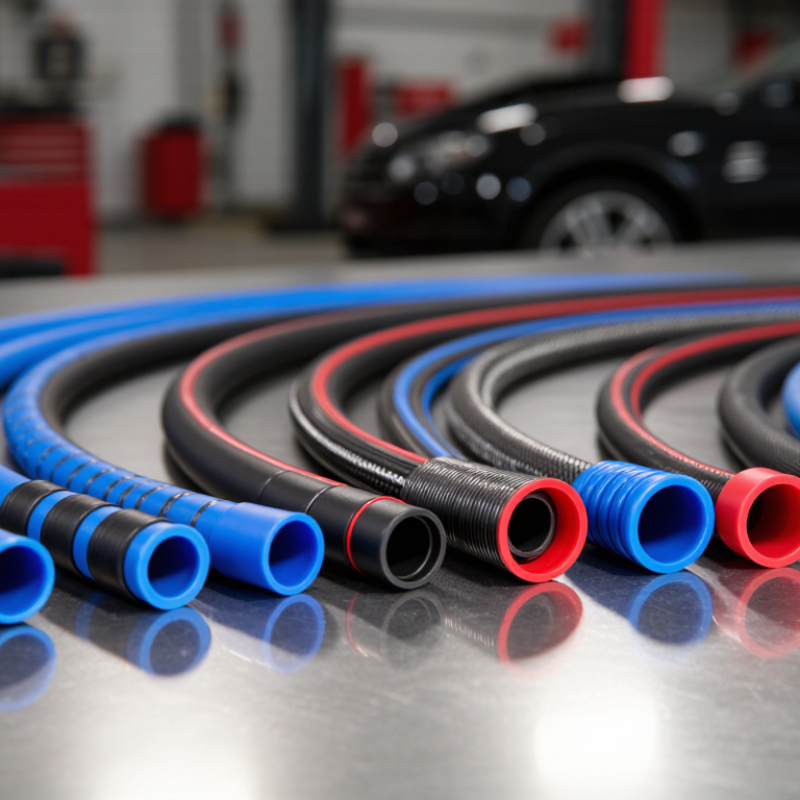
Silicone automotive hoses carry coolant and heated air through demanding parts of a vehicle. You may find them near radiators, heater cores, turbocharger systems, or charge-air plumbing. Their flexibility helps them route around tight engine-bay spaces, while their resistance to heat can support service in hot operating zones. Still, “silicone” does not mean suitable for every fluid or duty.
Details matter. A coolant hose must match the system’s temperature, pressure, diameter, and connection points. For a turbocharger or charge-air application, check reinforcement and pressure requirements rather than judging by appearance alone. A soft bend can kink and restrict flow; a poorly matched clamp may allow leakage. Measure the installed path, including bends and movement, before selecting a hose. Small clearances matter.
Inspection is practical, not glamorous. Look for swelling, cracks, abrasion, loose clamps, and contact with sharp edges. Replace a damaged hose with the engine cool, and follow the vehicle or component maker’s service guidance. Silicone can last well under suitable conditions, but it is not maintenance-free. I would not assume a clean exterior proves the inner wall is sound; that is an easy mistake.
China’s manufacturing scale makes careful supplier evaluation essential. The China Association of Automobile Manufacturers reported 30.16 million vehicles produced in 2023. That figure signals a large supply base, not consistent hose quality. Ask whether the factory controls silicone compound mixing, extrusion, curing, and final inspection in-house. Request batch records, material certificates, and valid quality-system certificates covering the actual production site. Looks convincing. Verify it.
Assess performance against the hose’s real operating conditions: temperature range, pressure, coolant or oil exposure, vibration, and installation radius. Request test reports for burst pressure, pressure cycling, heat aging, and ozone resistance. Check sample dimensions with calipers, especially wall thickness and inner diameter. Then compare results with your drawing and specification, not just a generic product sheet. The International Energy Agency’s Global EV Outlook 2024 reports nearly 14 million electric cars sold worldwide in 2023, about 18% of car sales. Changing vehicle designs make application-specific validation more useful than broad claims.
Review traceability from raw-material batch to finished hose, and ask how rejected parts are contained. A factory visit can reveal storage conditions, calibration labels, and whether operators follow documented checks. Request references for comparable automotive applications, with customer details appropriately protected. One limitation: a successful sample test cannot prove every production batch will match. Ask for ongoing inspection records and define acceptance criteria before ordering.
Suggested evaluation weights for comparing manufacturers. These are a practical scoring framework, not supplier ratings or market statistics.
Prioritize documented automotive quality controls, application-specific hose performance, material traceability, and test evidence. Confirm that specifications and test methods match the intended vehicle system and applicable requirements.
China’s silicone automotive hose manufacturing landscape spans material preparation, tube forming, reinforcement, curing, and quality checks. Capabilities differ between factories, so a polished catalog alone reveals little. Some producers focus on standard coolant hoses, while others handle custom bends, multi-layer construction, or low-volume development. Those differences affect lead times, tooling costs, and consistency.
For a hose, fit is not the only test. Buyers should review the specified temperature range, pressure rating, dimensions, reinforcement design, and compatibility with the intended fluid. Silicone handles heat well, but it is not automatically suitable for every oil or fuel application. Ask how samples are measured and how production batches are checked. Details matter. A useful assessment may include dimensional records, pressure testing, and heat-aging results. Still, test conditions should match the actual vehicle system; generic figures can mislead.
Tips: Request a drawing with tolerances and confirm connection sizes before ordering. Ask for sample and batch inspection records. Check whether the supplier can explain changes in color, hardness, or dimensions, rather than dismissing them as normal. One overlooked point is service access: a hose can meet its specification yet prove awkward to install.
The table below is a supplier-evaluation framework, not a verified ranking of individual manufacturers. Capabilities and specifications vary by product and should be confirmed directly with each supplier.
| No. | Evaluation dimension | What to verify | Relevant evidence or test |
|---|---|---|---|
| 1 | Automotive quality system | Whether the production site operates a documented quality-management system suitable for automotive supply. | Request current certificates and confirm their scope and issuing body. IATF 16949 is an automotive quality-management-system standard; certification should not be assumed. |
| 2 | Application suitability | Intended use, such as charge-air, coolant, or other under-hood connections; silicone is not automatically suitable for every fluid or system. | Obtain written compatibility guidance for the specific fluid, temperature, pressure, and duty cycle. |
| 3 | Silicone compound specification | Compound formulation, hardness, reinforcement compatibility, and stated operating limits for the proposed hose construction. | Request a material data sheet and test results for the finished hose; properties depend on formulation and construction. |
| 4 | Reinforcement and construction | Ply design, textile reinforcement, wall structure, and formed geometry appropriate to the specified application. | Review construction drawings, samples, and cross-section details; confirm that the quoted design matches the approved sample. |
| 5 | Pressure and vacuum performance | Working pressure, burst pressure, vacuum resistance, and performance at the customer’s specified temperature. | Request test conditions and results for the exact part design; values cannot be inferred from the material name alone. |
| 6 | Temperature and aging validation | Resistance to the temperature profile, thermal cycling, and aging conditions defined for the vehicle application. | Ask for test methods, exposure conditions, acceptance criteria, and post-aging inspection results. |
| 7 | Dimensional control | Control of inner diameter, wall thickness, length, bend shape, end geometry, and dimensional tolerances. | Review the controlled drawing, inspection plan, and sample measurement report for the part number. |
| 8 | Production and process control | Traceability of materials and batches, process monitoring, inspection frequency, and handling of nonconforming product. | Request process-flow documentation, lot traceability examples, and corrective-action procedures. |
| 9 | Applicable test standards | Whether the supplier can test to the specification required by the customer or vehicle program. | ISO 4081 covers rubber hoses for cooling systems for internal-combustion engines, including test methods; confirm the applicable edition and customer requirements. |
| 10 | Sampling, validation, and supply readiness | Ability to provide development samples, support fit and function validation, and maintain agreed production and delivery controls. | Confirm sample lead time, approval workflow, change notification, packaging, and documented production capacity. |
The ten manufacturer profiles are best read as capability snapshots, not a permanent ranking. Chinese suppliers vary in tooling, testing, and production focus. Some specialize in molded elbows for tight engine bays. Others make long coolant lines or reinforced turbocharger hoses. Details matter.
A useful comparison checks more than catalogue size. Look for clear specifications on inner diameter, wall thickness, bend radius, and operating temperature. Ask how samples are checked for leaks, pressure changes, and heat aging. Some factories emphasize custom tooling and short development cycles. Others focus on repeatable volume production. A neat sample is encouraging, but it does not prove every batch will match.
The strongest profiles also explain material selection and production controls in plain terms. Ask whether hose construction suits the intended coolant, oil mist, or under-hood heat. Request traceable batch records and consistent dimensional data. Small differences can matter. A bend that looks harmless on a workbench may kink after installation. Supplier claims deserve practical questions, too; a polished brochure is not a test report. These ten profiles help buyers compare strengths while leaving room for verification.
Comparing China’s top silicone automotive hose manufacturers requires more than checking product photos. A useful shortlist should compare hose types, dimensions, temperature ranges, reinforcement options, and custom-forming capacity. One factory may focus on straight coolant hoses, while another can produce shaped assemblies with bends and connectors. Ask how samples are measured and tested. A polished catalog is helpful, but it cannot confirm repeatable production.
Tips: Request a sample drawing, material specification, and recent test records. Check whether certificates are current and cover the actual production site and product scope. ISO 9001 or IATF 16949 may be relevant, but a certificate alone does not establish hose performance. Fit matters. Ask for proof.
Compare practical capabilities, too: tooling lead times, batch consistency, inspection methods, and handling of design changes. For a trial order, record dimensions, surface condition, and fit on the intended assembly. Clarify how defects are reported and resolved. No comparison is perfect; published information can be incomplete, and buyer requirements vary. Treat rankings as a starting point, then verify claims through documents, samples, and direct technical questions.
| Cookie | Duration | Description |
|---|---|---|
| cookielawinfo-checkbox-analytics | 11 months | This cookie is set by GDPR Cookie Consent plugin. The cookie is used to store the user consent for the cookies in the category "Analytics". |
| cookielawinfo-checkbox-functional | 11 months | The cookie is set by GDPR cookie consent to record the user consent for the cookies in the category "Functional". |
| cookielawinfo-checkbox-necessary | 11 months | This cookie is set by GDPR Cookie Consent plugin. The cookies is used to store the user consent for the cookies in the category "Necessary". |
| cookielawinfo-checkbox-others | 11 months | This cookie is set by GDPR Cookie Consent plugin. The cookie is used to store the user consent for the cookies in the category "Other. |
| cookielawinfo-checkbox-performance | 11 months | This cookie is set by GDPR Cookie Consent plugin. The cookie is used to store the user consent for the cookies in the category "Performance". |
| viewed_cookie_policy | 11 months | The cookie is set by the GDPR Cookie Consent plugin and is used to store whether or not user has consented to the use of cookies. It does not store any personal data. |