
Superabrasive

Top PSA Activated Carbon Manufacturers in China

Choosing among the top PSA Activated Carbon manufacturers in China takes more than comparing prices or catalogue figures. Buyers need to examine pore structure, particle size, hardness, moisture limits, and batch consistency. These details affect pressure drop, adsorption performance, and carbon loss during repeated operating cycles. A neat specification sheet is useful. It is not the whole story.

A practical principle, consistent with adsorption researcher Douglas M. Ruthven’s published work, is: “An adsorbent must suit the separation cycle, not merely the specification sheet.” This is an editorial paraphrase, not a verbatim quotation. For a PSA project, ask manufacturers how they test samples, control production batches, and support commissioning. Request data under conditions close to your intended feed gas, pressure range, and cycle time. A sample jar can look uniform while performance varies between batches. That deserves scrutiny.

This guide compares Chinese suppliers through product capability, technical communication, quality documentation, customization, and after-sales support. It also considers whether a manufacturer can explain trade-offs clearly, rather than promising the same result for every plant. Small details matter: dusty bags, uneven granules, or unclear test methods can complicate installation and operation. No supplier is a perfect fit. Verify claims, request current documentation, and test material before making a large commitment.
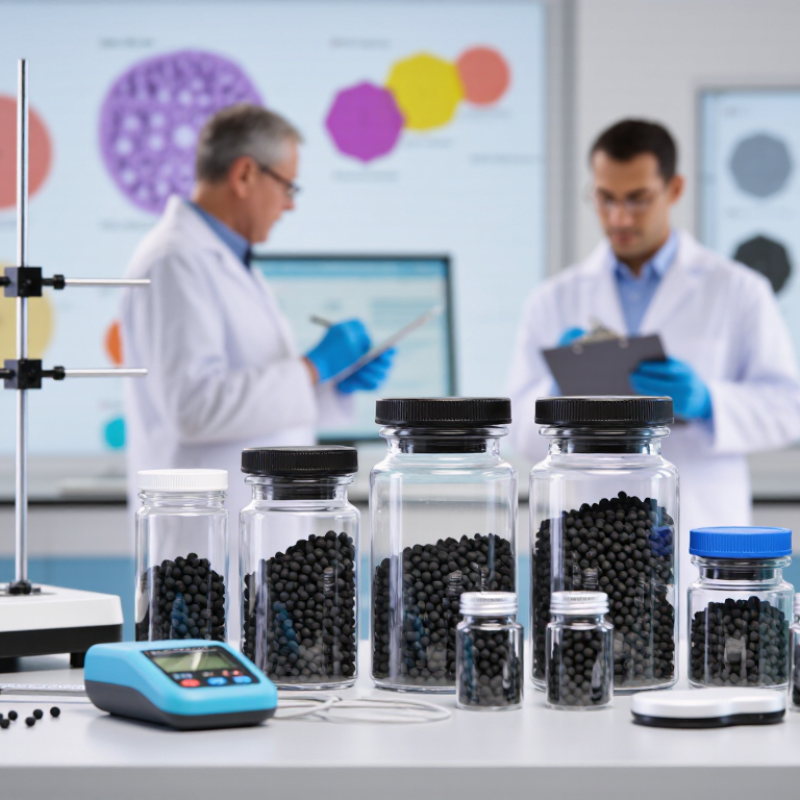
Top PSA Activated Carbon Manufacturers in China

Understanding PSA Activated Carbon and Its Role in Gas Separation

Pressure swing adsorption, or PSA, separates gas mixtures by changing pressure across an adsorbent bed. Activated carbon can capture selected molecules because its internal pores provide a large surface area. Under higher pressure, some components are retained; when pressure drops, they are released and the bed can be reused.

Small pores matter.

Performance depends on the gas mixture, pore-size distribution, humidity, temperature, and cycle timing. In air separation, carbon molecular sieves are often used for nitrogen generation; they are not interchangeable with every activated carbon grade. That distinction is easy to overlook.

A supplier’s data should identify the intended gas pair and test conditions, while pilot testing can reveal how a material behaves in real operating cycles. Moisture or dust may reduce performance, so pretreatment and routine checks are practical parts of system design.

The theory looks tidy, but actual beds can age unevenly. Engineers should monitor outlet purity and pressure drop, then adjust cycle settings based on measured results rather than assumptions.

Criteria for Identifying Leading PSA Activated Carbon Manufacturers in China

When assessing top PSA activated carbon manufacturers in China, look beyond product descriptions. Pressure swing adsorption beds depend on consistent pore structure, particle size, hardness, and moisture levels. Ask for current test data and the methods used to obtain it. Iodine value can indicate adsorption capacity, but it cannot predict performance alone. Request breakthrough test results under conditions close to your gas composition, pressure, and operating cycle. Small differences matter.

Manufacturing control is another useful measure. Review sample batch certificates, production records, and procedures for tracking raw materials and finished lots. Ask how the supplier manages dust, breakage, and changes between batches. These details can affect bed pressure drop and replacement intervals. A capable technical team should explain limitations clearly, not promise identical results in every system. A polished brochure may still leave gaps; that is worth checking.

Tips: Compare samples using the same test conditions. Confirm packaging protects carbon from moisture and damage during transport. Discuss trial quantities and acceptance criteria before ordering. If a supplier cannot explain a reported value, pause and ask again.

Profiles of Notable PSA Activated Carbon Manufacturers in China

Profiles of notable PSA activated carbon manufacturers in China should focus on more than production capacity. Key differences include pore structure, particle size, crush strength, and adsorption performance for the target gas. Buyers should also check whether a supplier provides batch test records and clear guidance on regeneration. These details matter in a PSA bed, where uneven pellets can affect pressure drop and operating stability.

Grand View Research estimated the global activated carbon market at about USD 4.74 billion in 2023, with growth projected through 2030. This broad market figure is not specific to PSA grades, but it reflects rising demand for adsorption materials. Manufacturer profiles are more useful when they separate general-purpose carbon from grades designed for pressure-swing adsorption. A specification sheet alone may not show how a product performs under a buyer’s actual cycle conditions. That gap deserves attention.

Tips: Request a representative sample and compare it under consistent test conditions. Check the stated test method, not just the headline adsorption value. Ask how production batches are tracked. Small differences matter.

How to read this chart: The non-nitrogen fraction is calculated as 100% minus the stated nitrogen purity. These are illustrative purity setpoints, not data attributed to any manufacturer; the remaining fraction is not necessarily oxygen alone. Actual product specifications vary.

Comparing Product Grades, Performance, and Manufacturing Capabilities

For pressure swing adsorption, activated carbon grades should be compared by more than iodine number. Pore distribution, pellet diameter, hardness, moisture, and ash can all affect performance. A narrow pellet range supports even packing, while low dust helps limit pressure drop. Numbers need context.

A useful comparison asks how a grade performs under the intended gas mixture, pressure, and cycle time. Dynamic adsorption tests can reveal working capacity and breakthrough behavior more clearly than a single laboratory index. Check test conditions, too; results from different methods may not be directly comparable. A small column test can expose issues that a specification sheet misses.

Manufacturing capability matters just as much as the nominal grade. Consistent activation, washing, drying, and screening help reduce batch variation. Ask for batch-level data, particle-size distributions, and mechanical-strength results, rather than relying only on a typical value. Production scale is useful, but it does not guarantee consistency. In practice, selection can involve trade-offs between capacity, strength, and pressure drop. Those trade-offs are easy to underestimate, and the best fit may only become clear after application-specific testing.

Top PSA Activated Carbon Manufacturers in China - Comparing Product Grades, Performance, and Manufacturing Capabilities

Comparison basis: The table compares common activated-carbon product grades and supplier capability indicators, not named manufacturers. Specification ranges are indicative commercial ranges; they are not verified claims about any particular Chinese supplier or product.

Product grade Typical form and particle size Indicative iodine number Typical performance characteristics PSA application considerations Manufacturing capabilities to compare
Coal-based granular activated carbon Extruded or crushed granules; commonly supplied in nominal sizes around 2–4 mm, with other sizes available. Often specified in the approximate range of 800–1,100 mg/g. Commercial grades commonly report high surface area and good mechanical strength. Actual adsorption performance depends on pore structure, feed gas, pressure, and test conditions. Used as a guard or bulk adsorbent for selected contaminants, including carbon dioxide and some hydrocarbons. Suitability must be confirmed against the PSA process and gas composition. Ask for controlled particle-size distribution, low fines, documented crush or abrasion resistance, and batch-to-batch test records.
Coconut-shell granular activated carbon Typically hard granules; common nominal sizes include approximately 1.5–3 mm and 2–4 mm. Often specified in the approximate range of 900–1,200 mg/g. Frequently selected for high micropore content and hardness. Iodine number alone does not establish capacity for a specific PSA contaminant. May be considered where hardness and microporous adsorption characteristics are priorities. Confirm working capacity and regeneration behavior under the intended cycle conditions. Compare raw-material traceability, activation consistency, screening accuracy, fines control, and test reports for each production lot.
Coal-based crushed or screened PSA granules Custom screened granules sized to the adsorber design; the specified size distribution matters more than a general nominal size. Set by the project specification; commonly falls within the broader range reported for coal-based grades. Performance depends on the balance of pore-size distribution, bulk density, pressure drop, and resistance to attrition. Can be evaluated for layered or multi-bed PSA systems. Validate pressure drop and breakthrough behavior using process-relevant testing. Check the supplier’s ability to meet custom sieve limits, control undersize and oversize fractions, and provide representative samples before qualification.
Impregnated activated carbon Granular or pelletized carbon with a specified impregnating agent; particle size is product-specific. Not directly comparable with unimpregnated grades; the test method and product formulation should be stated. Impregnation is designed for particular target contaminants. It can change usable pore volume, pressure drop, and regeneration behavior. Use only when the target contaminant and process conditions are compatible with the impregnant. Confirm compatibility with the PSA cycle and downstream requirements. Request details on impregnant identity or class, loading control, safety documentation, leaching risk, and lot-level quality checks.
Custom PSA-grade activated carbon Specified by the buyer for bed geometry and process requirements; may be granular or extruded. Agreed by specification and test method rather than by grade name alone. Qualification should consider working capacity, adsorption kinetics, selectivity, attrition, moisture, and performance over repeated cycles. Requires testing with representative feed gas, operating pressure, cycle time, and regeneration conditions. Pilot or process testing may be needed. Compare application engineering, sample-to-production consistency, production capacity, change-control procedures, and availability of independent laboratory testing.

Specification note: Iodine number is a general indicator of adsorption capacity and is not a substitute for contaminant-specific PSA testing. Request the test method and results for each lot; commonly used methods include ASTM D4607 for iodine number, ASTM D2867 for moisture, ASTM D2854 for apparent density, and ASTM D3802 for hardness. Verify particle size, fines, pressure drop, and cycle performance against the project specification before selecting a supplier.

Key Industries and Applications for PSA Activated Carbon in China

China’s chemical, refining, and gas-processing industries use pressure swing adsorption to purify changing gas streams. Activated carbon can capture carbon dioxide, heavier hydrocarbons, and other impurities before downstream processing. In hydrogen recovery, it often works alongside other adsorbents rather than carrying the entire separation alone. Feed composition matters.

Refineries and coal-chemical plants may apply PSA systems to hydrogen-rich off-gas, where stable product quality supports further processing. Biogas upgrading is another possible application, though the adsorbent choice depends on methane content, moisture, and contaminants. Pretreatment is essential: water and oil can reduce adsorption performance and shorten bed life. Small details matter.

Nitrogen generation deserves a distinction. Many PSA nitrogen units use carbon molecular sieves, which are not the same material as ordinary activated carbon. Buyers should compare pore structure, particle strength, pressure conditions, and regeneration behavior against the actual gas analysis. A specification copied from another plant may look convincing, yet perform poorly under different humidity or flow rates. Field conditions vary. Regular sampling and careful operating records help reveal whether the adsorbent is still doing its job.

All search results