How to Choose the Best Band Sealer for Your Business
Choosing the best Band Sealer begins with the package, not the product brochure. Film type, bag width, fill weight, and daily volume all affect sealing performance. A compact tabletop unit may suit short runs, while a continuous band sealer can keep pace with a busy packing line. Picture a pouch moving beneath the heated belts: the seal should emerge straight, clean, and consistent—not wrinkled or scorched.
Imagine Maya Chen, an experienced packaging-line technician, offering this practical rule: “Test the sealer with your actual bags, product, and production speed.” This is an illustrative expert viewpoint, not a quotation from a cited individual. It reflects a useful lesson: a sample seal made under ideal conditions may not match a full shift. Ask suppliers about temperature control, belt speed, pressure adjustment, maintenance access, and spare-part availability. Then run representative samples and inspect the seals after cooling.
The right choice also depends on your workspace and operators. Check machine footprint, power requirements, conveyor height, and how easily staff can clean the unit. A readable control panel matters when settings change between product runs. So does dependable support.
Small details count. Keep a simple test log. Compare several settings. Notice what fails, too. A Band Sealer that fits your real workflow can reduce rework and steady production, but no specification sheet can replace careful trials with your own packaging.
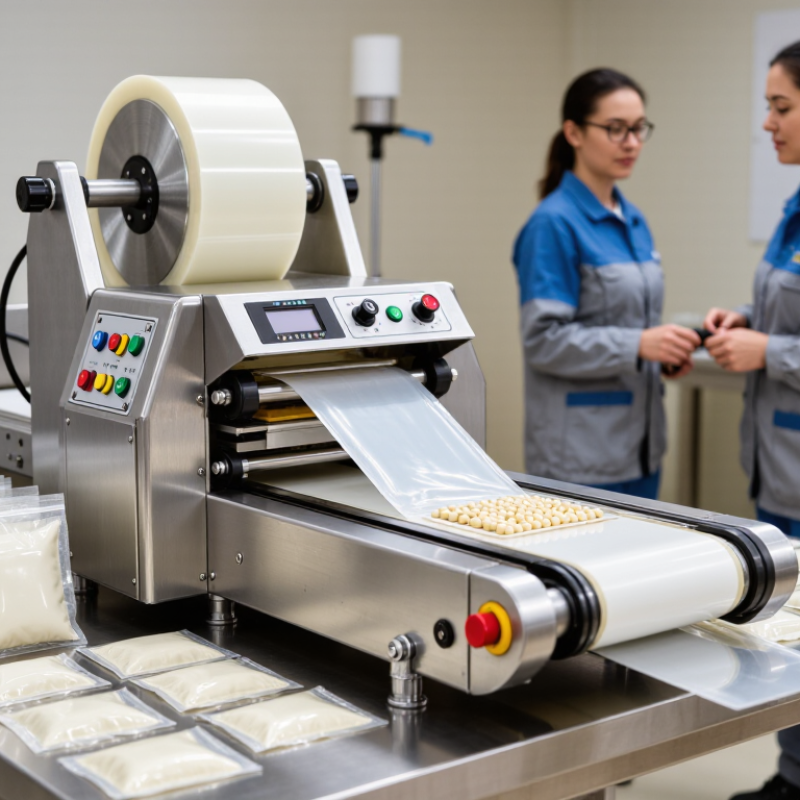
Define Your Packaging Requirements and Production Goals
A suitable band sealer starts with the package, not the machine’s advertised speed. Record the bag material, thickness, width, and filled weight. Polyethylene and laminated films may need different heat and pressure settings, so check the film supplier’s sealing guidance. Measure the actual packages, too; filled bags can behave differently from empty samples.
Numbers can mislead. Estimate your normal hourly output, peak periods, and how many hours the sealer will run each day. Then compare that demand with the machine’s rated speed and duty cycle. A line that handles 20 bags per minute on paper may slow down when workers load bags by hand or products arrive unevenly. Leave practical room for those pauses.
Set clear quality targets before comparing equipment. Decide what an acceptable seal looks and feels like, and how often operators will inspect it. Test representative bags at realistic line speeds, including the thickest material you expect to use. Check seal consistency, wrinkles, leaks, and opening strength after cooling. Keep notes on temperature, belt speed, and pressure during each trial; small changes can matter. It is easy to overlook cleaning access and operator training, especially when production is busy. That assumption deserves a second look. A short trial with real products can reveal fit problems before a purchase decision.
Compare Band Sealer Types for Your Products
Compare the package before comparing machines. Horizontal continuous band sealers suit flat pouches and solid products that can travel on a conveyor. Vertical models hold bags upright, helping limit spills from powders, granules, or liquids. Some machines can tilt, but that adjustment adds setup time. Small detail, big difference. Check the bag’s fill level and headspace, not just its material.
Heating style matters too. Direct-heat bands work well with many heat-sealable films, while hot-air systems can suit thicker or multi-layer laminates. Neither is universally better. Film structure, seal width, and production speed all affect results.
The Flexible Packaging Association’s 2023 State of the U.S. Flexible Packaging Industry report recorded $42.9 billion in U.S. sales for 2022. Flexible packaging represented about 21% of the U.S. packaging market.
That variety makes a one-setting-fits-all choice unlikely. Ask suppliers to run your actual pouch, filled to working weight, then inspect the seal after cooling. I would also test slightly dusty or wrinkled bags; clean samples can make a machine look more reliable than it is. Compare temperature stability, belt speed, pressure adjustment, and how quickly operators can change settings between products.
Evaluate Sealing Performance, Speed, and Machine Features
A band sealer should be tested with your actual film, product, and fill level. Check seal width, temperature stability, belt speed, and pressure. Then inspect the seal for wrinkles, channels, and weak corners. ASTM International’s F88/F88M method measures flexible-package seal strength; it offers a repeatable way to compare settings, though it cannot replace checks on your real production line. A strong seal matters. But speed matters too.
Compare sustained output, not the speed shown on a machine’s display. Include loading, changeovers, rejected packs, and operator adjustments in your trial. Adjustable temperature controls, variable conveyor speed, and accessible cleaning points can make daily operation easier. Eurostat reported 186.5 kilograms of packaging waste per EU resident in 2022. That figure is not caused by sealing machines alone, but avoidable rejects and excess film are worth tracking. Small losses add up.
UNEP’s Food Waste Index Report 2024 estimated that 1.05 billion tonnes of food were wasted at household, food-service, and retail levels in 2022. A dependable seal cannot solve food waste by itself, yet package integrity is one practical factor to evaluate. Ask suppliers to run several film types and record seal results, throughput, and reject rates. A short test can still miss problems during a long shift. That is easy to overlook. Compare the results with your own product and staffing conditions before choosing a machine.
Assess Space, Staffing, Maintenance, and Total Cost
How to Choose the Best Band Sealer for Your Business
Assess the machine in its real working space, not just on a floor plan. Measure the sealer, operator clearance, film-roll access, and the path for finished packs. A long conveyor may slow movement in a narrow room. Keep power and cleaning access in view, too. One missed measurement can turn a sensible purchase into a daily nuisance.
Staffing matters as much as sealing speed. Check whether one operator can load, seal, and inspect packs without leaving the line unattended. Ask suppliers to demonstrate changeovers using your actual bag sizes and materials. The U.S. Bureau of Labor Statistics’ Occupational Outlook Handbook notes that industrial machinery mechanics maintain and repair production equipment; this makes service access and clear maintenance routines practical buying criteria. Deloitte’s 2017 report, Predictive Maintenance and the Smart Factory, estimates predictive maintenance can reduce maintenance costs by 10–25%. That is not a guaranteed saving, but it shows why service needs belong in the cost calculation.
Tips: Compare purchase price, installation, spare parts, energy use, and expected downtime over several years. Ask for maintenance intervals and replacement-part prices in writing. A lower quote can hide a costly detail. Then test seals on representative packs and record results; a brief trial may still miss a shift-specific problem.
How to Choose the Best Band Sealer for Your Business
Compare space, staffing, maintenance, and total cost before choosing a sealer.
Illustrative planning scores—not measured product data. Scores run from 1 (less favorable) to 5 (more favorable); for total cost, a higher score means lower expected cost. Rate options using your available floor space, labor needs, maintenance requirements, and supplier quotes.
Test Suitable Models and Verify Supplier Support
A brochure cannot prove that a band sealer suits your line. Test representative bags from actual production, including the thinnest film and fullest package. Run them at your planned speed. Check seal consistency, wrinkles, leakage, and how easily operators thread the film. Record settings and reject counts. A warm, clean sample is not enough. Repeat after a normal production run, when dust, operator changes, and temperature drift may affect results. The test may expose an awkward truth: the fastest machine is not always the most dependable.
Test supplier support, too. Ask for a written response-time commitment, spare-parts availability, operator training, and troubleshooting instructions. Have a technician explain a simulated fault, such as a weak seal, without taking over the machine. Deloitte and MAPI’s 2024 Smart Manufacturing Survey found that 86% of manufacturing executives viewed smart-manufacturing solutions as a competitiveness driver over the next five years. That broader finding makes useful records and responsive technical help worth checking, even for a relatively simple sealer. Keep the trial results, service promises, and unresolved questions together. Some gaps will remain; note them rather than assuming they will disappear after installation.
