How to Choose the Best Sewer Drain Camera in 2026
Choosing the best sewer inspection equipment in 2026 is about more than image quality. It means matching a camera to the pipe, the job, and the crew’s daily working conditions. The U.S. EPA’s 2022 Clean Watersheds Needs Survey estimated $630.1 billion in wastewater and stormwater infrastructure needs over 20 years. ASCE’s 2021 Report Card for America’s Infrastructure cited an estimated 23,000 to 75,000 sanitary sewer overflows annually. These figures describe infrastructure needs and reported overflows, not camera performance. That distinction matters.
Sewer Drain Cameras help operators inspect pipe interiors, document defects, and make better-informed maintenance decisions. The right system should suit the pipe diameters and distances you regularly encounter. Check camera-head size, push-cable length and stiffness, lighting, recording options, and locator compatibility. A compact push camera may fit smaller lines; larger or longer runs can demand different equipment. Ask how the reel, connectors, and monitor handle routine cleaning and transport. A sharp picture is useful, but it cannot fix poor positioning or an untrained operator.
There is no perfect camera for every crew. That is easy to forget. Before buying, compare image clarity in wet, dark conditions, controls with gloved hands, battery life, service support, and warranty terms. Request a field demonstration using representative pipe conditions, not just a clean showroom sample. Consider whether footage exports easily for reports and follow-up reviews. Manufacturer specifications are useful, but real-world usability deserves equal weight. A camera cannot make a poor inspection good. This guide explains how to weigh those details and choose equipment that fits your work in 2026.
What a Sewer Drain Camera Does and Where It Is Used
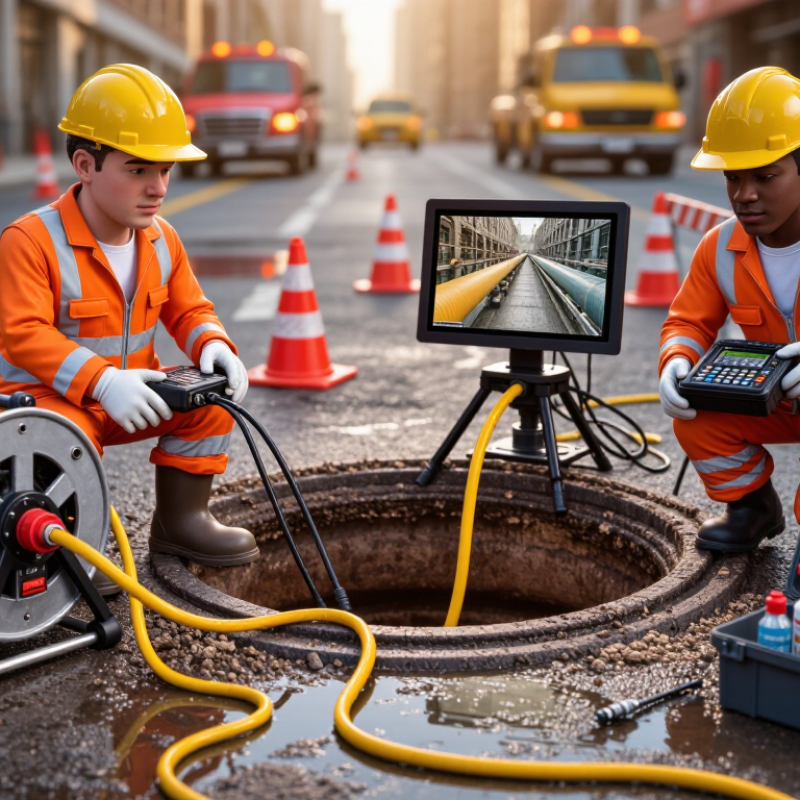
A sewer drain camera is a waterproof inspection tool that sends a small camera head through a pipe. Its live video helps plumbers and municipal crews find blockages, root intrusion, cracks, offset joints, and standing water without digging first. The camera may also include a distance counter and a locator sonde, helping crews estimate where a defect sits underground. Small details matter: a slow-moving image can make a joint look worse, while grease may hide a crack.
The U.S. Environmental Protection Agency’s 2022 Clean Watersheds Needs Survey estimates $630.1 billion in wastewater infrastructure needs over 20 years. That figure covers broad system needs, not just pipe inspections, but it shows why condition assessment matters. The American Society of Civil Engineers’ 2021 Report Card gave wastewater infrastructure a D+ grade. Neither report says a camera can fix a failing pipe. It helps document what is visible.
For home drains, a compact push camera can inspect branch lines and locate recurring trouble spots. Larger sewer mains may need longer cable, stronger lighting, and a self-leveling image. Operators should record footage and note distance, flow conditions, and suspected defects. A camera is useful, not infallible. Heavy water, mud, or a tight bend can obscure the view, and visual inspection alone cannot confirm every pipe’s structural strength.
Which Camera Specifications Matter for Your Inspection Needs
How to Choose the Best Sewer Drain Camera in 2026
Pipe diameter and access points should guide your camera choice. A compact camera head can pass through tight bends, while larger heads may provide brighter lighting and a clearer view in wider pipes. Check the head’s dimensions against the smallest pipe you inspect. Small is not always better.
Cable length matters, but so does push-cable stiffness. A long, flexible cable may struggle to travel through several bends or standing water. For typical residential lines, compare the usable cable length with the distance from the entry point to the suspected blockage. Ask whether the camera includes a locator sonde if you need to mark a defect’s position above ground. That feature can save unnecessary digging.
Look for adjustable LEDs, a durable waterproof camera head, and a display that remains readable in dim work areas. Recording can help you review cracks, root intrusion, or a shifted joint after the inspection. Resolution is useful, but it cannot compensate for a dirty lens or poor lighting. I would also consider battery life and whether footage transfers easily. It is easy to overvalue screen size; in a narrow basement, cable control may matter more. Check the small details before buying.
How Cable Length, Camera Head, and Lighting Affect Performance
A sewer drain camera is only useful when its cable, camera head, and lighting suit the pipe being inspected. Cable length should reach the target without leaving a large coil at the access point. Extra length can add weight and make steering harder, especially through tight bends. Measure the likely route, including vertical drops. A little margin helps, but more cable is not always better.
The camera head must fit the pipe while staying sturdy enough for repeated contact with debris and joints. A compact head can pass narrow sections, though its view may show less detail. Lighting matters just as much. In a wet, dark pipe, evenly spaced LEDs can reveal cracks and buildup; harsh glare on standing water can hide them. Adjust brightness when possible, and pause briefly before judging a suspicious mark. Reflections can fool you. That is easy to forget.
Tips:
- Match cable length to the longest expected run.
- Check head diameter against the smallest pipe.
- Test the lights on a wet, curved surface before inspection.
- Keep notes on unclear images; sometimes a second pass changes the interpretation.
What Recording, Locating, and Viewing Features to Compare
How to Choose the Best Sewer Drain Camera in 2026
What Recording, Locating, and Viewing Features to Compare
A useful sewer camera should make inspection details easy to capture and review. Check whether it records clear video and still images, and whether footage can be saved to removable storage. A timestamp helps match a clip to a specific job. In dim, wet pipes, adjustable lighting and a screen that remains readable outdoors matter more than impressive resolution alone. Look for controls you can operate while guiding the cable. Small buttons can be frustrating with gloves on. From field use, steady footage is often more helpful than extra features; I still find cable movement can make a good image jumpy.
For locating, check that the camera’s transmitter works with a compatible receiver. Confirm its frequency and understand that depth readings are estimates, especially near metal or other interference. Viewing features deserve equal attention: a bright, wide screen helps when sunlight washes out the display, while image rotation can make pipe orientation easier to interpret. Test these functions before relying on them in a tight crawlspace.
Tips: Record a short test clip, then play it back. Check focus, sound if needed, storage, and timestamp. Try the locator over a known point. A missed setting is easy to overlook, and I’ve learned not to assume the first setup is right.
How to Match a Sewer Drain Camera to Your Budget and Workload
How to Choose the Best Sewer Drain Camera in 2026
Start with frequency. A camera used twice monthly has different needs from one riding in a service van every day. For occasional inspections, prioritize a dependable push rod, clear image, and basic recording. Paying extra for advanced locating tools may not make sense if crews rarely trace pipe routes. Daily workloads justify tougher cable, a self-leveling camera head, built-in distance tracking, and a locator that helps pinpoint trouble beneath concrete. Useful features only earn their cost when workers use them.
Match the system to the pipes you actually inspect. A small-diameter residential line may call for a compact head, while larger mains can require a bigger camera and longer cable. EPA’s 2022 Clean Watersheds Needs Survey estimated $630.1 billion in U.S. wastewater infrastructure needs over 20 years. That scale points to sustained inspection demand, but it does not mean every contractor needs a premium system. Compare the camera’s service life, repair access, training time, and financing cost against expected inspections per week. Ask suppliers to demonstrate footage in a dark, wet pipe, not just a showroom. A spreadsheet can help, though repair downtime is easy to underestimate. I would revisit the budget after a season; actual call volume often surprises.
How to Choose the Best Sewer Drain Camera in 2026
Match your budget to your expected weekly inspection workload.
These are illustrative planning ranges, not market averages or guaranteed equipment capacities. Lower-cost systems may suit occasional, shorter inspections; frequent field work can justify a more durable push camera, longer cable, and serviceable components. Compare local prices, pipe-size compatibility, cable length, lighting, recording features, and warranty before buying.
