How to Choose the Best Spring Terminal Blocks for Your Needs?
When selecting Spring Terminal Blocks, it is crucial to understand your specific needs. These components play a vital role in electrical connections. Choosing the right type can impact functionality and safety.
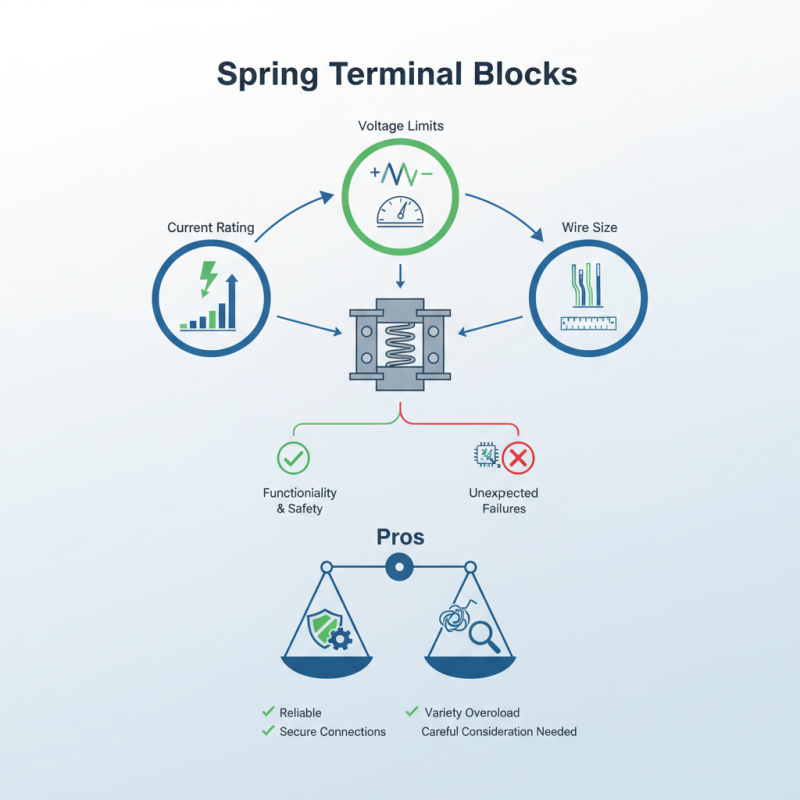
Spring Terminal Blocks are known for their reliability. They provide secure connections without needing tools for installation. This feature is beneficial for various applications, from industrial machinery to consumer electronics. However, the vast variety of options can be overwhelming. Understanding key specifications is essential before making a decision.
Consider the current rating, voltage limits, and wire size. Each factor influences performance. Take time to analyze how different types perform in real-world conditions. A small oversight can lead to unexpected failures. Weighing pros and cons helps in making a well-informed choice. With careful consideration, you can identify Spring Terminal Blocks that truly meet your requirements.
Understanding the Basics of Spring Terminal Blocks
Spring terminal blocks are essential components in electrical engineering. They ensure secure and efficient connections for various applications. Understanding their basics is crucial when selecting the right one for your needs.
Spring terminal blocks utilize a spring mechanism to secure wires. This design allows for faster installation and maintenance. A report by the International Electrotechnical Commission states that spring-loaded connectors can reduce assembly time by up to 30%. This efficiency can be a game changer for projects with tight deadlines. However, not every application may require this type of connection, so careful consideration is necessary.
When choosing spring terminal blocks, assess wire sizes and types. The right fit ensures optimal performance. It's important to consider the environment too. High humidity or extreme temperatures may affect the block's functionality.
**Tip:** Always review technical specifications thoroughly. They provide insight into the block’s voltage and current ratings.
Also, consider your future needs. Design specifications can evolve, making adaptability key. Investing wisely can save costs in the long run.
**Tip:** Always include a margin in your designs. This saves time and resources for future modifications.
Spring Terminal Blocks Selection Characteristics
This bar chart depicts the importance rating of various selection criteria for spring terminal blocks. Factors like ease of installation and wire range are considered most critical by users, influencing their purchasing decisions.
Identifying Your Specific Application Requirements
When selecting spring terminal blocks, understanding your specific application requirements is essential. Factors like voltage, current capacity, and environmental conditions can significantly affect your choice. For instance, if you’re dealing with high moisture environments, opt for blocks with robust insulation materials. Consider how often maintenance is required. Some designs offer easy access, which could save you time.
Next, evaluate the complexity of your wiring needs. Are you integrating multiple connections or a simple setup? More complex systems may require blocks with multiple terminals or additional features like LED indicators. Think about the mounting options too. Some blocks are designed for DIN rails, while others may require panel mounting. Reflect on your workspace layout to ensure compatibility.
Lastly, take into account future scalability. Choose blocks that can accommodate potential expansions. While it’s tempting to go for basic models, anticipating future needs can save costs later. Don’t hesitate to draw insights from projects that went wrong due to inadequate planning. It’s better to reflect on past experiences than rush into decisions that may lead to complications.
Evaluating Different Types of Spring Terminal Blocks
When evaluating different types of spring terminal blocks, several factors come into play. These components are essential for ensuring secure and reliable electrical connections. Spring terminal blocks offer various advantages, such as ease of installation and maintenance. With a push-in method, wire connections become straightforward and reduce the risk of errors.
Different types of spring terminal blocks exist, each suited for specific applications. Push-in blocks are ideal for general use, while those with screw terminals provide additional security for heavy-duty applications. Pay attention to the wire gauge and voltage ratings to ensure compatibility with your project. Often, it can be challenging to determine the right fit without thorough testing.
Furthermore, consider the environment where the terminal blocks will be installed. Temperature fluctuations and exposure to moisture can greatly affect performance. In industrial settings, choose blocks designed to withstand harsher conditions. Not all spring terminal blocks are created equal; some may fall short in critical situations. Conducting research and consulting with experts can help guide your decision.
Comparing Materials and Construction for Durability
When selecting spring terminal blocks, durability is essential. The material used directly impacts performance. Common choices include brass, copper, and thermoplastics. Each material has its strengths. Brass is resilient, resistant to corrosion, and offers excellent conductivity. Copper also excels in conductivity, aiding in energy efficiency. Thermoplastics provide insulation and protect against environmental factors.
Construction methods play a vital role, too. Processes like plating or coating can enhance durability. Plated terminals can resist wear and tear better. Yet, these coatings may wear off over time, leading to diminished performance. Additionally, the design of the terminal block impacts its longevity. A robust design can withstand mechanical stress and prevent failures.
Choosing the right terminal requires careful consideration. Not every material suits every environment. For example, humidity may weaken some materials, while others may corrode. Understanding the specific application can help in making a better choice. Evaluating your needs against these factors creates a clearer picture of what works best.
Recognizing Safety Standards and Certifications for Terminal Blocks
When selecting spring terminal blocks, safety standards and certifications play a crucial role. These guidelines ensure that terminal blocks meet industry requirements for performance and reliability. Look for certifications such as UL, CE, and IEC, which demonstrate compliance with essential safety standards.
Understanding safety certifications can get complex. Not all manufacturers may adhere to the same rigorous standards. It’s vital to choose products from companies that provide clear documentation of their compliance. Some suppliers might lack transparency, which can lead to confusion. Verify their claims through independent testing organizations to ensure true reliability.
Safety is not just a checkbox but a commitment. Poorly certified terminal blocks can lead to system failures or hazardous situations. Take the time to do your research. Ask questions and seek out knowledgeable sources. This diligence can make a significant difference in the safety and functionality of your electronic designs.
How to Choose the Best Spring Terminal Blocks for Your Needs?
| Feature | Description | Safety Standards | Typical Applications |
| Contact Resistance | Low contact resistance ensures efficient current transfer and less heat generation. | IEC 60947-7-1 | Power distribution, Industrial control panels |
| Temperature Range | Operational temperature from -40°C to +105°C ensures versatility in harsh environments. | UL 1059 | Automotive, HVAC, Renewable energy systems |
| Voltage Rating | Rated for up to 800V to support a wide range of applications. | DIN EN 61984 | Commercial and residential electrical systems |
| Connector Type | Available in various sizes and types (e.g., multi-level, push-in). | IEC 60352 | Telecommunications, Data centers |
| Certifications | Comply with international safety standard certifications for reliable performance. | CE, RoHS | Consumer electronics, Industrial applications |
