
How to Choose the Best Car Garage Lift in 2026
Choosing a Car Garage Lift in 2026 is less about buying the biggest machine and more about matching equipment to real work. A two-post lift can provide open access beneath a vehicle, while a four-post model may suit storage or routine service. Scissor lifts save space, though their platforms can limit access to certain components. These differences matter in a home garage. Measure ceiling height, bay width, floor thickness, and vehicle wheelbase before comparing prices. Small details count. Think about the vehicles you service today, while allowing room for realistic changes.
Capacity ratings deserve careful reading. A lift must handle actual vehicle weight, including accessories and load limits stated by its manufacturer. Check arm reach, locking positions, minimum height, and power requirements against the cars you own—not an idealized future project. Review installation instructions and independent safety certifications where available. Use a qualified installer when the site or wiring requires expertise. Never assume the concrete is “probably strong enough.” Measure twice.
Daily use matters, too. Consider how often the lift will run, whether you need wheels-free access, and how much room doors and tool carts require. Ask suppliers for clear warranty terms, parts availability, and maintenance schedules. Not just capacity. In 2026, connected controls and new features may look appealing, but simpler equipment can be a better fit. Product listings sometimes leave important limits unclear, so verify specifications with the manufacturer. The right lift should suit your space, feel stable, and make routine work safer—not merely look impressive. A careful choice takes time. That is not wasted effort.
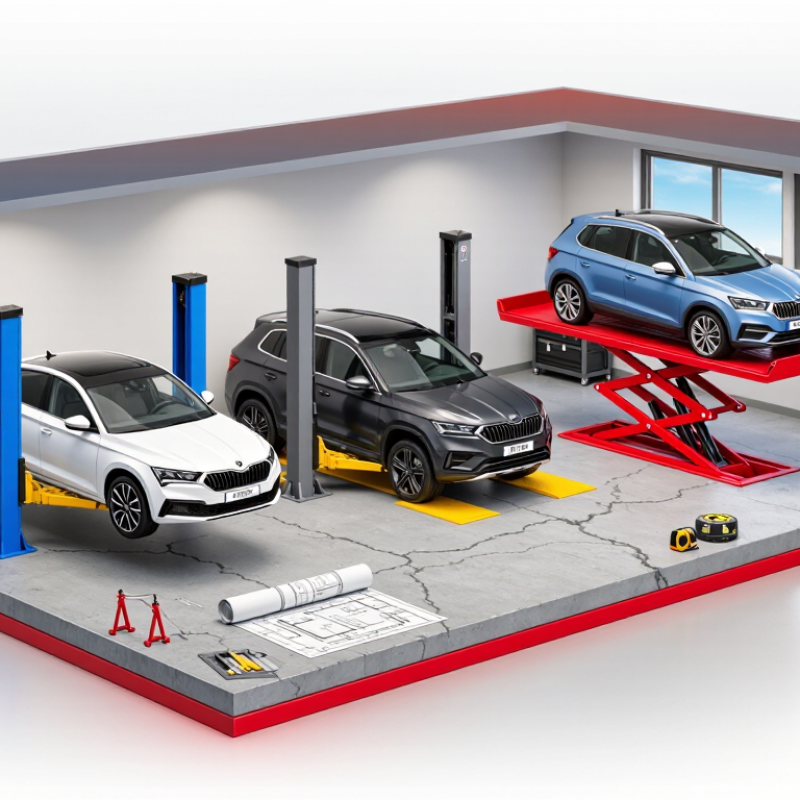
Table of Contents [Hide]
Define Your Garage Space, Vehicle Needs, and Lifting Goals
How to Choose the Best Car Garage Lift in 2026
Define Your Garage Space, Vehicle Needs, and Lifting Goals
Start with the garage, not the lift catalog. Measure ceiling height, clear floor width, door tracks, and the vehicle’s full height with its hood open. Check the floor condition and available power, too. The EPA’s 2024 Automotive Trends Report puts average new-vehicle weight at about 4,329 pounds for model year 2023. That is an average, not a capacity target. Your own vehicle’s manual and the lift manufacturer’s specifications matter more.
List the vehicles you plan to raise, including their weight, wheelbase, and lifting points. A long pickup may need different clearance and arm reach than a compact car. Decide whether your main goal is tire work, underbody repairs, or extra parking space; each changes the useful lift height and layout. Look for a lift evaluated to the applicable ANSI/ALI ALCTV standard. Fit is easy to overlook. A lift can meet its rating and still be wrong for your vehicle or garage.
Tips: Mark the lift footprint on the floor with tape. Open the garage door and vehicle doors, then check clearances again. Keep a little room for real-life clutter; it always seems to appear. Compare the measured vehicle weight with the lift rating, and follow the lift manual for setup and use.
How to Choose the Best Car Garage Lift in 2026 - Define Your Garage Space, Vehicle Needs, and Lifting Goals
| Lift Type | Typical Capacity | Space and Clearance to Check | Best Suited Vehicles | Common Lifting Goals | Key Trade-Offs | Before You Buy |
|---|---|---|---|---|---|---|
| Two-post lift | Commonly about 9,000–12,000 lb, depending on the model. | Needs room for two columns, swing-arm access, and vehicle doors. Many models need roughly 11–12 ft of ceiling height; verify the exact lift height and overhead clearance. | Cars, crossovers, and many light-duty trucks within the lift’s rated capacity and approved lifting-point range. | Wheel, brake, suspension, and underbody work; provides access beneath the vehicle. | Offers excellent under-vehicle access, but correct arm placement and a suitable floor are essential. It does not provide the same convenient storage platform as a four-post lift. | Check the vehicle’s lifting points, wheelbase range, arm reach, ceiling height, and the manufacturer’s slab and anchoring specifications. |
| Four-post lift | Commonly about 8,000–14,000 lb, with capacity varying by model. | Requires room for four posts and runways. Runways are often around 14–18 ft long; allow space for vehicle approach and confirm ceiling height for the raised vehicle. | Cars, sports cars, and many light trucks that fit the runway length and rated capacity. | Vehicle storage, oil changes, inspections, and work with compatible rolling jacks or accessories. | Stable runways make loading straightforward and can allow a second vehicle to be stored below when clearances permit. Runways can limit direct access to some wheels and underside areas. | Measure vehicle length, wheelbase, tire width, and garage approach space. Confirm whether the lift needs anchors and whether accessories are required for your work. |
| Scissor lift | Often about 6,000–10,000 lb; capacity and lifting height depend on design. | Compact models can suit tighter bays. Check platform length and width, lift height, closed height, and required access around the vehicle. | Cars and some crossovers or light trucks that fit the platform and specified lifting points. | Brakes, tires, suspension, and general service where a full-height lift is not practical. | Uses less permanent floor space than many full-height lifts, but the mechanism or platforms may restrict access to parts of the underside. | Compare lifting height and platform layout with the jobs you plan to do. Confirm the floor requirements and whether the unit is fixed, recessed, or portable. |
| Portable mid-rise lift | Often about 6,000–7,000 lb; check the individual unit’s rating. | Usually needs less ceiling height than a full-rise lift. Allow storage space for the lift when it is not in use and clear floor space for setup. | Many passenger cars and some light vehicles within the stated capacity and lifting-point range. | Wheel, brake, tire, and moderate underbody work in a shared or space-limited garage. | Can be moved or stored between jobs, but typically does not raise a vehicle as high as a full-height lift. | Check the vehicle’s ground clearance, lift-point compatibility, required floor surface, power needs, and the manufacturer’s setup instructions. |
Planning note: Capacities and dimensions are typical ranges, not universal specifications. Before purchase or installation, measure the garage and vehicles, then follow the selected lift manufacturer’s requirements for concrete strength and thickness, anchoring, electrical supply, clearances, and inspection. Have the installation and supporting floor assessed by qualified professionals when required.