How to Choose the Best Solar Tape for Your Needs?
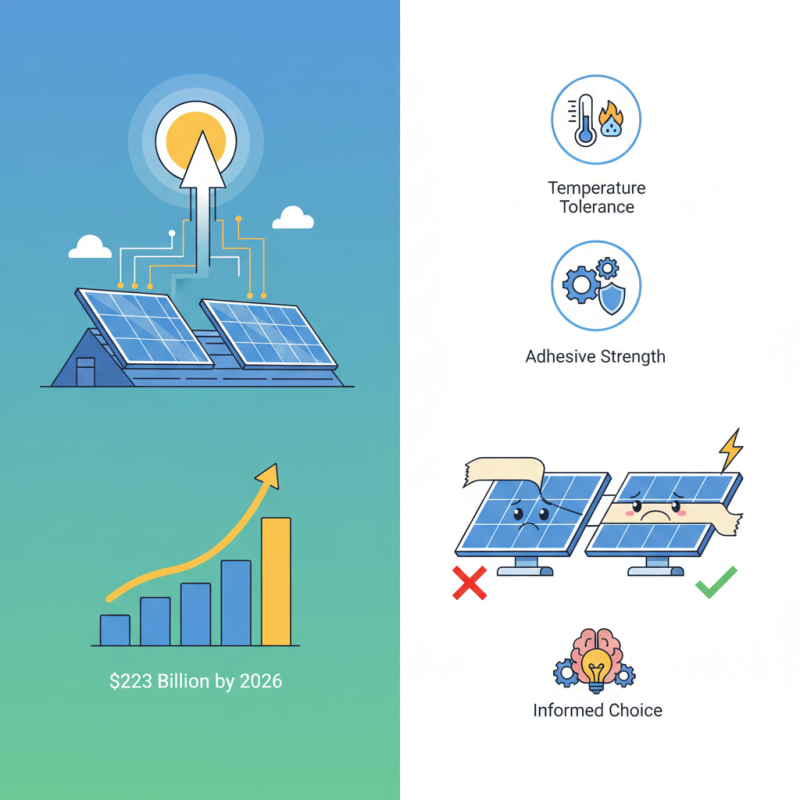
Choosing the right Solar Tape is crucial for efficient solar projects. With the global solar market projected to reach over $223 billion by 2026, the demand for quality materials is on the rise. Solar Tape plays a vital role in ensuring that solar panels are securely attached and optimized for maximum energy output.
Research indicates that improper installations can reduce efficiency by up to 20%. Therefore, selecting the best Solar Tape can significantly influence performance and longevity. Factors like temperature tolerance, adhesive strength, and UV resistance should guide your choice.
However, not all tapes are created equal. Some may not withstand extreme weather conditions, leading to early failures. As the solar industry evolves, staying informed about product specifications is essential. Making an informed choice now can save money and resources later. It’s time to reflect on your options and choose wisely.
Understanding Different Types of Solar Tape Available in the Market
When selecting solar tape, understanding the types available is crucial. Solar tape, often used for PV installations, comes in several varieties. Each type serves specific needs and applications.
One popular option is conductive solar tape. This tape allows for excellent electrical conductivity. Reports show that using high-quality conductive tape can improve the efficiency of solar panel connections by up to 5%. Another variant is insulating tape, which provides protection against moisture and temperature extremes. This is vital in outdoor settings. Some sources indicate that poor insulation can reduce a solar system's lifespan by up to 15%.
It's important to note that not all solar tapes are created equal. Some tapes may not perform well under extreme conditions. It's necessary to research user reviews and technical specifications. A study suggested that up to 25% of users experienced issues with durability. Choosing the right tape involves considering environmental factors, material quality, and specific project requirements.
Key Features to Consider When Choosing Solar Tape for Your Project
Choosing the right solar tape requires attention to specific features that affect performance. One notable factor is adhesion quality. According to industry reports, high-quality solar tapes exhibit a peel strength exceeding 20 N/inch. This ensures a long-lasting bond, vital for outdoor applications. Insufficient adhesion can lead to tape failure, affecting solar panel efficiency.
Another key feature is temperature resistance. Some tapes can withstand temperatures up to 100°C, which is essential under direct sunlight. Inadequate thermal stability may cause the tape to degrade, reducing its lifespan. Additionally, UV resistance is crucial. Tapes that break down under UV exposure will not provide enduring support for energetic solar projects.
It’s also important to consider flexibility. A tape that adapts well to different surfaces provides better contact. Rigid tapes might not conform well, risking air gaps and moisture infiltration. While selecting the best option, reflect on the specific needs of your project. Evaluate environmental factors and potential challenges. Making informed choices can significantly increase the effectiveness of your solar installations.
Evaluating the Adhesive Strength and Durability of Solar Tape
When choosing solar tape, adhesive strength and durability are crucial. Strong adhesive ensures the tape adheres well to surfaces, while durability impacts performance over time. According to industry research, tapes with a peel adhesion of at least 10 N/cm are often essential for effective application on solar panels.
Evaluate the environment where the tape will be used. High temperatures, humidity, and UV exposure can degrade the adhesive quality. A report from the Solar Energy Industries Association states that improper tape choice could reduce solar panel efficiency by up to 15% due to inadequate sealing. The best tapes resist these elements, offering longevity and reliability.
Tips: Look for tapes tested under harsh conditions. Consult manufacturers' data sheets for performance metrics. Additionally, consider a tape’s shear strength, which indicates how well it will hold under stress. Remember, not all tapes are equal; some may perform poorly in real-world applications despite promising specifications. Test samples whenever possible before making a large investment.
Assessing Temperature Resistance and Environmental Factors of Solar Tape
When selecting solar tape, assessing temperature resistance is crucial. Solar tape must endure extreme heat and cold. A product may work well in mild climates but fail in harsher conditions. Look for options that specify their operational temperature range. This ensures their effectiveness in different environments, including regions with high sun exposure.
Environmental factors also play a significant role. UV resistance is essential for tapes used outdoors. Poor-quality tapes can degrade quickly under strong sunlight. They may lose adhesion or become brittle. Testing tapes in real-world scenarios is vital. You may find that some tapes perform well initially but deteriorate over time. Evaluating long-term durability can guide your decision.
Consider your specific needs and usage scenarios. A tape suitable for a garden might not work in a rooftop application. Reflecting on factors like weather patterns and sunlight intensity can help clarify your choices. Not every product is perfect, and sometimes feedback reveals hidden flaws. It's necessary to learn from others' experiences in choosing solar tape.
Comparing Costs and Brands for the Best Value in Solar Tape
When selecting solar tape, understanding costs and brands is crucial. Prices can range significantly based on quality and features. High-quality tapes may be more expensive, but they often provide better adhesion and durability. It’s vital to consider your project scale. A small installation may not require high-end options, while larger setups may benefit from premium products.
Not all brands are created equal. Some are known for better performance in specific environments. Researching user reviews can offer insights into real-world applications. Check for warranty offerings, as reputable brands often back their products with guarantees. Balancing cost with reliability may reveal exciting options that meet your needs without overspending.
Recognizing potential trade-offs is essential. Cheaper tapes might save money upfront but could lead to issues later. Consider the longevity and the potential need for replacements. A poor choice can cause delays and additional costs. Aim to find a balance that meets your budget and performance expectations. With thoughtful research, you can find the best value in solar tape for your projects.
Comparing Solar Tape Prices by Features