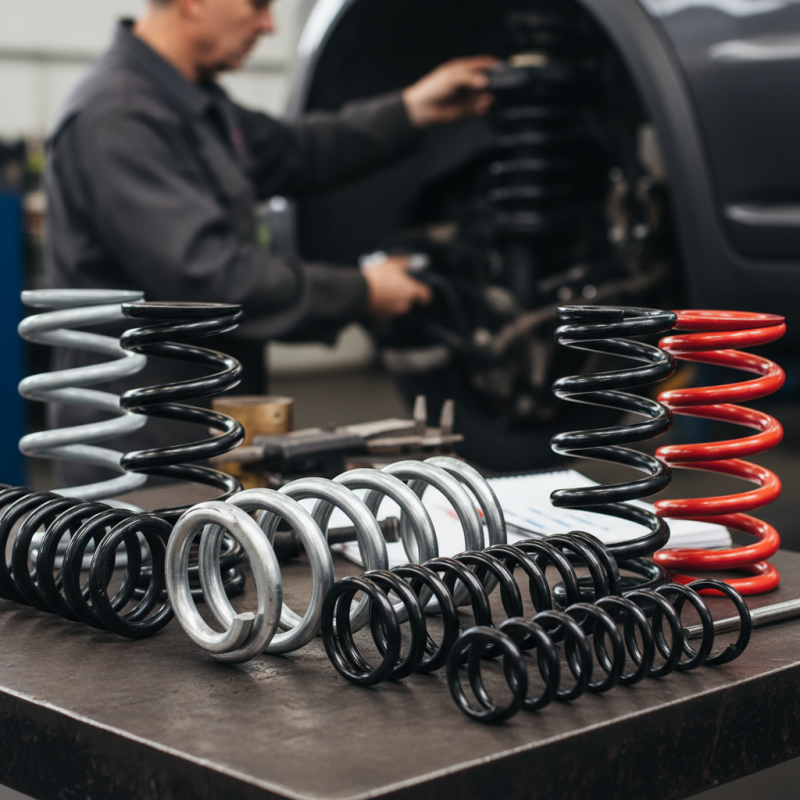
How to Choose the Right Coil Spring for Your Needs?
Choosing the right Coil Spring can be a daunting task. According to John Smith, a coil spring expert with over 20 years of experience, "Selecting the correct coil spring is crucial for performance and safety." Understanding the specific needs of your vehicle or machinery is vital.
Coil springs affect ride quality and load handling. They come in various sizes and specifications. For example, softer springs provide comfort, while stiffer springs support heavier loads. This difference can impact how a vehicle handles on the road.
It’s essential to consider not just the spring's dimensions, but also its material and spring rate. Researching and consulting professionals can lead to better decisions. Despite the extensive options, many still choose poorly, resulting in performance issues. Reflecting on your needs will guide you toward the right coil spring for your application.
Understanding the Basics of Coil Springs: Types and Functions
Coil springs play a crucial role in various mechanical systems. They store and release energy effectively. Understanding their types and functions can help you make an informed choice.
There are several types of coil springs. Compression springs are designed to compress under load. They expand when the load is removed. Tension springs work the opposite way. They stretch and exert force when pulled. Each type has its specific applications, such as automotive suspensions or industrial machinery.
Choosing the right coil spring is not always straightforward. Factors like load requirements and space constraints come into play. Choosing a spring that is too weak can lead to failure. Conversely, an overly strong spring may affect performance. Testing different options can reveal what works best for your application.
Factors to Consider When Selecting a Coil Spring for Your Project
Choosing the right coil spring for your project requires careful consideration of various factors. One critical aspect is the spring's load capacity. This relates directly to the weight the spring must support. For instance, a recent industry report highlights that incorrectly sized coil springs can result in structural failures in automotive and industrial applications, leading to costly repairs.
Another important factor is the spring’s material. Different materials provide various levels of strength and durability. According to research from the International Journal of Engineering, a spring made of high-carbon steel can withstand higher stresses compared to others. However, this also increases the risk of brittleness and fatigue over time.
Pay attention to the spring's application environment as well. Springs used in harsh conditions, such as extreme temperatures or corrosive settings, may require specialized coatings or materials. A 2020 study found that nearly 30% of coil spring failures in the field were due to environmental factors. Evaluating these elements will help ensure reliability and performance, reducing the likelihood of unexpected failures.
Calculating Load Requirements: How to Determine the Right Spring Rate
When selecting the right coil spring, understanding load requirements is crucial. The spring rate, measured in pounds per inch, directly impacts performance. To find the correct spring rate, assess the load your application will carry. Start by determining the total weight that the spring will support. This weight might fluctuate based on the operation conditions. For example, a vehicle may carry varying loads depending on cargo or passengers.
Next, calculate how much deflection you can tolerate. Too much deflection can lead to performance issues. To measure this, isolate the spring from the system. Apply the load and record the amount of deflection observed. The relationship between load and deflection helps in deriving the spring rate. If you're unsure about your calculations, consult with an expert. Their experienced insight can clarify any uncertainties.
It is essential to account for the spring’s working environment. Factors like temperature and moisture can impact material properties. Testing springs under real conditions may reveal weaknesses. Pay attention to these details, as they could affect effectiveness and safety. Regular reflection on these aspects will improve your decision-making process.
How to Choose the Right Coil Spring for Your Needs? - Calculating Load Requirements: How to Determine the Right Spring Rate
| Spring Type | Material | Free Length (inches) | Spring Rate (lb/in) | Load Capacity (lbs) | Application |
| Compression | Steel | 12 | 200 | 400 | Automotive |
| Extension | Carbon Steel | 10 | 150 | 300 | Industrial |
| Torsion | Alloy Steel | 14 | 175 | 350 | Agricultural |
| Constant Rate | Stainless Steel | 8 | 180 | 360 | Medical Equipment |
Material Choices for Coil Springs: Pros and Cons of Common Options
When selecting a coil spring, understanding the material is essential. Common materials include steel, stainless steel, and composite materials. Each has unique benefits and drawbacks. Steel is often favored for its strength and durability. However, it is prone to rust without proper treatment. This can lead to premature failure in harsh environments.
Stainless steel offers better corrosion resistance. It is ideal for outdoor or marine applications. However, it is typically more expensive than regular steel. Not all stainless steel grades are equally suited for every application. It's crucial to choose a grade that matches your specific needs.
Composite materials, on the other hand, are gaining popularity. They can provide excellent performance with less weight. Yet, they might not withstand high loads as effectively as metal options. This variability in performance raises questions on their long-term reliability. Evaluating the specific use case becomes vital when considering composites. Each material has its place, but a one-size-fits-all approach rarely works.
Installation Tips and Maintenance for Optimal Coil Spring Performance
Proper installation and maintenance of coil springs are crucial for achieving optimal performance. According to industry reports, about 30% of coil spring failures result from improper installation practices. Begin by ensuring that the vehicle is properly supported when replacing coil springs. Use jack stands and never solely rely on a hydraulic jack. Always confirm that the springs are installed in the correct orientation, as reversing them can lead to performance issues and safety hazards.
Regular maintenance also plays a vital role in extending the life of coil springs. Inspect them for signs of wear, such as cracking or deformity, at least twice a year. It’s recommended to clean the springs and surrounding components periodically. A study by the Automotive Engineering Society indicated that lubricating the coil spring ends can reduce friction and prolong their lifespan.
Proper torque specifications during installation are essential too; under-tightening or over-tightening can lead to premature failure. Remember, a small oversight in installation or maintenance can have significant consequences on a vehicle's handling and safety.