How to Choose the Right Pallet Box in 2026?
Choosing the right Pallet Box in 2026 is not simply a matter of comparing prices. It requires a clear understanding of your products, handling equipment, storage space, and shipping conditions. A box that protects fresh produce may not suit automotive parts or sensitive electronics. Product weight, moisture exposure, stacking height, and cleaning requirements all influence the final choice.
In real warehouse operations, small details often decide performance. Check whether forklift pockets fit your equipment. Measure aisle widths before selecting oversized containers. A reinforced plastic Pallet Box may handle repeated impacts, while a lighter model could reduce transport costs. Ventilated walls can improve airflow, but they may offer less protection from dust. These trade-offs deserve careful attention.
There is no perfect container.
This guide compares material types, load capacities, dimensions, lids, hygiene features, and sustainability considerations. It also explains how returnable packaging can affect labor, damage rates, and long-term operating costs. Reliable manufacturers should provide tested specifications, maintenance guidance, and transparent load ratings. Still, published figures may not reflect your exact warehouse conditions. That is why practical trials remain valuable before a large purchase.
Expect a few unexpected findings. The cheapest Pallet Box may become expensive after frequent repairs. The strongest model may waste space on standard pallets. Our recommendations focus on measurable needs rather than attractive claims, while recognizing that every supply chain has limitations. By reviewing each decision carefully, buyers can choose a safer, more efficient, and more economical solution for 2026.
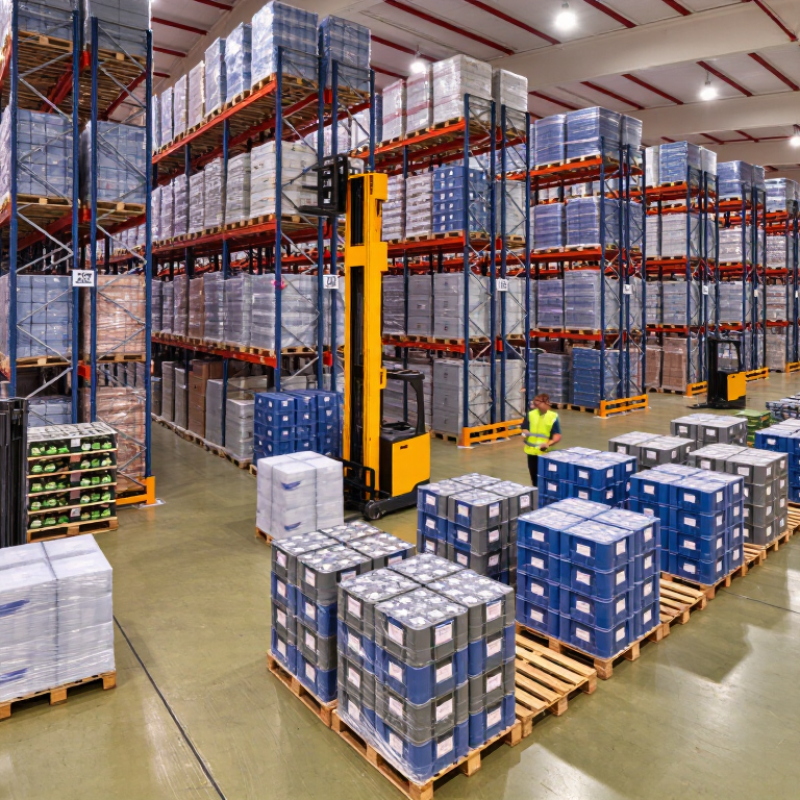
Define the Load: Static, Dynamic, and Racking Ratings in Kilograms
Choosing a pallet box starts with the load, not the box price. Static rating means the load the box can hold while stationary on a level floor. Dynamic rating covers movement by forklift, pallet truck, or conveyor. Racking rating is different again. It describes supported storage between rack beams, often with a smaller safety margin.
The 2024 MHI Annual Industry Report identified labor shortages as a top challenge for 43% of surveyed supply-chain professionals. That pressure makes fast handling common, but speed exposes weak containers. A 600-kilogram static rating may fail during a sharp forklift turn. It may also fail when weight shifts toward one corner. Measure the real load, including moisture, packaging, and uneven distribution. Then check the test method, support spacing, temperature range, and expected service life. ISO 8611 testing principles can help compare pallet performance, but laboratory results cannot replace an on-site risk review.
Use the lowest applicable rating as your working limit. Add a documented safety factor. Do not confuse stacking strength with racking strength. In racking, beam spacing and fork-entry design matter greatly. A box rated for 800 kilograms on the floor may hold far less between beams. I have seen clean calculation sheets overlook damaged corners and flexible floors. That is an uncomfortable weakness. Re-test after design changes, because recycled content, folding features, and cold storage can alter performance. Ask for load-test records in kilograms, not vague claims such as “heavy duty.”
Match Box Dimensions to ISO 6780 Pallet Footprints and Warehouse Aisles
Choosing a pallet box in 2026 starts with the pallet footprint, not the box volume.
ISO 6780 identifies common footprints, including 1200 × 1000 mm and 1200 × 800 mm. Measure the pallet first. Then allow clearance for fork entry, wrapping, and damaged edges. A box that fits tightly on paper may jam during a busy shift.
Warehouse aisles also shape the decision. Record the turning radius of the actual forklift, pallet truck, or automated vehicle. Do not trust a generic aisle chart. A 1200 × 1000 mm load can need more operating space than expected, especially near rack corners.
MHI’s 2024 Annual Industry Report found that 55% of surveyed supply-chain professionals expected increased technology investment over the next two years. That trend makes machine-readable dimensions and consistent footprints more valuable.
Still, automation cannot correct a poorly measured box.
Keep the load below the pallet edge. Shorter internal dimensions may protect products, but they can waste storage height. Taller boxes may improve cube use and reduce handling trips. They can also block visibility and create unstable stacks.
I have seen teams optimize volume, then lose aisle capacity. That mistake is easy to repeat. Test one filled box in a real aisle, with the intended equipment, before ordering hundreds.
Record the box length, width, height, gross weight, nesting ratio, and clearance at every turning point. Statistics help, but the warehouse floor remains the final test.
Compare HDPE, PP, Corrugated, and Steel by Weight, Durability, and Cost
How to Choose the Right Pallet Box in 2026?
Compare HDPE, PP, Corrugated, and Steel by Weight, Durability, and Cost
Choosing a pallet box starts with the load, not the material. Weight affects forklift energy, shipping fees, and worker handling. HDPE boxes are tough, moisture-resistant, and suitable for repeated warehouse use. PP boxes are often lighter and more flexible. They can reduce handling strain, but excessive bending may shorten their service life. Both plastics need accurate load ratings and stable stacking conditions.
Corrugated boxes usually have the lowest purchase cost. They are light, easy to print, and practical for one-way shipments. However, humidity, sharp edges, and rough floors can damage them quickly. Steel boxes provide the highest resistance to impact, heat, and heavy loads. They are also the heaviest option, which increases transport costs and demands suitable handling equipment. Steel may be excessive for clean, short-distance distribution.
The difficult part is comparing cost per trip. A cheap box is not economical if it fails after two uses. A reusable plastic box may cost more initially, yet perform better across many cycles. In one purchasing review, the first estimate ignored return freight. That mistake changed the preferred material. Measure actual usage, stacking height, cleaning needs, and damage rates. Test a sample under real conditions before making a large order. No material wins every application.
Calculate Volume Efficiency, Nesting Ratios, and Return-Trip Savings
How to Choose the Right Pallet Box in 2026?
Pallet-box selection should begin with usable cubic capacity, not exterior appearance. Measure internal length, width, and height, then divide by the external footprint volume. A box measuring 1,100 × 900 × 750 millimeters inside and 1,200 × 1,000 × 950 millimeters outside delivers about 65% volume efficiency. That figure looks acceptable, but lost space around irregular products can reduce it sharply. Measure actual loads.
Nesting performance matters during empty returns. Define the nesting ratio as separated height divided by nested height. If five empty boxes occupy 1.5 meters instead of 4.5 meters, the ratio is 3:1, with roughly 67% vertical-space reduction. Eurostat’s 2024 road-freight statistics show road transport carried about 77% of EU inland freight tonne-kilometres in 2022. Small cube improvements therefore affect many journeys. A 10% space reduction may allow one extra return stack, depending on trailer height and weight limits.
Calculate return-trip savings with real freight invoices. Compare the empty-return cost against the cost of collecting, cleaning, folding, and storing reusable boxes. The 2023 World Bank Logistics Performance Index also emphasizes reliability and shipment timeliness, so a cheaper container is not automatically better. Test three loaded cycles and one empty return. Record damage, loading minutes, and actual stack height. My first calculation is often too optimistic. Product protrusion, damaged lids, and awkward forklift access usually expose it.
How to Choose the Right Pallet Box in 2026?
Compare volume efficiency, nesting ratios, and return-trip savings using a standard 1,200 × 800 mm pallet footprint.
Volume efficiency is calculated as usable internal volume divided by external box volume. Return-trip cube reduction compares the collapsed or nested height with the 1,000 mm operating height. A higher nesting ratio and greater return-trip reduction generally lower reverse-logistics space requirements.
Calculations use the dimensions shown below as standardized engineering examples. Actual performance depends on wall thickness, folding design, load limits, and stacking conditions.
| Box design | External dimensions | Internal dimensions | Collapsed height |
| Fixed-Wall Box | 1,200 × 800 × 1,000 mm | 1,160 × 760 × 960 mm | 1,000 mm |
| Foldable Box | 1,200 × 800 × 1,000 mm | 1,140 × 740 × 940 mm | 250 mm |
| Collapsible Box | 1,200 × 800 × 1,000 mm | 1,140 × 740 × 940 mm | 200 mm |
