How to Choose the Right Tractor Hydraulic Ram in 2026?
Choosing the right Tractor Hydraulic Ram in 2026 starts with the job it must perform. A loader lift, steering repair, and three-point hitch can demand very different cylinder sizes and mounting arrangements. Match the ram’s bore, stroke, and working pressure to the tractor’s specifications and the task. More force is not always better. An oversized cylinder may strain brackets, hoses, or the hydraulic system.
Measure the existing unit carefully. Check its fully retracted and extended lengths, pin diameters, port locations, and mounting style. A few millimeters can matter. Also consider the load’s weight, how it moves, and the conditions around the tractor. Dust, moisture, temperature changes, and frequent cycles can affect seal life and performance. Select compatible hydraulic fluid and fittings, and use the tractor manual or manufacturer’s technical data to confirm pressure limits. If specifications are unclear, ask a qualified equipment professional before installation.
Price and appearance can be tempting shortcuts. They are not enough. A low-cost ram that fits the pins may still have the wrong stroke or pressure rating. And a replacement that looks identical might differ internally. That is easy to miss. This guide outlines the key checks, common sizing mistakes, material and seal considerations, and questions to ask suppliers. Some tractors have modifications or worn mounts, so measurements may not tell the whole story. Verify the setup before buying, and never rely on guesswork when hydraulic loads are involved.
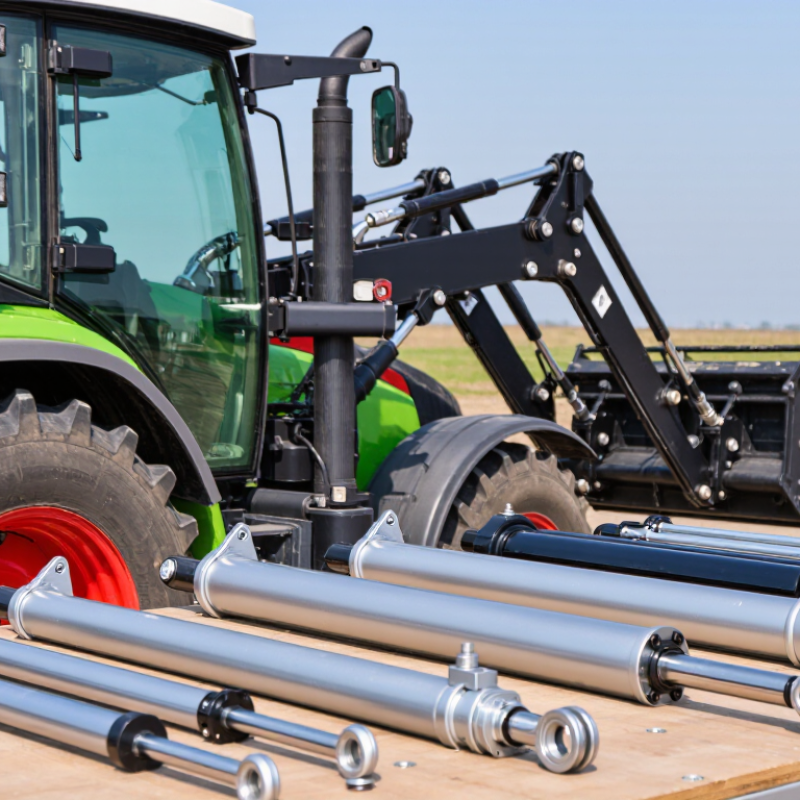
Identify the Tractor Task and Required Hydraulic Force
Before choosing a tractor hydraulic ram, define the task: lifting, pushing, tilting, or steering. A loader attachment may need a short, forceful stroke, while a dump trailer may need more travel. Record the load’s weight, where it acts, and the ram’s angle throughout movement. Pivot geometry matters. A ram pushing close to a hinge may need much more force than the load’s weight suggests. Allow for friction and resistance, but treat rough estimates as a starting point, not a specification.
Check the tractor’s hydraulic pressure and flow in its documentation, then compare them with the cylinder’s rated limits. Hydraulic force depends mainly on pressure and piston area. A wider bore can increase force, but it also requires more oil. At the same pressure, a larger cylinder may move more slowly if flow remains unchanged. Measure the required stroke between mounting pins, leaving clearance at both ends. Measure twice.
Check mount strength, hose routing, and side loads; standard cylinders are not built to withstand every sideways force. Do not select a ram by tractor horsepower alone. If measurements or pressure figures are uncertain, have a qualified hydraulic technician verify them.
Choose the Ram Type and Mounting Configuration
Choosing a tractor hydraulic ram starts with its job, not its appearance. A loader lift, steering linkage, and top link face different loads and travel through different arcs. Match the ram’s action to the tractor’s hydraulic circuit. A single-acting ram returns through gravity or the implement’s weight. A double-acting ram is powered in both directions. Check the tractor’s service information before choosing.
Mounting geometry matters just as much as ram type. Measure pin-to-pin length with the implement fully raised and lowered. Compare those measurements with the ram’s closed length and stroke. Check pin diameter, mount width, and clearance around hoses and nearby parts. Keep the rod aligned with the load; side pressure can accelerate wear. Measure twice. It is easy to miss a small offset when the implement is parked on uneven ground.
Choose mounting points that preserve the implement’s intended movement and avoid contact at either end of travel. A ram that fits the pins may still have the wrong stroke or push at an awkward angle. Confirm the rated pressure and load capacity against reliable equipment specifications, not appearance alone. If measurements conflict with the service data, pause and verify them. Guessing can be tempting, but fit is not proof of suitability.
Match Bore, Stroke, and Operating Pressure
When choosing a tractor hydraulic ram, match its bore to the force your implement needs. A larger bore creates more force at the same pressure, but it also needs more oil to extend. Check the tractor’s rated hydraulic pressure and the cylinder’s working-pressure rating; never assume they match. Small detail. On the rod side, the smaller effective area usually means less force during retraction.
Choose stroke from the movement the implement actually needs, not from a guess. Measure between the mounting pins with the linkage fully retracted and fully extended. Allow for the ram’s closed length, pin clearance, and the implement’s travel limits. The cylinder should not hit its internal stop before the linkage reaches its own stop. That mistake is easy to miss on paper.
Operating pressure matters as much as bore and stroke. A cylinder rated below the tractor’s system pressure may be damaged, even if it fits perfectly. Check the service information or have a qualified hydraulic technician verify pressure with a gauge. Also confirm that hoses, fittings, and mounts suit the same operating conditions. A slightly larger ram can seem like a simple upgrade, but it may move slowly or strain the mounting points. Recheck the geometry under load; measurements alone do not tell the whole story.
Verify Tractor Compatibility and Hydraulic Connections
Before selecting a tractor hydraulic ram, confirm the tractor’s model and hydraulic specifications. Check the mounting pin diameter, pin spacing, and available stroke. Measure the ram fully retracted and extended, then compare those lengths with the tractor’s linkage or implement. A ram may fit the pins but still bind when the hitch moves. Small measurements matter.
Next, identify whether the system needs a single-acting or double-acting cylinder. Check the tractor’s hydraulic outlets, coupler type, thread size, and pressure rating against the ram and hose specifications. Never assume two fittings match because they look similar. Keep connections clean, and relieve hydraulic pressure before disconnecting hoses. Route hoses through the full range of movement; they should not stretch, pinch, or rub against sharp edges.
Test carefully. Watch the ram move slowly and listen for unusual noise or uneven travel. Stop if a hose bulges, a connection leaks, or the cylinder reaches its limit too early. A tidy fit in the workshop can still fail on uneven ground. It is tempting to rely on a quick visual check, but I’d measure twice; even then, linkage geometry can be easy to misjudge. Verify uncertain dimensions in the tractor manual or with a qualified hydraulic technician.
How to Choose the Right Tractor Hydraulic Ram in 2026? — Verify Tractor Compatibility and Hydraulic Connections
This chart shows theoretical extension force at a reference pressure of 2,000 psi, calculated as pressure × piston area. It is not a recommendation for your tractor: check the tractor’s rated hydraulic pressure and flow, cylinder stroke and mounting, and coupler type before choosing a ram. Actual force may be lower; retracting force is lower than extension force because of the piston rod.
Assess Materials, Seals, Safety, and Maintenance Needs
How to Choose the Right Tractor Hydraulic Ram in 2026?
A tractor hydraulic ram must suit the machine’s pressure, mounting points, and working load. Dimensions alone are not enough. Check the equipment manual before comparing options, and confirm the ram’s rated pressure matches the hydraulic system. A mismatch can cause poor performance or damage. That detail matters.
Look closely at the barrel, rod, and welds. A corrosion-resistant rod helps when equipment works outdoors or gets washed often. The barrel should show no dents, deep scratches, or signs of leakage. Ask what materials and surface treatments are used; vague descriptions deserve follow-up. A clean exterior does not prove the internals are sound. It is easy to overlook that.
Seals need to tolerate the hydraulic fluid and temperatures your tractor actually encounters. In cold weather, stiff seals may respond slowly; heat and dirty fluid can shorten service life. Check the seal type and whether replacement parts are available. For safety, inspect hoses and connections, stay within rated loads, and support raised equipment mechanically before working near it. Never rely on hydraulic pressure alone. Maintenance is simple, but consistency matters: keep the rod clean, check for leaks, and change fluid and filters on the schedule in the manual. I would still recheck fit after installation; assumptions can be wrong.
