How to Choose the Right Mobile Excavator?
Choosing the right Mobile Excavator starts with the work it must do, not its brochure. A machine lifting drainage pipes on a narrow street faces different demands from one grading a roadside verge. Travel speed, lifting capacity, reach, and ground pressure all matter. So do transport limits and the space available for stabilizers. Small details can become expensive.
Industry data offers useful context, but it needs careful interpretation. McKinsey Global Institute’s 2017 report, Reinventing Construction, estimated that global construction labor productivity grew about 1% annually over two decades, compared with 2.8% for the wider economy and 3.6% for manufacturing. Those figures do not prove that one excavator type improves productivity. They do underline why equipment fit, reduced idle time, and efficient job planning deserve attention. The report is a broad sector analysis, not a machine-buying guide.
Start with the actual job list. Note trench depth, typical lift weight, ground conditions, and how often the excavator must travel between sites. Check operating weight, hydraulic flow, tire configuration, cab visibility, and attachment compatibility against those needs. Ask dealers for working demonstrations and service-response details. A quick turn on paper can feel different on wet pavement. It happens.
This guide explains how to compare specifications, ownership costs, and site requirements without treating the largest machine as the automatic choice. Some trade-offs remain; a compact model may access tight sites, yet lack reach for a particular lift. Confirm the numbers against your own work records before deciding.
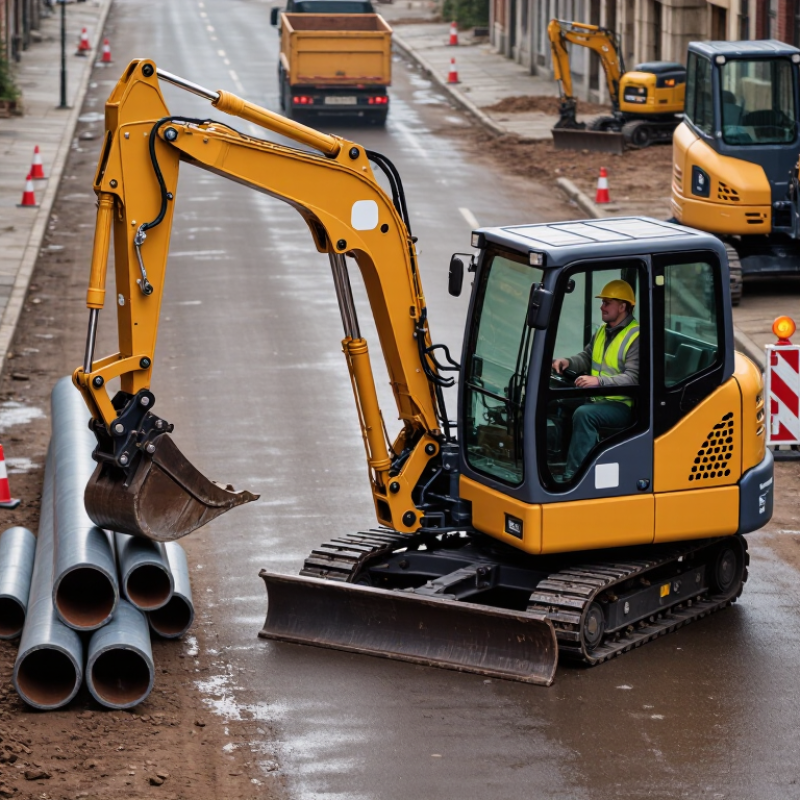
Define the Job Requirements and Expected Workload
Define the job before comparing machines. Record trench depth, digging reach, lift weights, ground conditions, and daily travel distance. Estimate productive hours per shift, not just scheduled hours. A 500-metre utility trench in wet clay demands different reach, traction, and bucket capacity than scattered landscaping work. Small details matter.
McKinsey Global Institute’s 2017 report, Reinventing Construction, estimated construction labor productivity grew about 1% annually over two decades, compared with 2.8% across the global economy. This is not an excavator performance test, but it shows why workflow deserves careful attention. Count truck arrivals, attachment changes, and time spent repositioning. A neat spreadsheet can still be wrong.
Then size the machine around the busiest realistic day, not an exceptional peak. Check whether its operating weight suits narrow streets, soft verges, and the route between sites. Match hydraulic flow to planned attachments, and confirm the cab offers clear sightlines for close work. I would also ask operators to review the estimates; their cycle times may differ from the planner’s. That discrepancy is useful. It may reveal assumptions worth testing before purchase.
Match Excavator Size, Reach, and Digging Capacity to the Task
Choose a mobile excavator by measuring the work, not by guessing from its class. Record the deepest trench, farthest spoil pile, and narrowest access point. Then compare those measurements with the machine’s digging depth, reach, and transport dimensions. A longer reach can reduce repositioning, but it may make close-in digging less comfortable. Match bucket width to trench dimensions and soil conditions; an oversized bucket can slow careful work.
Check digging force and lifting capacity separately. ISO 10567:2007 limits rated hydraulic excavator lift capacity to 75% of tipping load or 87% of hydraulic capacity, whichever is lower. These figures concern lifting, not bucket breakout force. Compare the load chart at the actual working radius, especially when placing pipe or lifting material over a trench. Also check ground pressure on soft or recently filled soil. Exact needs vary; site conditions can defeat a neat specification sheet.
Tips: Measure the task before comparing machines. Allow a little extra reach, but avoid buying capacity you rarely use. Verify depth and lift figures in the operator’s manual. One detail is easy to miss: attachments can change machine balance and working performance.
How to Choose the Right Mobile Excavator? — Match Excavator Size, Reach, and Digging Capacity to the Task | Typical Size Class | Operating Weight | Typical Bucket Capacity | Typical Maximum Digging Depth | Typical Maximum Reach at Ground Level | Tasks It Often Suits |
| Compact | 5–7 tonnes | 0.15–0.25 m³ | 3.2–3.8 m | 5.5–6.5 m | Utility repairs, landscaping, and work in confined urban areas where transport size and maneuverability matter. |
| Small | 8–10 tonnes | 0.25–0.40 m³ | 4.0–4.5 m | 6.5–7.5 m | Roadside drainage, shallow service trenches, and general site work with limited access or ground-space requirements. |
| Medium | 12–14 tonnes | 0.40–0.60 m³ | 4.5–5.5 m | 7.5–8.5 m | Routine road and utility work, loading small-to-medium trucks, and excavation that needs a balance of reach and mobility. |
| Large | 15–18 tonnes | 0.60–0.80 m³ | 5.5–6.5 m | 8.5–9.5 m | Deeper drainage, larger construction sites, and frequent loading where greater bucket capacity can improve productivity. |
| Heavy | 20–24 tonnes | 0.80–1.20 m³ | 6.5–7.5 m | 9.5–11.0 m | High-volume earthmoving, larger infrastructure projects, and demanding loading tasks with adequate working space. |
| Figures are typical planning ranges, not specifications for a particular machine. Actual digging depth, reach, bucket capacity, and stability vary with boom and dipper configuration, bucket choice, tires, stabilizers, and job conditions. Check the machine’s specification sheet and confirm that its rated lifting capacity suits the planned lift. |
Assess Site Access, Terrain, and Travel Requirements
Before selecting a mobile excavator, measure the actual route, not just the site entrance. Check gate width, overhead cables, turning space, and any narrow approach beside parked vehicles. A machine that fits through the gate may still struggle to turn on soft ground. Small details matter.
Terrain changes the choice. Inspect slopes, drainage, loose fill, and ground that could soften after rain. Wheeled excavators can travel efficiently on firm surfaces, but muddy ground may call for different tires, attachments, or another machine type. CPWR’s Construction Chart Book reports 804 construction-worker deaths from struck-by incidents between 2011 and 2015, representing 17% of construction fatalities. That figure is not excavator-specific, but it reinforces the need to plan clear travel paths and keep people separated from moving equipment. A drawing can miss a blind corner.
Estimate travel distance and frequency, too. Repeated moves between work areas can affect tire wear, fuel use, and daily productivity; long public-road trips may require separate transport planning. The U.S. Bureau of Labor Statistics recorded a fatal injury rate of 12.9 per 100,000 full-time-equivalent workers in construction and extraction occupations in 2023. This broad category is not a machine-risk rating, but it is a reminder to assess the whole work setup, not just digging performance. I would recheck the route after rain. Conditions change. (CPWR, The Construction Chart Book, 6th ed.; BLS, Census of Fatal Occupational Injuries, 2023)
Compare Attachments, Power Options, and Operating Costs
Choose attachments around the tasks you repeat, not the occasional job you hope to win. A grading bucket can save time on finish work, while a hydraulic breaker needs suitable oil flow and pressure. Check coupler compatibility, attachment weight, and the excavator’s lift chart before buying. Fit matters. A heavy tool can reduce reach and stability, even when it connects correctly. I would price the attachment package with the machine, since extra hoses and adapters can quietly add cost.
Power options should match the workday. Diesel may suit long shifts far from charging access, but fuel use and exhaust controls affect running costs. Battery-electric models can be quieter on indoor or noise-sensitive sites, yet charging time, available power, and daily runtime need careful checking. Ask for consumption figures under a comparable duty cycle, not just a best-case estimate. Real jobs vary.
Operating cost includes more than fuel or electricity. Count tires, scheduled servicing, hydraulic wear, transport between sites, and time lost during attachment changes. Small costs accumulate. A simple spreadsheet can compare expected hours, energy use, and maintenance across several years. Still, estimates are imperfect: muddy ground, idle time, and operator habits can change the result. Leave room in the budget for that uncertainty.
Check Safety Features, Service Support, and Machine Specifications
A mobile excavator should fit the worksite, not just the budget. Check cab protection, seat belts, clear sightlines, and camera coverage around the machine. Test the horn, travel alarm, lights, and emergency controls before purchase. Walk around the unit, too. Loose steps or hard-to-reach handholds can become daily hazards, especially in wet weather.
Service support matters when a machine is working far from a workshop. Ask how quickly technicians can arrive and whether common filters, hoses, and wear parts are stocked nearby. Review maintenance records for repeated hydraulic leaks, tire damage, or unexplained downtime. A tidy cab is reassuring, but it proves little on its own. I’d want to inspect the machine under load; a short yard demonstration can miss problems.
Tips: Match operating weight, transport width, digging depth, and reach to your actual jobs. Check lift capacity at the working radius, not only the maximum figure in a brochure. Confirm tire type and stabilizer setup suit the ground. Bring a tape measure to compare transport dimensions with your trailer and access routes. Specs can look perfect on paper. Site conditions may disagree.
How to Choose the Right Mobile Excavator?
Compare safety features, service support, and machine specifications before making a decision.
The percentages are a suggested buyer-defined evaluation framework, not industry statistics. Check safety equipment and visibility, confirm local parts and service availability, and match operating weight, reach, lifting capacity, and transport requirements to your jobs.
