
The global mattress industry is becoming more technical, automated, and quality-driven. Grand View Research estimates that the global mattress market reached approximately USD 57 billion in 2023. Its report also projects continued growth through 2030, supported by urbanization, replacement demand, and stronger consumer interest in sleep quality. These changes create new expectations for every Mattress Quilting Machine used in modern production lines.
A quilting machine affects more than surface appearance. It controls stitch consistency, panel alignment, fabric tension, and production speed. Small defects can become visible across thousands of finished mattresses. That is why manufacturers increasingly compare servo systems, needle layouts, programmable patterns, foam compatibility, and after-sales support. ISPA industry data also shows the continuing importance of bedding production within the broader sleep-products sector. The numbers are useful, but they do not tell the whole story.
Machine-specific market statistics remain limited. Many public reports combine quilting equipment with wider textile or industrial sewing categories. This makes supplier comparison less straightforward. A reliable evaluation therefore needs both data and factory-level experience. Look closely at sample stitching, operator controls, maintenance access, and energy consumption. Not every impressive specification improves daily output.
This guide examines leading manufacturers worldwide through practical and technical criteria. It considers engineering capability, customization, delivery support, training, and documented customer experience. Reports from Grand View Research, ISPA, and textile-equipment analysts provide market context, while manufacturer evidence supports closer comparisons. Readers should still verify current certifications, warranty terms, and local service coverage before purchasing. Machines operate under real production pressure. That is where reputations are tested.
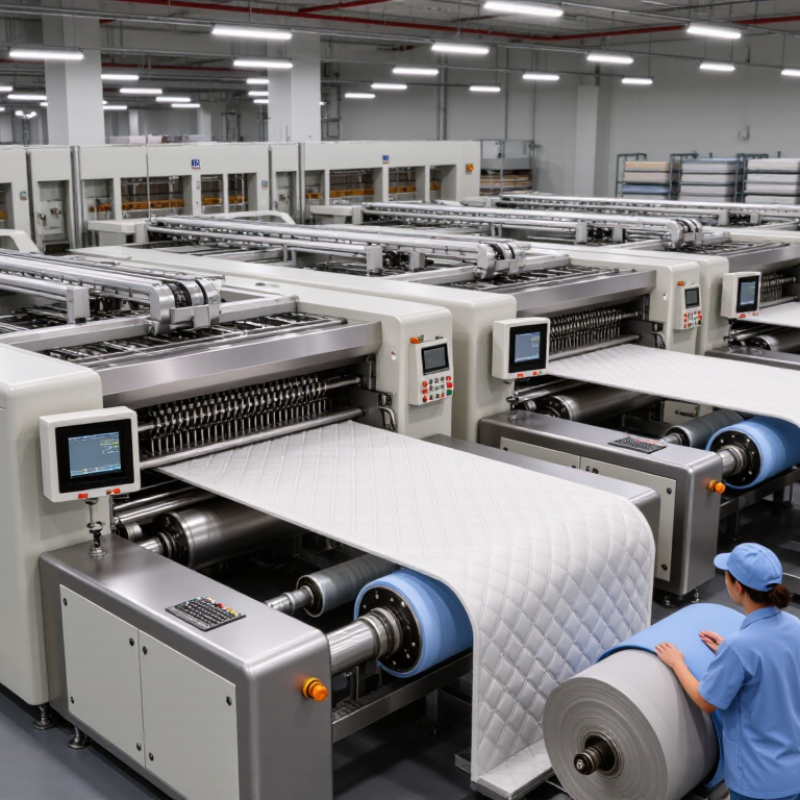
A mattress quilting machine is industrial equipment that joins fabric layers with stitching. It commonly combines a mattress panel, foam, batting, and backing material. The machine creates repeated patterns, such as squares, diamonds, or waves.
During production, rollers guide the fabric under multiple needles. The needles move through several layers at controlled speeds. This process improves surface stability and gives the mattress a more finished appearance. Some machines use computerized pattern control, while others depend on mechanical settings. Advanced controls can save time, but they do not remove the need for skilled adjustment. A slightly uneven fabric feed may create visible wrinkles. That detail is easy to underestimate.
When evaluating manufacturers worldwide, buyers should examine stitch accuracy, machine width, service support, and spare-part availability. Production capacity matters too. A factory making standard mattress panels may need different equipment from a facility producing decorative bedding. Operators should test real materials before purchasing. Samples reveal problems that brochures often hide. Noise, thread tension, cleaning access, and training requirements deserve attention.
Tips: Check the machine’s maximum quilting thickness. Confirm whether local technicians can provide support. Ask for sample patterns using your actual fabric. Keep records of tension settings and maintenance. Small adjustments can prevent expensive rework.
A mattress quilting machine joins the cover fabric, filling, and backing with stitched patterns. The chart below compares common North American mattress widths, which are important when selecting a machine’s usable quilting width.
Dimensions shown are common nominal North American mattress widths in inches. Actual quilting width requirements may vary according to seam allowance, border construction, and production design.
Top Mattress Quilting Machine Manufacturers Worldwide
Key Technologies Used in Mattress Quilting
Mattress quilting machines now combine multi-needle stitching, computerized pattern control, and servo-driven motion. The core system uses several needles to create even lines across fabric, foam, and padding layers. Each needle requires stable thread tension. Small variations can cause puckering or visible gaps.
Servo motors improve speed control during curves and pattern changes. Computerized systems store geometric designs and adjust stitch length with precision. Operators can select wave, diamond, or customized quilting patterns from a control panel. Laser or camera guidance helps align fabric edges before stitching begins. This reduces material waste on large mattress panels.
Modern equipment also uses sensors for thread breaks, fabric movement, and needle position. Automatic tension control is useful when materials change during production. A cotton cover and a thick knitted cover behave differently. The machine must respond accordingly. Layered foam can compress unevenly, especially near corners. That remains a practical weakness.
In factory trials, preventive maintenance strongly affects quilting quality. Cleaning lint from guides and checking needle timing can prevent irregular stitches. Data records also help technicians identify repeated faults. However, automation does not replace skilled inspection. A perfect digital pattern may still feel uneven by hand. Machine settings often need adjustment after real fabric testing, not only software simulation.
| Technology Category | Typical Machine Configuration | Common Working Width | Typical Stitch Length | Typical Production Range | Primary Applications | Main Advantages | Important Considerations |
|---|---|---|---|---|---|---|---|
| Multi-Needle Lockstitch Quilting | Multiple parallel needles and bobbins create durable lockstitch quilting lines. | Approximately 2,450–3,200 mm | Approximately 2–8 mm | Commonly up to about 15–25 m/min, depending on pattern, material and machine design. | Mattress panels, borders, ticking fabrics and layered quilted covers. | Strong seam security, consistent stitch formation and broad material compatibility. | Requires correct needle, thread and bobbin-tension settings; thicker stacks reduce speed. |
| Chainstitch Multi-Needle Quilting | Needle-and-looper systems form continuous chainstitches across multiple lanes. | Approximately 2,450–3,200 mm | Approximately 3–8 mm | Often selected for continuous-line production where high throughput is required. | Large mattress panels, comforter-style ticking and continuous roll goods. | Efficient thread consumption and suitability for long, uninterrupted quilting runs. | The stitch can be more vulnerable to laddering if thread tension or fabric handling is incorrect. |
| Computer-Controlled Pattern Quilting | Servo-driven quilting head with digital pattern storage and programmable movement. | Approximately 2,450–3,200 mm | Typically programmable within about 2–8 mm | Output varies substantially with pattern complexity, stitch density and acceleration limits. | Geometric, diamond, wave, floral and customized mattress-cover patterns. | Fast pattern changeover, repeatability and reduced manual marking. | Requires operator training, digital pattern management and regular servo calibration. |
| Continuous Roll-to-Roll Quilting | Fabric, filling and backing are fed continuously through synchronized rollers. | Usually about 2,450–3,200 mm | Commonly about 3–8 mm | Designed for uninterrupted production; actual output depends on material thickness and quilting pattern. | Bulk mattress ticking, quilted rolls and high-volume bedding components. | Reduced handling, consistent fabric tension and improved line productivity. | Needs accurate edge alignment, synchronized feeding and adequate floor space. |
| Single-Piece CNC Quilting | A programmable frame or clamp holds individual panels while the quilting head follows a digital path. | Often up to approximately 2,000–2,800 mm | Approximately 2–8 mm | Generally slower than continuous systems but suitable for flexible, low-to-medium volume production. | Premium covers, smaller production batches and varied panel dimensions. | High design flexibility and reduced tooling requirements for pattern changes. | Panel loading and unloading can become the main production constraint. |
| Servo-Synchronized Feeding | Electronic motors coordinate fabric feed, needle motion and pattern positioning. | Available across narrow and full-width quilting platforms. | Supports programmable stitch lengths, commonly around 2–8 mm. | Improves repeatability rather than defining a fixed production rate. | Elastic ticking, multilayer assemblies and patterns requiring precise registration. | Reduces pattern distortion, fabric slippage and variation between production runs. | Performance depends on encoder accuracy, software settings and preventive maintenance. |
| Automatic Edge Alignment | Sensors or guided feeding systems maintain the position of fabric edges during quilting. | Configured according to the selected machine width. | Compatible with common stitch lengths of approximately 2–8 mm. | Helps maintain production consistency, especially on wide continuous materials. | Wide mattress ticking, border quilting and fabrics with controlled edge margins. | Improves pattern registration and reduces off-center quilting. | Sensors must be kept clean and calibrated for different fabric colors and surfaces. |
| Automated Layer Tension Control | Feed rollers, pressure systems or software adjustments control movement of fabric and filling layers. | Used on both panel and continuous-width equipment. | Usually adjustable to the selected quilting pattern and material stack. | Supports stable output when foam, fiberfill or multiple textile layers are combined. | Thick mattress panels, high-loft fiberfill and mixed-material assemblies. | Helps limit puckering, layer shifting and uneven compression. | Material thickness, compressibility and moisture can affect the required settings. |
| Integrated Cutting and Slitting | Quilting line includes downstream knives, slitters or cross-cutting equipment. | Cutting width is matched to the quilting line and mattress component dimensions. | Not applicable to cutting itself; quilting settings remain programmable. | Reduces separate cutting operations in high-volume roll production. | Pre-sized mattress panels, border strips and continuous quilted components. | Fewer handling steps, improved dimensional consistency and lower labor requirements. | Knife alignment, dust control and safe guarding are essential for reliable operation. |
Note: The specifications shown are representative industry ranges for commercial mattress-quilting equipment. Actual capabilities vary according to machine configuration, material composition, quilting pattern, stitch density and operating conditions.
Leading mattress quilting machine manufacturers worldwide are judged by more than machine speed. They must provide stable stitch quality, accurate pattern control, and dependable support across different production regions. Grand View Research estimated the global mattress market at about USD 51.7 billion in 2023, with continued growth expected through 2030. This expansion increases demand for flexible quilting systems, especially for foam, spring, and hybrid mattress production.
Experienced manufacturers usually offer computerized pattern programming, multi-needle configurations, fabric tension control, and reduced material waste. A practical test matters more than a brochure. Inspect a finished panel at the machine’s highest operating speed. Look for skipped stitches, uneven edges, and heat around the needle area. ISO 9001 certification can support process reliability, but it does not guarantee perfect field performance. That distinction is easy to miss. Industry buying decisions should also consider local technicians, spare-part availability, training, and software support. A low purchase price may become expensive during production delays.
Tips: Request sample quilting on your own fabric. Compare energy use, maintenance intervals, and operator training time. Ask for verifiable references from similar factories. No ranking is perfect. The best manufacturer depends on mattress design, factory volume, labor skills, and regional service coverage. Textile machinery reports from organisations such as ITMF also show continuing pressure to improve automation and resource efficiency, although real factory results can vary.
Comparing mattress quilting machine manufacturers requires more than reading speed claims. Grand View Research valued the global mattress market at about USD 51.7 billion in 2022, with continued growth expected through 2030. That pressure encourages factories to seek faster, more flexible equipment. However, stated speed often reflects ideal fabric, simple patterns, and uninterrupted production.
I would compare usable output, not brochure speed. Ask for production samples using your actual ticking, foam thickness, and thread types. Check stitch consistency across a full-width panel. Review needle-bar control, pattern changeover time, fabric tension, and servo accuracy. A practical test should record defects, operator adjustments, and energy use. Short tests can mislead.
Maintenance matters greatly. Request spare-parts availability, remote diagnostic support, training hours, and response times. The International Sleep Products Association reported continued volatility in bedding demand and material costs in recent industry updates, making downtime especially expensive. A machine with lower output may still perform better when changeovers are frequent. Think beyond speed.
Compare warranty terms carefully. Ask whether software updates, sensors, and tooling are included. Visit an operating installation if possible, not only a showroom. My evaluation can still miss hidden maintenance habits. That is why acceptance testing should use written targets, production records, and independent quality checks. A low purchase price can become expensive.
Mattress quilting equipment is changing as manufacturers respond to comfort, labor, and energy demands. Modern machines increasingly use servo motors, touch-screen controls, and sensors for stable fabric feeding. These features help reduce uneven stitching across wide mattress panels. In production rooms, operators can adjust patterns quickly when customers request different surface textures. However, automation does not remove every quality problem. Thread tension still needs experienced attention.
Flexible production is another strong industry trend. Manufacturers want equipment that handles foam-backed fabric, knitted covers, and varied quilting depths. Digital pattern libraries can shorten setup time and reduce repeated manual adjustments. Energy-efficient motors also matter, especially during long shifts. Still, buying the fastest machine may be a poor decision if maintenance support is weak. We sometimes overvalue speed.
Tips: Check stitch consistency on real production materials, not only sample fabric. Ask about cleaning access, spare parts, operator training, and software updates. Measure noise, power use, and changeover time before choosing equipment. A practical trial can reveal problems hidden in a polished demonstration.
Data collection is becoming more useful, but it needs careful interpretation. Production dashboards can show downtime, rejected panels, and recurring tension faults. Managers can then improve schedules and maintenance plans. Yet inaccurate data creates false confidence. A reliable manufacturer should explain testing standards, service response, and expected machine limits clearly. Transparent technical documents are more valuable than impressive claims.
| Cookie | Duration | Description |
|---|---|---|
| cookielawinfo-checkbox-analytics | 11 months | This cookie is set by GDPR Cookie Consent plugin. The cookie is used to store the user consent for the cookies in the category "Analytics". |
| cookielawinfo-checkbox-functional | 11 months | The cookie is set by GDPR cookie consent to record the user consent for the cookies in the category "Functional". |
| cookielawinfo-checkbox-necessary | 11 months | This cookie is set by GDPR Cookie Consent plugin. The cookies is used to store the user consent for the cookies in the category "Necessary". |
| cookielawinfo-checkbox-others | 11 months | This cookie is set by GDPR Cookie Consent plugin. The cookie is used to store the user consent for the cookies in the category "Other. |
| cookielawinfo-checkbox-performance | 11 months | This cookie is set by GDPR Cookie Consent plugin. The cookie is used to store the user consent for the cookies in the category "Performance". |
| viewed_cookie_policy | 11 months | The cookie is set by the GDPR Cookie Consent plugin and is used to store whether or not user has consented to the use of cookies. It does not store any personal data. |