
Mosquito risk gives importers a practical reason to evaluate repellent products carefully. The World Health Organization’s World Malaria Report 2024 estimated 263 million malaria cases and 597,000 deaths worldwide in 2023. WHO also reported more than 14.6 million dengue cases in 2024, a record at the time. These figures show why reliable bite protection matters, though no spray can prevent every bite or infection.
For buyers, an Anti-Mosquito Spray is more than a label and a fragrance. Check the active ingredient and concentration, intended users, application directions, packaging integrity, and evidence supporting product claims. The U.S. Environmental Protection Agency advises consumers to choose registered repellents and follow label directions; importers should verify the rules in each intended market. Small details count. A leaking nozzle can ruin a carton. Unclear directions can undermine consumer confidence.
Medical entomologist Dr. Mustapha Debboun is often credited with this practical reminder: “The best repellent is the one you will use.” Importers should treat that as a useful buying principle, not a substitute for efficacy evidence. Review supplier documentation, product stability, batch consistency, and customer-use conditions before placing a large order. A sample may perform well in a showroom, yet disappoint in humid storage or daily use. That deserves a second look. These ten buying tips help importers ask sharper questions and make more dependable sourcing decisions.
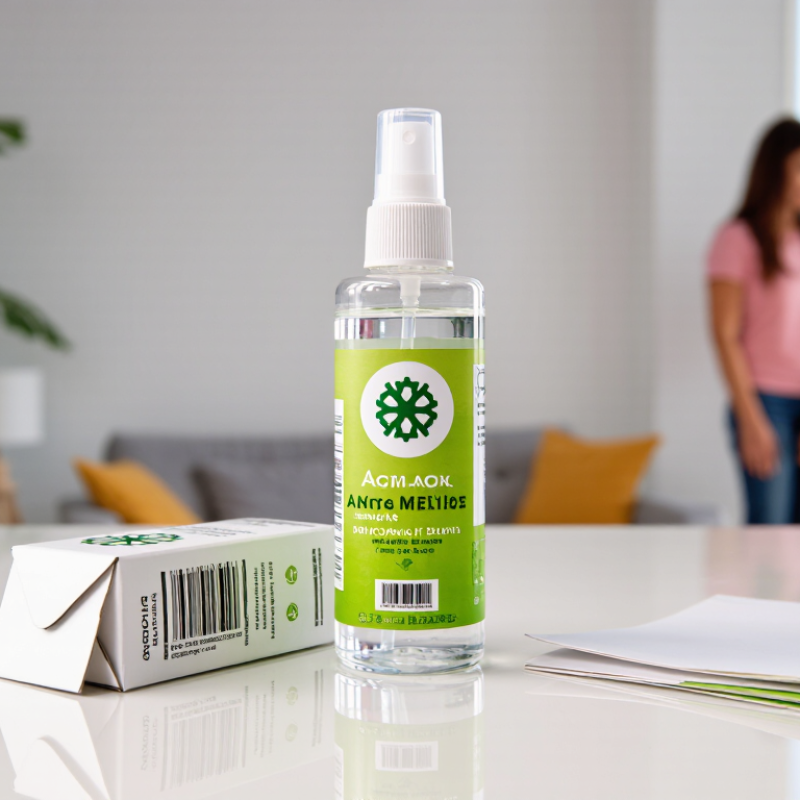
Before requesting quotations, define the exact product you plan to import. Record its active ingredients, concentration, spray format, container size, and intended use. Small details matter. A pump spray and an aerosol may face different shipping, storage, and documentation requirements. Ask a qualified customs broker or the destination market’s relevant authority to confirm product classification, registration needs, label language, and required safety documents. Do not rely on a supplier’s general claim that a product is “export ready.” Requirements can change between countries, and packaging claims may need separate review.
Then identify the buyers and conditions the product must serve. A humid coastal area with a long mosquito season may need different pack sizes than a city where shoppers prefer compact bottles for short trips. Check local retail prices, common shelf formats, climate, seasonal demand, and whether buyers shop in pharmacies, supermarkets, or online. Speak with distributors and review competing products in person when possible. A simple sample test can reveal practical issues, such as a cap that leaks in a warm warehouse or a label that is hard to read. Your forecast may still be imperfect. Note what is uncertain, then verify demand before placing a large order.
Ingredient comparisons should begin with intended users and exposure conditions, not a supplier’s headline claim. DEET, picaridin, IR3535, and oil of lemon eucalyptus are common repellent actives. Their permitted uses and label directions can vary by destination market. Compare active concentration, reapplication guidance, and age-related directions on the finished product label. A higher percentage is not automatically the best fit.
Formulation changes the user experience. A pump spray may offer more controlled application, while an aerosol can cover larger areas quickly. Lotion or gel can reduce airborne mist, but may feel tacky in humid weather. Check spray patterns on test surfaces, not just in product photos. I would not select by odor alone; a pleasant sample can still leave residue or irritate sensitive skin.
Ask suppliers for ingredient specifications, safety documentation, stability data, and packaging compatibility results. Test samples after storage in warm conditions, then inspect for separation, leakage, nozzle blockage, or changes in smell. Small details matter. Confirm that the label matches the formula and local requirements before placing an order. Also compare unit volume and directions per container, since these affect practical value more than a low quoted price.
10 Anti-Mosquito Spray Buying Tips for Importers
Efficacy claims need evidence, not just a prominent percentage on the label. WHO’s Guidelines for Efficacy Testing of Mosquito Repellents for Human Skin recommend controlled testing under defined conditions. Ask suppliers for reports showing the tested mosquito species, application rate, protection duration, and test conditions. Skin repellents and room sprays need different assessments. A laboratory result may not reflect humid, windy outdoor use. Small detail. Big difference.
Safety documents deserve the same scrutiny. Check ingredient concentrations against the destination market’s requirements, and review the safety data sheet, hazard warnings, first-aid instructions, and packaging compatibility. A leaking bottle can turn a compliant formula into a costly shipment problem. Confirm batch traceability and request current test documents, not a generic certificate for another product. One weak point: paperwork can look complete while failing to match the exact formula.
Rules vary by country and product category, so verify applicable registration, notification, labeling, and import requirements before shipment. The WHO World Malaria Report 2023 estimated 249 million malaria cases worldwide in 2022; that figure signals the importance of mosquito control, but it does not prove any spray prevents disease. Avoid unsupported health claims. Compare evidence carefully, and record which documents support each claim on the package.
| Buying Tip | Evidence to Request | What to Check | Potential Red Flags |
|---|---|---|---|
| 1. Confirm the product’s intended use | Product specification, proposed label, and directions for use. | Determine whether it is a personal skin-applied repellent, a clothing treatment, or an area-use product. These uses can have different safety and regulatory requirements. | A label that blurs personal-use and area-treatment claims or gives no clear application instructions. |
| 2. Verify the active ingredient and concentration | Full ingredient declaration and, where appropriate, a certificate of analysis for the active ingredient. | Check the active substance, concentration, formulation, and permitted use against the rules in the destination market. Common repellent actives vary by country and product type. | An undisclosed active ingredient, inconsistent ingredient records, or a concentration outside local permitted conditions. |
| 3. Review efficacy data for the actual product | Product-specific test reports, including the test method, date, test conditions, and results. | Check the mosquito species tested, application method, dose, climate conditions, and measured protection period. In the United States, EPA OCSPP 810.3700 is a relevant guideline for testing insect repellents applied to human skin. | Claims based only on ingredient reputation, an unrelated formula, or tests with no method or results provided. |
| 4. Match protection claims to the evidence | Claim-substantiation file and the proposed packaging, website, and advertising text. | Confirm that statements such as protection duration or mosquito species coverage are supported under relevant test conditions and comply with local advertising rules. | Absolute claims such as “100% protection” or “works all day” without adequate supporting evidence. |
| 5. Check product authorization before import | Applicable registration, authorization, or approval documents, plus the approved label where required. | For the United States, verify applicable EPA pesticide registration and labeling requirements. In the EU, skin-applied insect repellents are generally regulated as biocidal products under the Biocidal Products Regulation; verify active-substance and product authorization requirements for the intended market. | A claim that one country’s approval automatically authorizes sale in another country. |
| 6. Assess user safety and directions | Safety assessment, toxicological information, and final user instructions and warnings. | Review age restrictions, application frequency, use on or near the face, eye and mouth precautions, and instructions for washing or reapplication. Requirements depend on the formula and jurisdiction. | Missing precautions, vague directions, or safety claims that are not supported by the product’s assessment. |
| 7. Review hazard communication and the SDS | Current Safety Data Sheet (SDS), hazard classification, and compliant label artwork. | Check that hazard statements, pictograms, precautionary statements, and language requirements match the destination market and product classification. An SDS does not replace product registration or authorization. | An outdated SDS, mismatched formulation details, or a label that conflicts with the SDS. |
| 8. Check stability and packaging compatibility | Stability data, packaging compatibility results, and batch quality specifications. | Review shelf-life support, storage conditions, leakage or corrosion risks, spray performance, and packaging integrity across expected transport and storage conditions. | A stated shelf life with no supporting data or packaging that leaks, deforms, or affects the formula. |
| 9. Confirm transport and import documentation | Transport classification, shipping documents, SDS, customs data, and any required import permits. | Classification depends on formulation and packaging. Aerosols and flammable liquids may be subject to dangerous-goods transport rules; confirm the applicable mode-specific requirements with a qualified carrier or dangerous-goods adviser. | Assuming every spray has the same shipping classification or omitting required transport information. |
| 10. Establish batch traceability and quality controls | Manufacturing specifications, batch records, certificates of analysis, complaint procedures, and recall process. | Confirm lot coding, release testing, change-control procedures, retention samples, and a process to investigate adverse events or quality complaints. | No traceable lot number, undocumented formula changes, or no practical recall and complaint-handling process. |
Before committing to a large order, assess the supplier’s quality controls and communication. Ask for its manufacturing-site details, batch traceability process, and recent quality records. Request the safety data sheet, ingredient declaration, and relevant batch test results. Check that product names, ingredient details, and batch codes agree across documents. Any mismatch deserves a clear explanation. No shortcuts.
Packaging needs a hands-on review. Request a filled sample, not just a digital mock-up. Check the cap seal, spray consistency, bottle markings, and carton fit. Ask how the supplier tests for leakage during handling and shipping. Labels should remain readable, with product claims supported by documentation. A glossy mock-up proves little. Confirm destination-market labeling and registration requirements with a qualified local specialist before printing a full run.
Documentation should match the goods exactly. Compare the invoice, packing list, product specification, and shipping description for SKU, quantity, net content, and batch details. Keep dated copies of approved labels and specifications, and ask the supplier to notify you before any formulation or packaging change. It sounds basic, yet busy teams can miss small revisions. I would not treat a complete-looking PDF as proof; verify the issuing source and ask questions when details are vague.
A low factory price can hide expensive surprises. Calculate landed cost per saleable bottle, not just the quoted unit price. Include product, packaging, inspection, freight, insurance, duties, port handling, storage, and domestic delivery. Add exchange-rate movement and fees for payment or document changes. Then divide by the number of bottles likely to arrive in usable condition. A damaged carton still costs money. Ask suppliers to quote the same order size and shipping terms, or the comparison may mislead you. Keep a small contingency; real shipments rarely follow a perfect spreadsheet.
Set quality standards before placing a bulk order. Specify the approved formula and concentration, bottle volume, closure fit, label details, batch coding, and packaging strength. Ask for measurable checks, such as leakage after handling, consistent nozzle output, and legible labels on every sampled carton. Use a written sampling plan and agree on acceptable defect levels before production. For formula verification, arrange testing through a qualified independent laboratory when appropriate. Keep sealed samples from each batch for later comparison. One awkward detail: testing adds cost and time, but skipping it can be far more expensive. Review the first inspection report carefully, and revise standards when actual results expose gaps in your assumptions.
| Cookie | Duration | Description |
|---|---|---|
| cookielawinfo-checkbox-analytics | 11 months | This cookie is set by GDPR Cookie Consent plugin. The cookie is used to store the user consent for the cookies in the category "Analytics". |
| cookielawinfo-checkbox-functional | 11 months | The cookie is set by GDPR cookie consent to record the user consent for the cookies in the category "Functional". |
| cookielawinfo-checkbox-necessary | 11 months | This cookie is set by GDPR Cookie Consent plugin. The cookies is used to store the user consent for the cookies in the category "Necessary". |
| cookielawinfo-checkbox-others | 11 months | This cookie is set by GDPR Cookie Consent plugin. The cookie is used to store the user consent for the cookies in the category "Other. |
| cookielawinfo-checkbox-performance | 11 months | This cookie is set by GDPR Cookie Consent plugin. The cookie is used to store the user consent for the cookies in the category "Performance". |
| viewed_cookie_policy | 11 months | The cookie is set by the GDPR Cookie Consent plugin and is used to store whether or not user has consented to the use of cookies. It does not store any personal data. |