7 Stainless Steel Clamps Buying Tips for Global Buyers
For global buyers, Stainless Steel Clamps can look like simple hardware—until a loose fit, corroded band, or delayed shipment disrupts a job. Choosing well means checking more than price and appearance. Material grade, clamp dimensions, tightening range, and the conditions of use all affect performance. A clamp used near saltwater may need different corrosion resistance from one used in a dry indoor assembly. Small details matter.
This guide introduces seven practical buying tips for comparing products and suppliers. It covers how to match stainless steel grades to the working environment, confirm measurements, assess band and screw design, and request clear product information. Buyers should also consider quality checks, sample evaluation, packaging, lead times, and communication across borders. These points are useful, but no checklist can replace testing a clamp in its intended application. Supplier claims deserve verification, too. A polished datasheet is helpful; it is not proof by itself.
Some specifications are easy to overlook. Others are not stated clearly. Ask direct questions, compare like with like, and record the answers before placing a large order. Even experienced purchasing teams can miss a small mismatch between a stated diameter range and the actual hose or pipe. That happens. A careful review helps buyers reduce avoidable surprises and select Stainless Steel Clamps that fit their requirements, budget, and delivery plan.
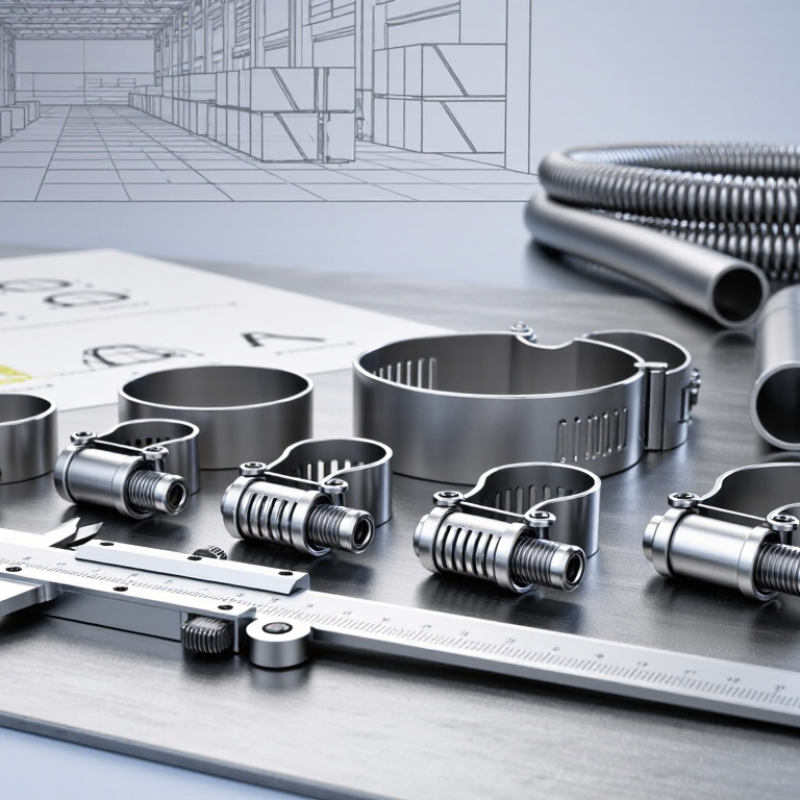
Identify the Clamp’s Application, Load, and Operating Conditions
Before comparing stainless steel clamps, define what the clamp must hold and where it will operate. A hose carrying cool water has different needs from a pipe exposed to vibration, heat, or washdown. Measure the outside diameter at the installation point, not from an old drawing. Small differences matter. Also note whether the joint sees steady pressure, pressure pulses, movement, or occasional impact. A clamp that fits neatly on a bench may loosen after weeks of vibration.
Estimate the actual load, then check the clamp’s published working limits and installation guidance. Do not treat a tightening torque as a load rating; they describe different things. Consider the surrounding conditions, too: salt spray, cleaning chemicals, temperature swings, and trapped moisture can affect service life. Match the stainless grade and clamp design to those conditions, and confirm compatibility with the hose or pipe material. In field checks, uneven tightening is easy to miss. It can distort a soft hose or leave a leak path. That is worth rechecking. If the application is unusual, such as a hot line with repeated movement, verify the choice with the supplier’s technical data rather than relying on appearance alone. A shiny finish proves little.
Choose a Stainless Steel Grade for the Required Corrosion Resistance
Stainless steel grade should match the clamp’s actual exposure, not just its label. Grade 304 often works in dry indoor settings and around fresh water. For coastal air, frequent washdowns, or chloride exposure, grade 316 is usually a stronger candidate because molybdenum improves resistance to pitting. It is not corrosion-proof. Salt changes the choice. Chlorides can still attack 316, especially in narrow gaps where moisture remains trapped.
Tips: Check the fluid, cleaning chemicals, temperature, and time spent outdoors. Ask for material documentation, and inspect the clamp after a trial period in the real application. A grade chart helps, but it cannot capture every site condition.
Pay attention to the clamp’s contact points. A rough finish, trapped residue, or a crevice under the band can encourage localized corrosion. Also consider nearby metals and whether the assembly stays wet after cleaning. In some cases, improving drainage or rinsing away salt matters as much as choosing a higher grade. Details matter. I would avoid selecting 316 by default without checking the exposure; added corrosion resistance may not solve damage caused by poor installation or maintenance. When conditions are uncertain, test a sample under representative use and review the results before ordering in volume.
Select the Clamp Type, Dimensions, and Fastening Method
Choose the clamp type to match the joint, not just the pipe. A worm-drive clamp suits many adjustable hose connections, while a T-bolt design can provide a broader band for heavier-duty assemblies. For a one-time installation, an ear clamp may be suitable, but removal is less convenient. Check that the band, housing, and screw all meet the required corrosion-resistance level; stainless parts can still behave differently in harsh environments.
Measure the outside diameter with the hose or sleeve in place. Select a size range that puts this measurement near its middle, rather than at either limit.
Small detail, big difference.
A clamp that is too wide may interfere with nearby fittings, while a narrow band can press unevenly. Match the fastening method to available tool access and service needs. A standard screwdriver may be enough for a light-duty joint; controlled torque is preferable where consistent compression matters. Avoid overtightening, which can damage soft hose walls or distort the band. I would still test a sample assembly: paper measurements do not always reveal how a real hose compresses. Recheck the fit after installation, especially if vibration or temperature changes are expected.
Check Product Quality, Testing, and Applicable Certifications
When sourcing stainless steel clamps, ask for the material grade, heat number, and mill test certificate. Match the grade to the fluid, temperature, and exposure; “stainless” alone is not a specification. Stainless Steel in Figures 2024, published by worldstainless, reports 58.4 million tonnes of crude stainless steel production in 2023. At that scale, traceable material records are practical, not excessive. Inspect band edges, welds, screw engagement, and housing alignment. A rough edge can cut a hose. Request dimensional inspection records and load or torque test results for the exact clamp design. Test samples should match the production material and assembly; generic certificates prove little.
Certifications have limits. ISO 9001 covers a quality management system, not corrosion resistance or clamp holding strength. For corrosion screening, ask whether a suitable method, such as ISO 9227 salt spray testing, was used. Request the test duration and acceptance criteria. The AMPP/NACE IMPACT study estimated corrosion costs at US$2.5 trillion, or 3.4% of global GDP, in 2013. It estimated that corrosion-control practices could save 15–35%, but this is an economy-wide estimate, not a clamp guarantee. Treat it as context, not a prediction. Keep inspection photos and test reports with the purchase record. One detail often gets missed: check that each certificate covers the supplied batch, not just the factory.
Compare Suppliers, Total Costs, Lead Times, and Export Support
When comparing stainless steel clamp suppliers, request the same specification from each. Include steel grade, band width, thickness, diameter range, and edge finish. A quote that says only “stainless steel” leaves too much unclear. Ask for material test documents and sample photos, especially when clamps will face moisture or outdoor use. Small details matter.
Compare the full landed cost, not just the unit price. Include packaging, inspection, freight, insurance, and destination charges where applicable. Ask whether prices change with order quantity or custom tooling. A low quote can become less attractive after these costs are added. Not always, but often. Keep assumptions in writing so competing offers can be compared fairly.
Lead times should separate production from transit. Confirm when the schedule starts, what could delay dispatch, and whether sample approval affects it. For export support, check that the supplier can prepare clear invoices, packing lists, and other documents required for your shipment. Requirements vary by destination, so verify them with your logistics provider. Even a detailed checklist can miss something; revisit it after the first order and note where estimates differed from reality.
