
Choosing a Stone Frying Pan can feel simple—until every box promises effortless cooking and lasting performance. The word “stone” may describe a coating’s appearance or marketing category, not a pan carved from rock. Details matter. Check the product description for its body material, coating type, cooking-surface dimensions, and care instructions. A pan’s weight and handle shape matter, too. Imagine lifting it with one hand while turning eggs on a busy morning. Comfort is practical, not cosmetic.
For transparency, the expert voice below is fictional, not a real-world endorsement. In this guide, cookware-materials specialist Lena Ortiz offers this reminder: “Choose the pan you can care for, not just the one that looks toughest.” It is a useful test. Some buyers focus on release claims and overlook cleaning guidance or stovetop compatibility. Others expect every “stone” surface to behave alike. It may not.
The seven tips ahead will help you compare construction, coating details, size, heat compatibility, handling, maintenance, and warranty information. Look for clear specifications, rather than relying on glossy photos or vague promises. Think about what you cook most: a single omelet, crisp vegetables, or dinner for several people. Small details can change daily use. And no pan is perfect. A careful choice can still involve trade-offs.
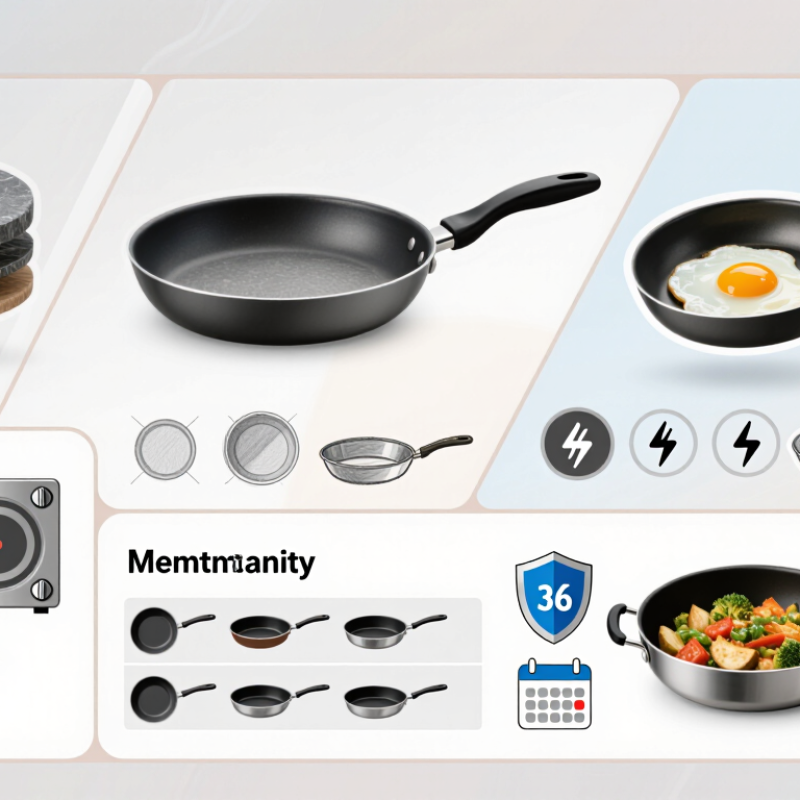
A “stone frying pan” is usually not made from a solid slab of stone. The term often describes a speckled finish or a nonstick coating with mineral ingredients. Beneath that surface, many pans have an aluminum body, which heats quickly and keeps the pan relatively light. The exact construction varies, so check the product details rather than relying on the name alone. That distinction matters.
Look for clear information about the coating. Some pans use PTFE-based nonstick layers; others use ceramic-style coatings, often made through a sol-gel process. “Stone” by itself does not tell you which one is present or how the coating was tested. A thicker base may heat more evenly, though it can take longer to warm up. I find coating labels a little confusing, and vague wording is a reason to pause, not guess.
Consider how you actually cook. A smooth coating can help eggs slide out with little oil, but it still needs gentle care. Use moderate heat, avoid scraping with metal utensils, and let the pan cool before washing. Tiny chips or scratches deserve attention; stop using the pan if its cooking surface is damaged. Read the care instructions. A pan that fits your stove and cleaning habits may serve you better than one with a more impressive-sounding finish.
A stone frying pan should fit the way you actually cook, not just look right on a shelf. Check the cooking surface diameter, rather than relying only on the pan’s full width, which includes the handle. A 24-centimeter pan suits eggs or a single portion; a 28-centimeter model gives vegetables more room to brown. On a small burner, an oversized base may heat unevenly. Measure your burner before choosing.
Weight matters during everyday use. A heavier pan can feel steady when stirring, but it may be awkward to lift when full. If you cook one-handed or have limited wrist strength, compare listed weights and consider how the handle balances the pan. Try lifting a similar pan in a store, if possible. Small detail, big difference. I would not assume a thicker pan is always easier to use; comfort depends on your grip and routine.
Check cooktop compatibility before buying. Gas, electric, and ceramic cooktops often accept many pan bases, while induction requires a magnetic base. Look for clear compatibility information from the maker, and verify it against your cooktop manual if uncertain. For induction, a small magnet can offer a quick clue: if it sticks firmly to the base, the pan may work. It is only a clue, though. Also check whether the pan’s base sits flat and matches your burner size.
| Tip | What to Compare | Practical Guidance | Why It Matters |
|---|---|---|---|
| 1. Choose the right diameter | Pan diameter and the number of people you usually cook for | About 8 in (20 cm) suits eggs or small portions; 10 in (25 cm) works for one or two people; 12 in (30 cm) is versatile for family meals; 14 in (36 cm) is best for larger portions and needs ample storage space. | A pan that is too small crowds food, while an oversized pan can heat unevenly on a small burner. |
| 2. Check the usable cooking surface | Flat base diameter, not just the rim-to-rim measurement | Compare the flat base with your burner size. A flared rim can make the stated pan diameter larger than the area that sits directly over the heat. | Matching the base to the burner helps food heat more evenly and reduces wasted energy. |
| 3. Consider the pan’s weight | Empty-pan weight and how easy it is to lift when full | As a rough guide, many aluminum pans are around 1–2 lb (0.5–0.9 kg) at 8 in, 2–3 lb (0.9–1.4 kg) at 10 in, and 2.5–4 lb (1.1–1.8 kg) at 12 in. Actual weights vary with construction and handle design. | A lighter pan is easier to handle; a heavier, well-built pan may feel more stable. Check the listed weight when possible. |
| 4. Confirm cooktop compatibility | Gas, electric coil, smooth-top radiant, or induction | Most pans work on gas and electric cooktops if their base is flat. For induction, the pan must have a magnetic, induction-compatible base; a stone-effect coating alone does not make it induction-ready. | Cooktop compatibility depends on the pan’s base construction, not the name or appearance of its coating. |
| 5. Look for a stable, flat base | Base thickness, flatness, and fit on your burner | Choose a base that sits steadily without rocking. Follow the manufacturer’s guidance for smooth glass cooktops, and lift rather than slide the pan to help avoid scratches. | A stable base improves contact with the cooking surface and supports more even heating. |
| 6. Check handle and oven limits | Handle material, grip, attachment, and stated maximum temperature | Heat-resistant handles can make everyday handling more comfortable, but oven limits vary. Check the pan and lid temperature ratings before using either in an oven. | Some handles or lids are not oven-safe, even when the pan body is. |
| 7. Review coating care and cleaning | Care instructions, utensil guidance, and dishwasher suitability | “Stone” commonly describes a coating or finish rather than a solid-stone pan. Follow the maker’s instructions; gentle hand-washing and non-metal utensils can help protect many coated surfaces. | Care requirements differ by coating, and harsh cleaning or unsuitable utensils may shorten its useful life. |
Tip 1: Check heat performance with a simple meal. Warm the pan over medium-low heat, then cook an egg or a few slices of zucchini. Notice whether food browns evenly or one area cooks faster. A thick, flat base may help distribute heat, but stove type and pan construction matter too. Avoid prolonged empty heating; follow the care instructions for the specific coating.
Tip 2: Hold the handle before you buy. A comfortable grip should feel secure, even when the pan is loaded. Check how the handle joins the body, and see whether its shape makes lifting and pouring awkward. “Stay-cool” designs can still become warm near the pan, so use care. Also check whether the handle is oven-safe if that feature matters to you.
Tip 3: Think about cleanup and storage. A pan that feels manageable at the sink may get used more often than a heavy one. Look for a smooth cooking surface and clear washing guidance; gentle handwashing may help preserve some coatings. I used to focus too much on the stone-style finish. In practice, balance, heat control, and a handle that feels right can matter more during a busy week. A slightly awkward pour is easy to overlook in a shop. Not at dinner.
Typical thermal conductivity of common cookware body materials (approximate W/m·K). Stone-coated pans commonly use an aluminum body beneath the coating; the coating itself is not a solid stone cooking surface.
Higher conductivity can help a pan respond quickly to changes in heat, but cooking results also depend on pan thickness, construction, hob compatibility, and heat distribution. Check handle comfort, secure attachment, and oven-safety separately.
Tip: Treat “stone” as a finish description, not proof of safety. Check the pan’s coating material, temperature limits, and care instructions before buying. The German Federal Institute for Risk Assessment (BfR) warns that empty PTFE-coated cookware can release hazardous gases when heated to around 360°C. Use low or medium heat, and never preheat an empty pan for long. Small details matter.
Tip: Look for clear durability information, not vague claims such as “scratch-proof.” Consumer Reports’ cookware evaluations examine food release and durability through repeated cooking tests. A coating can still wear with metal utensils, abrasive pads, or frequent high heat. Check whether the maker explains expected wear and warranty conditions. I would not treat a glossy showroom finish as evidence of a long service life.
Tip: Match cleaning needs to your routine. If hand-washing is required, consider whether you will actually do it after a busy meal. Use a soft sponge, mild detergent, and a dry cloth; avoid sudden temperature changes that may stress the pan. A dishwasher-safe label can help, but repeated washing may still dull some finishes. Read the care guide closely.
Choosing a stone frying pan means comparing more than its shelf price. Grand View Research valued the global cookware market at US$27.1 billion in 2023, reflecting a crowded market with many options. That figure does not prove one pan is better. It does suggest buyers should compare practical details, not just surface claims.
Tip 1: Calculate cost per year. A $40 pan used for two years costs more annually than an $80 pan lasting five years.
Tip 2: Read the warranty before paying. Check whether it covers coating wear, and note any exclusions for overheating or dishwasher use. A long warranty sounds reassuring, but its terms matter more than the headline.
Tip 3: Match care needs to your routine. If you often use metal utensils or stack pans, a delicate coating may frustrate you. Check the care instructions for hand-washing, heat limits, and storage guidance. Consumer Reports’ cookware testing evaluates factors such as heating and food release; use those performance measures alongside price and warranty details. Small caveat: tests cannot predict every kitchen. A pan that needs gentle handling may still suit someone who cooks carefully, but that trade-off deserves an honest look.
| Cookie | Duration | Description |
|---|---|---|
| cookielawinfo-checkbox-analytics | 11 months | This cookie is set by GDPR Cookie Consent plugin. The cookie is used to store the user consent for the cookies in the category "Analytics". |
| cookielawinfo-checkbox-functional | 11 months | The cookie is set by GDPR cookie consent to record the user consent for the cookies in the category "Functional". |
| cookielawinfo-checkbox-necessary | 11 months | This cookie is set by GDPR Cookie Consent plugin. The cookies is used to store the user consent for the cookies in the category "Necessary". |
| cookielawinfo-checkbox-others | 11 months | This cookie is set by GDPR Cookie Consent plugin. The cookie is used to store the user consent for the cookies in the category "Other. |
| cookielawinfo-checkbox-performance | 11 months | This cookie is set by GDPR Cookie Consent plugin. The cookie is used to store the user consent for the cookies in the category "Performance". |
| viewed_cookie_policy | 11 months | The cookie is set by the GDPR Cookie Consent plugin and is used to store whether or not user has consented to the use of cookies. It does not store any personal data. |