China Top 10 Floor Grinding Machine Manufacturers?
Choosing the right floor grinding machine manufacturer can shape an entire concrete project. It affects productivity, dust control, surface quality, and long-term maintenance.
Bob Harris, founder of the Decorative Concrete Institute, is widely respected for his practical training in decorative concrete. He has often reminded contractors, “The floor is the canvas.” This idea matters when comparing China’s leading manufacturers. A powerful machine cannot compensate for poor preparation, unsuitable tooling, or careless operation.
This guide examines ten China-based floor grinding machine manufacturers through practical criteria. These include motor performance, planetary grinding systems, tooling compatibility, dust extraction, operator controls, and after-sales support. It also considers factory experience, export records, certifications, and customer feedback where reliable information is available.
Real job conditions matter. A contractor grinding a 500-square-meter warehouse needs different equipment from a specialist polishing a small retail floor. Weight, machine width, electrical requirements, and transport design can change the final decision. A machine may look impressive in a showroom yet feel unstable on uneven concrete.
No ranking is perfect. Published specifications do not always reveal vibration, learning difficulty, or spare-parts response. Some manufacturers communicate clearly, while others provide limited technical evidence. That uncertainty deserves attention.
The companies discussed here represent different strengths, price levels, and production approaches. Buyers should still request current quotations, test reports, tooling recommendations, and local service details before ordering. Careful comparison reduces risk and supports a more consistent floor grinding result.
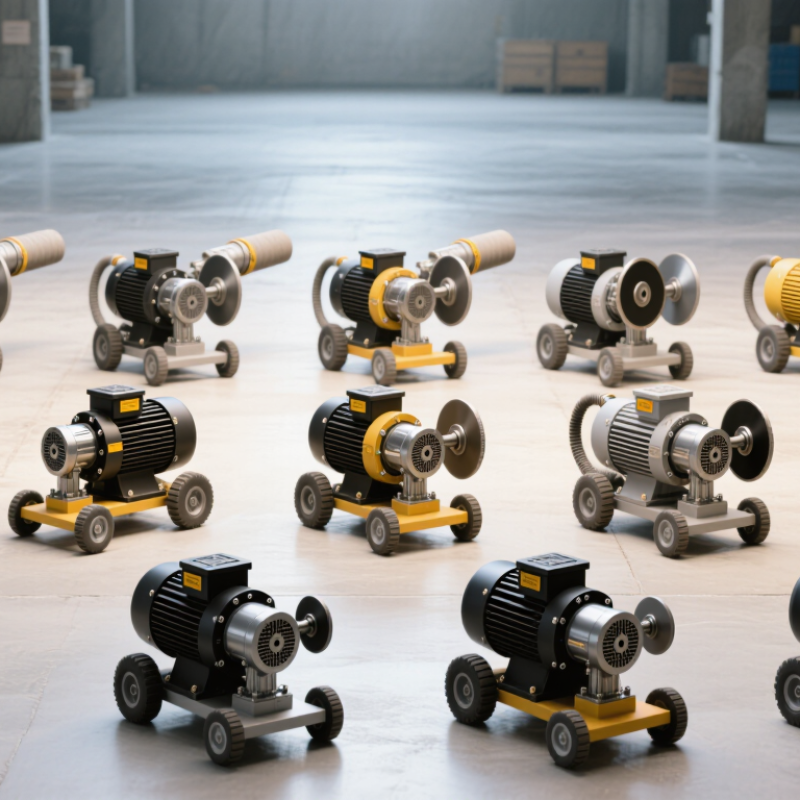
Floor Grinding Machines: 2–32 in. Width and 1–30 kW Power Classes
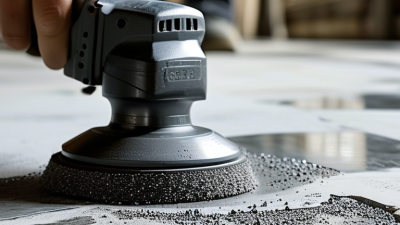
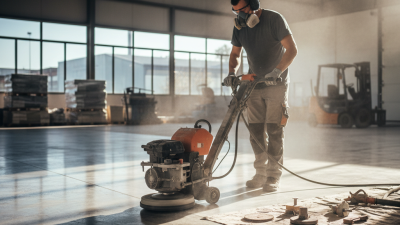
China’s floor grinding machine market covers compact 2-inch edge grinders to powerful 32-inch planetary systems. Width determines coverage, transport needs, and operator control. A 2-inch machine can reach corners, stair edges, and narrow repair zones. A 32-inch unit can remove coatings across large warehouse floors much faster. The choice should match the floor area, not only the advertised motor size.
Power classes range from 1 to 30 kW. A 1–4 kW grinder suits light polishing and small residential repairs. Machines between 5 and 15 kW often handle concrete preparation, adhesive removal, and medium commercial spaces. Systems above 15 kW need stronger electrical supply, heavier frames, and reliable dust extraction. More power is not always better. Excessive pressure can glaze the tooling or mark softer concrete.
Experienced buyers should check working width, grinding speed, tool compatibility, and dust-port design together. Ask for vibration measurements, spindle runout data, thermal-protection details, and load-test records. A machine may look stable in a showroom but behave differently on uneven concrete. Dust changes everything. Operators also need practical controls, balanced handles, and manageable wheel movement. I would test the machine with the intended diamond segments before ordering. That assumption fails. Some published performance figures appear optimistic, especially when measured on ideal surfaces. Proper trials reveal the useful working rate, cable heating, and actual finish quality.
Ranking Criteria: m²/h Output, RPM, Dust Control, and ISO 9001 Status
China Top 10 Floor Grinding Machine Manufacturers?
A useful ranking should measure more than catalogue claims. For this review, m²/h output is the main productivity indicator. It shows how much floor a machine can process per hour under stated conditions. Concrete hardness, tooling, operator skill, and pass depth can change the result. Numbers need context.
RPM reveals how aggressively the grinding head works. Higher speed is not always better. Stable torque, balanced heads, and adjustable speed often matter more on uneven concrete. Dust control receives equal attention. A reliable machine should support sealed shrouds, compatible vacuums, and efficient filter cleaning. During site checks, visible dust around the operator is a serious warning.
ISO 9001 status can strengthen confidence in production controls. However, a certificate should be current and traceable to the correct manufacturing site. It does not automatically prove grinding performance. I would verify test records, service procedures, spare-part access, and warranty response before placing any manufacturer in the top ten. A practical test might compare 100 m² of cured concrete, record actual working time, and inspect the floor afterward. This method is useful, but not perfect. Different tooling can still distort the ranking. Supplier communication also deserves attention, because unclear technical answers often appear before larger service problems.
China Top 10 Floor Grinding Machine Manufacturers? - Ranking Criteria: m²/h Output, RPM, Dust Control, and ISO 9001 Status
Anonymous comparative ranking based on published machine-performance ranges, production capability, dust-management features, and quality-system disclosures.
| Rank |
Manufacturer Profile |
Typical Output
(m²/h) |
Grinding Speed
(RPM) |
Working Width
(mm) |
Dust-Control Configuration |
Dust-Control
Rating |
ISO 9001 Status |
| 1 |
Profile A |
80–150 |
300–1,800 |
680–800 |
Integrated shroud, brush seal, external industrial vacuum port |
High |
Reported certified |
| 2 |
Profile B |
70–140 |
350–1,500 |
650–760 |
Full-cover grinding hood with replaceable sealing skirt |
High |
Reported certified |
| 3 |
Profile C |
60–125 |
400–1,800 |
600–750 |
Sealed planetary head and 50 mm vacuum connection |
High |
Reported certified |
| 4 |
Profile D |
55–115 |
300–1,200 |
550–700 |
Removable dust skirt and centralized extraction outlet |
High |
Not publicly disclosed |
| 5 |
Profile E |
50–105 |
350–1,400 |
500–680 |
Flexible shroud with optional HEPA-compatible vacuum system |
Medium–High |
Reported certified |
| 6 |
Profile F |
45–95 |
300–1,200 |
500–650 |
Brush skirt and side extraction port; vacuum sold separately |
Medium–High |
Not publicly disclosed |
| 7 |
Profile G |
40–90 |
280–1,100 |
450–620 |
Partial enclosure with standard dust-extraction interface |
Medium |
Reported certified |
| 8 |
Profile H |
35–80 |
300–1,000 |
400–600 |
Basic dust guard with external vacuum coupling |
Medium |
Not publicly disclosed |
| 9 |
Profile I |
30–70 |
250–900 |
350–550 |
Standard shroud; extraction performance depends on vacuum selection |
Medium |
Not publicly disclosed |
| 10 |
Profile J |
25–60 |
250–800 |
300–500 |
Compact guard with optional dust hose adapter |
Basic–Medium |
Not publicly disclosed |
Notes: Output varies with concrete hardness, coating thickness, abrasive type, operator technique, and site conditions. RPM figures refer to adjustable grinding-head or planetary-head speed ranges where applicable. “Reported certified” means an ISO 9001 claim is publicly indicated but should be verified against the current certificate, issuing body, validity period, and certification scope before purchasing.
China’s Top 10 Manufacturers: Product Lines, Markets, and Factory Data
China Top 10 Floor Grinding Machine Manufacturers
China’s top ten floor grinding machine manufacturers are best compared through products, markets, and factory evidence. A useful review should examine planetary grinders, edge grinders, dust extractors, scarifiers, and polishing systems. It should also check motor power, grinding width, water control, and spare-part availability. Grand View Research’s construction equipment analysis reports continued growth in global building activity, while Allied Market Research identifies Asia-Pacific as a major demand region for construction machinery. These findings support China’s strong export position, but they do not prove every supplier has equal technical capability.
Factory data adds practical value. Public supplier records commonly show workshops ranging from several thousand to tens of thousands of square metres. Export markets often include Southeast Asia, the Middle East, Europe, and North America. Stronger manufacturers usually provide ISO 9001 systems, load-testing records, electrical safety documents, and documented output capacity. Their product lines may include single-disc machines for small repairs and multi-head planetary units for large warehouses. Test details matter more than attractive catalogues.
Some published factory figures remain difficult to verify. This is an important weakness. Buyers should request dated production photos, serial-number samples, test reports, and recent shipment records. The International Trade Centre’s trade database can help compare national export trends, although its classifications may combine several machinery types. Price alone is unreliable. A cheaper grinder may use thinner frames, weaker bearings, or limited dust sealing. Site trials, technician response times, and local spare-part stock reveal more than marketing claims.
China’s Top 10 Floor Grinding Machine Manufacturers: Product Lines and Market Applications
Category-level comparison based on commonly reported product specifications and application coverage in Chinese floor-grinding equipment catalogs. No company or brand data is displayed.
The chart compares typical product categories by working-width range and the main markets they serve. Planetary grinders and ride-on machines are generally selected for larger commercial and industrial projects, while edge grinders and single-disc machines are suited to smaller or detail-oriented work.
Buyer’s Checklist: Certifications, Warranty, Parts, and Cost per m²
China Top 10 Floor Grinding Machine Manufacturers?
When comparing Chinese floor grinding machine manufacturers, verify certificates against the exact model.
ISO 9001 shows a quality-management system, not guaranteed machine performance. The 2023 ISO Survey reported more than one million ISO 9001 certificates worldwide, so certification alone is a weak filter. Check CE documentation, electrical test reports, motor protection, and dust-control design. Ask for serial-number traceability. Small details matter.
Warranty terms should state coverage, response time, and exclusions. A useful warranty includes the motor, inverter, control board, and bearings. Consumable tooling is often excluded, but this must be written clearly. Request a parts list with prices and delivery times. A six-month warranty may look acceptable, yet delayed spare parts can stop a project for weeks.
I have learned that cheap machines become expensive when support is vague.
Calculate cost per m², not only purchase price. Use this formula:
machine depreciation, labor, electricity, dust extraction, diamond tools, transport, and maintenance, divided by finished area.
Record real output on the intended concrete hardness.
OSHA limits respirable crystalline silica exposure to 50 micrograms per cubic meter over eight hours, with a 25-microgram action level. Dust extraction is therefore a safety requirement, not decoration. The NIOSH hierarchy also favors engineering controls, such as local exhaust.
Test a sample floor. Estimates are imperfect. They should be challenged with measured tooling wear and daily production data.