
Choosing a reliable condenser fan matters when a vehicle sits in traffic, climbs a hot road, or idles beneath a harsh summer sun. The fan helps move air through the condenser, supporting heat rejection and consistent cabin cooling. A poor fit can mean noisy operation, weak airflow, or difficult installation. Small details matter.
The International Energy Agency’s Global EV Outlook 2024 reported nearly 14 million electric cars sold worldwide in 2023, close to one in five new cars. That shift makes dependable vehicle thermal management increasingly important, although it does not make every fan suitable for every vehicle. This guide compares ten options for global buyers using practical criteria: fitment, voltage, airflow information, connector design, noise, and available durability data. For any Ac Condenser Fan Car, confirm the exact vehicle application and compare manufacturer specifications before purchasing. A familiar brand name is not enough. Nor is a high airflow claim without clear test conditions.
Specifications can be incomplete. That is worth remembering. Where published evidence is limited, buyers should treat performance claims cautiously and verify compatibility with a qualified parts supplier. The right choice is not always the most powerful fan; it is the one that fits correctly and performs reliably under the vehicle’s operating conditions.
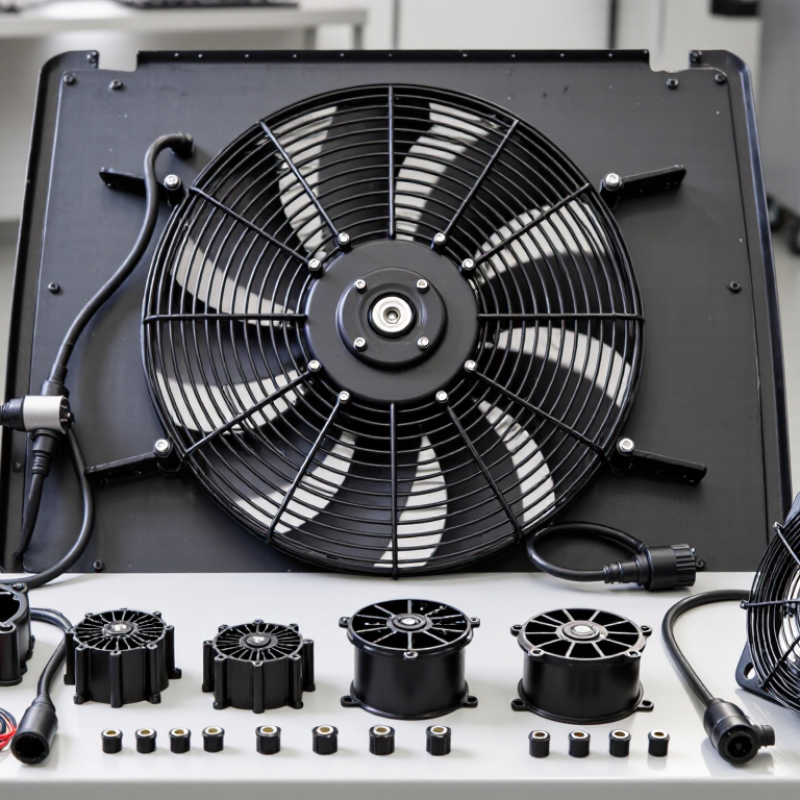
A condenser fan moves air through the condenser, where hot refrigerant releases heat before returning to the cabin cooling cycle. At low speeds, natural airflow is limited, so the fan helps maintain heat transfer. That matters at idle. On a hot afternoon, weak airflow may mean warmer vents while the car waits in traffic. A fan that runs slowly, turns the wrong way, or sits behind a blocked grille can reduce cooling performance.
Tips: With the engine off, check for leaves, bent blades, and loose connectors. Never reach near a fan while the system is powered; some fans can start unexpectedly. Small details count.
A correctly matched fan should fit the condenser and move air in the intended direction. Its motor, wiring, and shroud also affect airflow and reliable operation. Replacing a fan alone may not solve poor cooling if the condenser is dirty or refrigerant flow is impaired. I would treat fan noise or uneven cooling as clues, not a complete diagnosis. Comparing airflow and vent temperature before and after repair can help confirm whether performance improved.
Top 10 Car AC Condenser Fans for Global Buyers
Key Fan Types, Specifications, and Compatibility Factors
Condenser fans commonly use puller or pusher layouts. Puller fans sit behind the condenser and draw air through it; pusher fans mount ahead and push air across the fins. Some vehicles use dual fans, while others rely on one larger unit. Brushed and brushless motors also differ in control needs, cost, and expected service life. No type is best for every installation.
Compare rated voltage, airflow, fan diameter, depth, and mounting points. Airflow figures alone can mislead because shrouds and tight spaces affect performance. Check connector shape, wire count, rotation direction, and available clearance. Match the vehicle’s year, engine, and cooling arrangement, then confirm measurements against reliable fitment data. A catalog match helps, but it does not prove the fan will fit every trim. Details matter.
Tips: Measure the opening and mounting distance before ordering. Photograph the old connector and note its wire positions. If the replacement needs a different control signal or mounting method, pause and verify compatibility with a qualified parts specialist. It is easy to overlook a small mismatch. That can mean extra work.
For global buyers, a useful top-ten condenser-fan shortlist should compare fit, airflow, durability, and electrical compatibility—not just price. Confirm the vehicle’s year, engine, connector, mounting points, and required voltage before comparing options. A fan that looks right may still foul the radiator shroud. Small details matter. OICA’s 2023 production report records about 93.5 million motor vehicles built worldwide, reflecting the wide range of vehicle platforms buyers may need to support. That scale makes clear fitment data essential.
Powertrain changes also affect cooling needs. The International Energy Agency’s Global EV Outlook 2024 reports nearly 14 million electric cars sold in 2023, about 18% of global car sales. Buyers should therefore check whether a replacement fan matches the vehicle’s cooling-control system, not assume all condenser fans operate alike. Request rated airflow, current draw, noise data, material details, and test conditions from suppliers. Listen for bearing noise. Ask about corrosion and vibration testing, especially for vehicles used in humid or dusty conditions. One caveat: a published airflow figure may not reflect real installation, where nearby components restrict flow. Comparing test methods takes effort, but it can prevent a poor match.
Comparing car AC condenser fans starts with fit, not price. Check the vehicle’s year, engine, condenser layout, fan diameter, mounting points, connector shape, and rated voltage. A fan that looks correct in a product photo may still need a different plug or bracket. Match airflow and operating specifications to the vehicle maker’s requirements where available. Small details matter.
When comparing suppliers, look for clear specification sheets, fitment references, warranty terms, and responsive technical support. Brand reputation can help, but consistent documentation is more useful than bold performance claims. Compare the full delivered cost: unit price, shipping, taxes, and possible handling fees. A low listing price may not stay low. I would also ask whether replacement motors or connectors are sold separately; this is easy to overlook.
International availability depends on regional stock, shipping routes, and realistic lead times. Ask for the fan’s country of dispatch and whether tracking is provided. Confirm packaging protects the blades and motor housing, especially for long-distance freight. Check that the seller can help resolve fitment questions across time zones. Availability can change quickly, so written confirmation is safer than relying on a product page alone. Even then, specifications sometimes leave gaps; verify the connector against the vehicle before ordering.
This is a practical comparison of common replacement-fan configurations, not a ranking of named products. Price bands are indicative USD retail ranges for the fan assembly only; actual prices vary by vehicle, supplier, shipping, taxes, and market. Confirm dimensions, electrical specifications, mounting points, and vehicle compatibility before ordering. Availability describes common sourcing channels, not live inventory.
| Rank | Fan configuration | Typical size or setup | Common application | Indicative price (USD) | International availability | Key buyer checks |
|---|---|---|---|---|---|---|
| 1 | Direct-fit single-fan assembly | One fan in a vehicle-specific shroud; dimensions vary by application | Replacement for vehicles originally equipped with a single condenser or cooling fan | $40–$180 | Common through regional replacement-parts distributors and international marketplaces; exact fitment is vehicle-specific | Match OE reference, shroud shape, mounting points, connector, voltage, and rotation direction |
| 2 | Direct-fit dual-fan assembly | Two matched fans mounted in a shared shroud | Vehicles designed with two cooling fans or a combined condenser/radiator fan module | $80–$300 | Available in major automotive parts markets; shipping may be costly because the assembly is bulky | Check complete shroud dimensions, fan positions, connector count, and whether the module includes controls |
| 3 | Universal slim electric fan | Usually about 10–16 inches in diameter; slim profile for limited clearance | Custom installations or vehicles where a direct-fit assembly is unavailable | $25–$110 | Widely sold internationally by automotive accessory and performance-parts retailers | Verify clearance, mounting method, airflow direction, electrical draw, and local roadworthiness requirements |
| 4 | Vehicle-specific brushless fan assembly | Electronic motor with vehicle-matched housing and connector | Late-model vehicles using electronically controlled cooling fans | $100–$450 | Often available through specialist distributors; coverage and stock can vary substantially by vehicle market | Confirm control signal compatibility, communication requirements, connector pinout, and any required programming |
| 5 | Vehicle-specific brushed-motor fan assembly | Conventional electric motor in a dedicated shroud | Many older and mid-generation passenger vehicles | $45–$220 | Common in aftermarket catalogs; availability is usually best for high-volume vehicle applications | Compare connector, motor voltage, shroud fit, blade design, and supplied hardware |
| 6 | Push-type auxiliary fan | Mounted in front of the condenser; often available in compact diameters | Supplemental cooling where the vehicle layout and airflow design permit front mounting | $25–$120 | Commonly sourced from universal-parts sellers and performance retailers across regions | Check available front clearance, airflow direction, obstruction of the heat exchanger, and mounting security |
| 7 | Pull-type auxiliary fan | Mounted behind the condenser or radiator to draw air through the core | Supplemental or replacement installations with adequate space behind the heat exchanger | $25–$130 | Generally easy to source internationally in universal sizes; vehicle-specific brackets may be needed | Confirm space behind the core, blade clearance, airflow direction, and secure mounting points |
| 8 | Compact fan for small vehicles | Typically a smaller-diameter fan or compact vehicle-specific module | Small passenger cars and vehicles with restricted engine-bay packaging | $35–$180 | Available through vehicle-specific catalogs, though uncommon models may require special ordering | Measure the shroud and blade envelope; do not select by diameter alone |
| 9 | Heavy-duty vehicle-specific fan assembly | Larger or reinforced assembly designed for a particular vehicle platform | Selected vans, utility vehicles, and higher-load applications | $90–$400 | Typically sold through commercial-vehicle or specialist parts channels; cross-border freight can be significant | Match the vehicle’s cooling package, duty requirements, electrical rating, and mounting configuration |
| 10 | Universal dual-fan kit | Two separate slim fans supplied with basic mounting hardware | Custom builds or repairs where no complete direct-fit module is available | $55–$220 | Widely listed by international accessory sellers; kit contents and documentation differ by supplier | Check combined current draw, wiring and relay requirements, fan spacing, shroud coverage, and mounting method |
A condenser fan must match the vehicle’s electrical system, mounting points, and airflow direction. Check the service information before installation; similar-looking fans may rotate differently or use different connectors. Disconnect power, secure the fan and shroud, and keep wiring clear of blades and hot components. The fit should feel firm, not forced. A pinched wire can cause trouble later.
Common problems include cracked blades, worn bearings, loose connectors, and failed fuses or relays. Look for leaves and road grit blocking the condenser, especially after dusty drives. A fan that runs noisily, starts intermittently, or stops at idle deserves prompt inspection. Weak cooling in traffic can be a clue, though low refrigerant or other faults may produce similar symptoms. Even a careful visual check can miss an electrical issue; that part is easy to underestimate.
Tips: With the engine off and cool, inspect the fan and wiring for damage. Never reach near moving blades. If the fan does not operate, avoid repeated testing and have a qualified technician check its power supply and control circuit. Record when the symptom occurs—such as during idling or after rain. Small details help.
Installation, Maintenance, and Common Fan Problems
Use these typical reference ranges when checking the electrical supply to a condenser fan. Low voltage can contribute to slow or failed fan operation, but also inspect the fuse, relay, connectors, wiring, and motor. Vehicle specifications and test conditions vary; consult the service manual for pass/fail limits.
| Cookie | Duration | Description |
|---|---|---|
| cookielawinfo-checkbox-analytics | 11 months | This cookie is set by GDPR Cookie Consent plugin. The cookie is used to store the user consent for the cookies in the category "Analytics". |
| cookielawinfo-checkbox-functional | 11 months | The cookie is set by GDPR cookie consent to record the user consent for the cookies in the category "Functional". |
| cookielawinfo-checkbox-necessary | 11 months | This cookie is set by GDPR Cookie Consent plugin. The cookies is used to store the user consent for the cookies in the category "Necessary". |
| cookielawinfo-checkbox-others | 11 months | This cookie is set by GDPR Cookie Consent plugin. The cookie is used to store the user consent for the cookies in the category "Other. |
| cookielawinfo-checkbox-performance | 11 months | This cookie is set by GDPR Cookie Consent plugin. The cookie is used to store the user consent for the cookies in the category "Performance". |
| viewed_cookie_policy | 11 months | The cookie is set by the GDPR Cookie Consent plugin and is used to store whether or not user has consented to the use of cookies. It does not store any personal data. |