Who Are the Top Carbon Steel Rebar Suppliers in 2026?
Choosing a Carbon Steel Rebar Supplier in 2026 is not just a price decision. A low quote can lose its appeal when delivery dates slip or bar sizes arrive mixed across bundles. Buyers need dependable specifications, traceable test documentation, consistent production, and clear communication. Small details matter. A mill certificate should match the delivered heat, not simply look complete.
Quality-management pioneer W. Edwards Deming said, “Quality is everyone’s responsibility.” His words were not written specifically about rebar, but they fit supplier evaluation well. Quality depends on more than the mill. It also involves inspection, handling, documentation, and honest responses when something goes wrong. That last part deserves attention. Supplier claims need verification.
This guide examines leading suppliers through practical criteria: product range, manufacturing capacity, quality controls, delivery reach, and customer support. It also considers whether a supplier can serve different project needs, from routine building work to demanding infrastructure schedules. “Top” does not mean best for every buyer. A supplier with broad reach may not offer the shortest local lead time, and public information can leave gaps. Rankings are snapshots, not guarantees. Readers should confirm current certifications, product availability, and project-specific requirements before making a decision. The comparison aims to make that work clearer, while recognizing that no shortlist can replace a careful review of the actual order.
What Carbon Steel Rebar Is and Where It Is Used
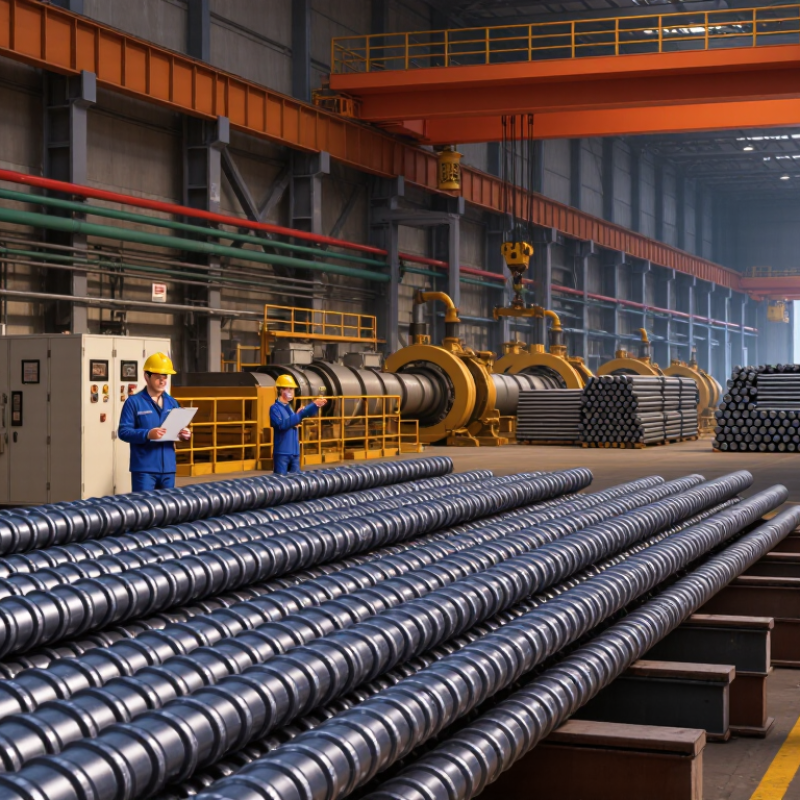
Carbon steel rebar is a steel bar embedded in concrete to help structures resist tension. Concrete performs well under compression, but it is weaker when pulled or bent. Rebar helps manage those forces. Its raised ribs grip the surrounding concrete and reduce slipping under load.
You will find rebar in foundations, floor slabs, columns, beams, retaining walls, roads, and bridges. In a home foundation, for example, bars may sit in a tied grid before concrete is poured. In a bridge deck, reinforcement helps the concrete cope with repeated traffic loads and temperature changes. The exact bar size, grade, spacing, and placement depend on the structural design and site conditions.
Details matter. Concrete usually shields carbon steel from corrosion, but cracks can let water and salts reach the bars. Over time, rust may expand and damage the surrounding concrete. That sounds straightforward, but real projects involve uneven surfaces, tight corners, and crowded reinforcement. Crews need clear drawings and careful checks before pouring. A small placement error can be hard to correct once the concrete sets. Rebar is common, not foolproof. Proper detailing and inspection still count.
Carbon Steel Rebar Grades and Strength
Carbon steel rebar reinforces concrete in structures such as foundations, slabs, beams, columns, and retaining walls. The chart shows the specified minimum yield strength for selected ASTM A615/A615M grades; the appropriate grade depends on the project design and specifications.
How to Assess Rebar Suppliers in 2026
In 2026, assessing a Carbon Steel Rebar Supplier takes more than comparing prices. Start with documented quality and traceability. Request recent mill test certificates and check that each document matches the supplied grade, dimensions, and heat number. Confirm which technical standards apply to your project and market; requirements can differ. Paperwork matters.
Then examine delivery performance and stock handling. Ask for realistic lead times, recent on-time delivery records, and clear procedures for reporting damaged or mismatched bundles. Compare the quoted schedule with your construction sequence, not just the earliest date offered. A low price can lose its appeal if a missing truck delays a concrete pour. Look for rust, bent bars, or unreadable bundle tags when inspecting a shipment. Small details count.
Communication is another useful test. Ask how the supplier handles a specification change or a failed inspection, and who will provide the supporting records. Specific answers are more reassuring than broad promises. Still, no checklist catches every problem; a sample review cannot guarantee every future batch will be consistent. Where feasible, verify critical claims with independent testing or project inspections, and keep the results on file. That takes time, but it makes comparisons more grounded.
How Supplier Strengths Differ Across Regions
In 2026, a strong carbon steel rebar supplier is not simply the one offering the lowest price. Regional strengths often depend on mill capacity, delivery routes, product availability, and familiarity with local project specifications. On a busy jobsite, a clearly marked bundle and a dependable truck schedule can matter as much as a small price difference.
Coastal suppliers may benefit from port access and efficient imports, while inland producers can offer shorter delivery routes to nearby construction hubs. In regions with established rail networks, larger orders may move more predictably by rail than by road. Buyers should check mill test certificates, heat numbers, bar markings, and lead times before placing an order. Small details matter. Regional advantages are not guarantees; weather, congestion, and production delays can disrupt even a well-planned shipment.
Compare suppliers using the same checklist. Ask how they handle short-notice orders, mixed bar sizes, and documentation changes. A low quote can still be a poor fit if stock is limited or delivery dates are vague. I would also question any claim of consistent supply without recent delivery records. That may sound cautious, but procurement plans often rely on assumptions that deserve a second look.
How to Choose a Supplier for a Rebar Project
In 2026, a “top” carbon steel rebar supplier is one that can meet your project’s specifications, schedule, and documentation needs—not simply offer the lowest price. Confirm the required grade, bar sizes, lengths, and applicable standards before requesting quotes. Ask for mill test certificates showing chemical composition and mechanical properties, and check that heat or batch numbers can be traced to the delivered bundles. Check the paperwork.
Compare quotations line by line. Freight, cutting, bending, unloading, and minimum order quantities can change the real cost. Ask how the supplier handles substitutions or delayed shipments, and whether stock is reserved for your delivery dates. For a large order, request a sample bundle or arrange an inspection before dispatch. Look for consistent rib patterns, clear bundle tags, and bars free from damage that could complicate handling. A neat website proves little. A responsive technical contact and precise written answers are more useful. Still, paperwork and promises cannot prevent every delay; leave room in the schedule, and verify details again when the order is confirmed.
