
Top 10 Fluid End Modules Suppliers Worldwide?
Fluid End Modules are critical pressure-bearing components in triplex and quintuplex pumps used for drilling, well stimulation, and industrial fluid transfer. They absorb repeated hydraulic loads, abrasive solids, and rapid pressure changes. A failure can stop a pumping spread within minutes. It can also damage valves, liners, seats, and nearby piping.
Recent industry reports show why supplier selection remains important. Baker Hughes’ international rig count continues to reflect changing drilling activity across North America, the Middle East, and other producing regions. The International Energy Agency’s Oil 2024 outlook also highlights ongoing investment in upstream operations, despite efficiency pressures and energy-transition uncertainty. Meanwhile, reports from S&P Global Commodity Insights emphasize equipment reliability, supply-chain resilience, and operating-cost control across oilfield services. These trends support continued demand for durable Fluid End Modules.
This article reviews ten worldwide suppliers through practical criteria. These include material quality, pressure ratings, machining accuracy, replacement availability, customization, and field support. Manufacturer experience matters. So does documented performance under abrasive, high-pressure conditions. However, supplier comparisons are not perfectly uniform. Product names, regional subsidiaries, and published specifications often differ. Some claims also depend on customer applications rather than independent testing. That limitation deserves attention.
The strongest suppliers usually provide more than a forged body. They offer compatible valves, liners, expendable parts, technical drawings, inspection records, and responsive service. In real operations, a well-machined module with fast delivery may outperform a cheaper alternative. That sounds obvious, but procurement teams sometimes overlook it. This ranking therefore focuses on verifiable capabilities, industry reputation, and practical value for demanding pumping environments.
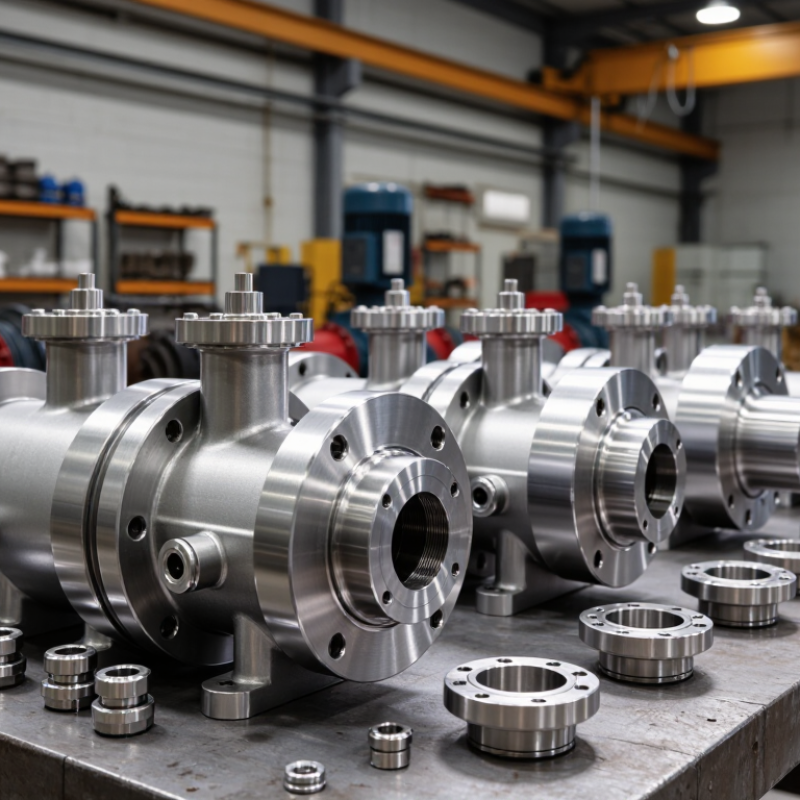
Table of Contents [Hide]
Fluid End Modules: Definition, Functions, and Core Components
Fluid End Modules: Definition, Functions, and Core Components
A fluid end module is the pressure-bearing section of a reciprocating pump. It guides fluid movement while containing repeated pressure cycles. In drilling, chemical processing, and industrial water systems, this assembly faces severe mechanical and chemical stress. Field technicians often inspect it before changing the entire pump. That approach can reduce downtime, but only when the module matches operating conditions.
Its main function is controlled suction and discharge. During each stroke, valves open and close against changing pressure. Core components include the fluid end body, suction and discharge valves, valve seats, liners, pistons or plungers, packing, and discharge manifolds. Some designs also include pulsation dampeners or replaceable wear inserts. Small surface damage matters. A scratched valve seat can cause leakage, heat, and unstable flow. An incorrectly fitted liner may fail much earlier than expected.
When comparing worldwide suppliers, buyers should examine material certificates, dimensional records, pressure-test reports, and replacement-part availability. Forged alloy steel may suit high-pressure service, while corrosion-resistant materials can support aggressive fluids. However, material selection alone is not enough. Temperature, abrasive solids, stroke rate, and cleaning methods must be reviewed together. One detail is often missed: maintenance access. A technically excellent module becomes less useful if technicians cannot inspect valves safely and quickly. Supplier claims also need practical verification through drawings, inspection data, and service experience. Specifications can be imperfect. Operating history often reveals more.
Top 10 Fluid End Modules Suppliers Worldwide: Definition, Functions, and Core Components
Anonymized supplier profiles are arranged by broad international market visibility and capability coverage. The table focuses on supplier types, manufacturing capabilities, and fluid-end module specifications rather than company or brand names.
| Rank | Supplier Profile | Primary Market Region | Typical Applications | Common Fluid-End Module Types | Core Components Usually Supplied | Common Material Options | Typical Pressure Range | Key Supply Strength |
|---|---|---|---|---|---|---|---|---|
| 1 | Integrated Oilfield Equipment Manufacturer | North America and global service bases | Well stimulation Fracturing Cementing | Heavy-duty reciprocating-pump fluid ends; modular five-cylinder and triplex configurations | Fluid-end body, suction and discharge manifolds, valve seats, valves, plugs, liners, and packing assemblies | Forged alloy steel, stainless steel trim, tungsten-carbide-coated wear surfaces | Approximately 10,000–15,000 psi for common high-pressure stimulation equipment | Large installed base, field-replacement support, and complete module integration |
| 2 | Specialized Mud-Pump Fluid-End Producer | North America, Europe, and the Middle East | Land drilling Offshore drilling Workover | Triplex and quintuplex mud-pump fluid ends with replaceable liners | Valve covers, liners, pistons, piston rods, liners, valve guides, seats, and discharge plugs | High-strength forged alloy steel with corrosion-resistant internal components | Commonly 3,000–7,500 psi discharge pressure, depending on pump size and configuration | Interchangeable replacement parts and compatibility with widely used drilling-pump designs |
| 3 | Precision Forging and Machining Specialist | Western Europe and Central Europe | Process industries Chemical transfer High-pressure cleaning | Custom plunger-pump and diaphragm-pump fluid ends | Pump heads, suction and discharge ports, check valves, sealing chambers, plungers, and valve assemblies | Stainless steel, duplex stainless steel, nickel alloys, and hardened tool steels | Approximately 100–1,000 bar for industrial high-pressure pumping applications | Close-tolerance machining, corrosion-resistant metallurgy, and engineered-to-order production |
| 4 | Asian Oilfield Replacement-Parts Manufacturer | East Asia and South Asia | Drilling Workover Mining | Replacement fluid ends for triplex and quintuplex pumps | Fluid-end blocks, liners, valve assemblies, seats, pistons, expendable seals, and cover plugs | Forged alloy steel, chrome-plated liners, ceramic-coated wear parts, and elastomeric seals | Approximately 3,000–7,500 psi for common mud-pump configurations | Competitive production costs, broad dimensional compatibility, and high-volume replacement supply |
| 5 | High-Pressure Waterjet and Cleaning Equipment Supplier | Europe, North America, and the Asia-Pacific region | Waterjet cutting Industrial cleaning Descaling | Compact plunger-pump fluid ends and high-pressure pump heads | Pump head, plungers, high-pressure seals, inlet and outlet check valves, valve seats, and manifolds | Stainless steel, ceramic plungers, carbide wear parts, and engineered polymers | Approximately 500–3,000 bar, depending on application and pump design | High-cycle operation, compact design, and wear-resistant sealing systems |
| 6 | Industrial Metering-Pump Module Manufacturer | Europe, North America, and Japan | Water treatment Chemical dosing Petrochemical processing | Plunger, diaphragm, and hydraulic-diaphragm fluid ends | Diaphragms, pump heads, check valves, relief valves, pulsation dampeners, and dosing connections | 316 stainless steel, Hastelloy-type nickel alloys, PTFE, reinforced polymers, and ceramics | Typically 10–400 bar, depending on flow rate, fluid chemistry, and metering design | Accurate flow control, chemical compatibility, and packaged dosing solutions |
| 7 | Mining and Slurry-Pump Fluid-End Supplier | Australia, South America, Africa, and North America | Mining Slurry transport Mineral processing | Abrasive-duty plunger and diaphragm-pump fluid ends | Slurry chambers, diaphragms, valve balls, valve seats, liners, discharge manifolds, and wear plates | High-chrome alloys, duplex stainless steel, rubber-lined components, ceramics, and polyurethane | Commonly 50–300 bar for abrasive slurry and mineral-processing services | Resistance to abrasive solids, replaceable wear parts, and heavy-duty maintenance designs |
| 8 | Hydraulic Test and Pressure-Control Equipment Supplier | North America, Europe, and the Middle East | Pressure testing Pipeline testing Hydrostatic testing | High-pressure test-pump fluid ends and compact reciprocating modules | Test-pump heads, check valves, relief valves, plungers, seals, manifolds, and pressure connections | Stainless steel, alloy steel, carbide seats, high-pressure polymers, and reinforced elastomers | Approximately 300–2,000 bar for hydrostatic and pressure-test equipment | Compact systems, rapid pressure build-up, and standardized safety components |
| 9 | Custom Engineered Pump-System Integrator | Europe, the Middle East, and Southeast Asia | Desalination Energy systems Industrial processing | Application-specific plunger, piston, and diaphragm fluid-end modules | Custom pump heads, manifolds, valves, diaphragms, pulsation control parts, seals, and instrumentation ports | Duplex and super-duplex stainless steel, nickel alloys, titanium, ceramics, and fluoropolymers | Approximately 50–1,000 bar, selected according to process conditions | System engineering, material selection, skid integration, and project-based customization |
| 10 | Regional Service and Remanufacturing Specialist | Latin America, Africa, the Middle East, and Southeast Asia | Field maintenance Pump overhaul Emergency replacement | Rebuilt and replacement fluid-end modules for drilling and industrial pumps | Reconditioned fluid-end bodies, replacement liners, pistons, valve assemblies, seats, plugs, and seal kits | Alloy steel, stainless steel, chrome-plated surfaces, tungsten-carbide coatings, and elastomers | Typically 3,000–7,500 psi for drilling equipment and up to 400 bar for industrial pumps | Short lead times, local inventory, repair services, inspection, and dimensional refurbishment |