
Superabrasive

Top Low Profile CPU Cooler Manufacturers in China?

Choosing a Low Profile Cpu Cooler is rarely just a matter of comparing height and price. In compact desktops, small-form-factor workstations, and home theater PCs, a few millimeters can decide whether the cooler clears the case or blocks nearby memory. Fan noise, heat-pipe layout, mounting hardware, and processor compatibility matter just as much. Small details count.

China has a broad base of cooling-product manufacturers, from established export suppliers to specialized factories serving OEM and custom projects. Their capabilities can differ considerably. A product page may show a neat aluminum fin stack, but buyers should also examine specification sheets, sample quality, production consistency, and communication about testing. Ask for measurable details: cooler dimensions, fan speed range, supported socket types, and thermal test conditions. Results depend on the test setup. That point is easy to overlook.

This guide explores manufacturers through practical factors rather than promotional claims alone. It considers product range, engineering support, quality-control practices, customization options, and how clearly each supplier documents its work. Where public information is limited, that should be treated as a limitation, not filled with guesswork. A polished catalog is useful, but it cannot replace a sample evaluation or a clear technical discussion. The right partner depends on your case design, target processor, order volume, and required service level. Even then, a cooler that performs well in one enclosure may behave differently in another. Careful comparison helps narrow the field—and leaves room to ask better questions.
Top Low Profile CPU Cooler Manufacturers in China?

Understanding Low-Profile CPU Coolers and Their Applications

Understanding Low-Profile CPU Coolers and Their Applications

A low-profile CPU cooler uses a short heatsink and compact fan to fit where standard tower coolers cannot. It suits small-form-factor desktops, home-theater PCs, and slim office systems. Its reduced height can free space above the motherboard, but it also limits fin area and airflow. Cooling performance depends on the processor, case ventilation, fan speed, and cooler design—not height alone. A published thermal rating is useful, though real results vary between systems.

Tips: Measure the case’s cooler-height limit before buying. Check RAM clearance and nearby motherboard components, too. A few millimeters matter. Compare noise and airflow figures under similar testing conditions; ratings from different methods may not be directly comparable.

For compact builds, look for evenly spaced fins, a firmly mounted base, and heatpipes positioned to contact the processor effectively. Manufacturers’ quality controls also matter: consistent dimensions and fan testing help prevent fit and noise surprises. If comparing suppliers in China, ask for dimensional drawings, compatibility details, and test conditions rather than relying on broad performance claims. Low-profile cooling can work well for moderate workloads, but sustained heavy processing may expose its limits. That trade-off deserves a second look before choosing the smallest option.

China’s CPU Cooler Manufacturing Landscape

China’s CPU cooler manufacturing landscape combines metalworking, component sourcing, and assembly across established industrial regions. Low-profile models demand careful coordination: a few millimeters can affect memory clearance, case compatibility, and airflow. Manufacturers typically shape aluminum fins through extrusion or stamping, then assemble bases, heat pipes, and compact fans. Each step influences cooling performance and noise.

Production quality depends on more than a polished sample. Practical checks include measuring base flatness, inspecting solder joints, and testing fan vibration under sustained load. Small differences matter. Export-focused factories may also adjust packaging and documentation for different customer requirements, though buyers should verify specifications directly rather than rely on catalog images. Capacity and engineering depth vary between suppliers. A low price can conceal thinner materials or limited validation. That trade-off deserves a closer look. And honestly, compact coolers are not always quiet at high fan speeds; the result depends on the case, processor, and workload. Reliable sourcing benefits from clear drawings, defined test conditions, and sample evaluation before production orders.

Top Low Profile CPU Cooler Manufacturers in China? - China’s CPU Cooler Manufacturing Landscape
Landscape dimension Common industry practice Relevance to low-profile coolers What buyers can verify
Supplier structure The supply chain includes finished-cooler manufacturers, OEM/ODM providers, and specialist component suppliers. A supplier may design and assemble the complete cooler or source parts such as fans, heat pipes, and fasteners from partners. Confirm which production steps are performed in-house and which are subcontracted.
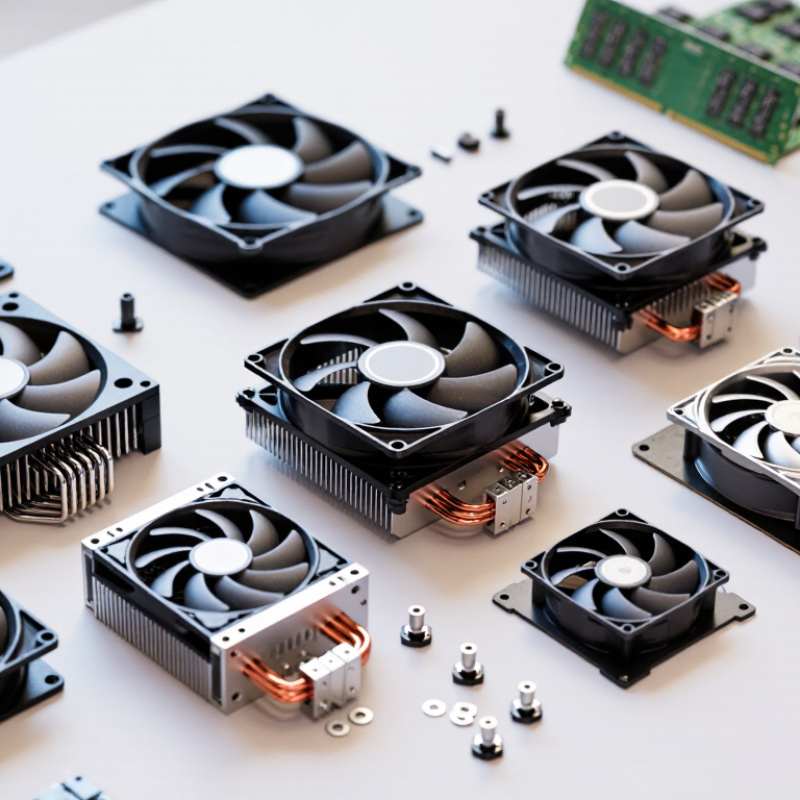
Product architecture Low-profile designs commonly use a top-down layout, with a fan positioned above a heatsink; heat pipes may be incorporated depending on the design. Compact layouts can help meet restricted height and clearance requirements, but motherboard and case compatibility still need to be checked. Request a dimensioned drawing, cooler height, socket mounting details, and a clearance check for nearby components.
Heatsink construction Common construction approaches include stamped or formed fins, extruded aluminum sections, and copper or aluminum base components. The choice depends on design and cost targets. Fin spacing, fin area, base contact, and airflow path influence cooling performance within a limited volume. Check material specifications, construction drawings, surface finish, and sample consistency.
Heat-pipe integration Some designs use heat pipes to move heat from the base into the fin stack; other compact designs rely on a simpler solid-metal heatsink. Heat pipes can support heat spreading, but their presence alone does not establish the cooler’s thermal performance. Ask for the test setup, operating conditions, and measured results for the specific cooler configuration.
Fan and acoustics Compact axial fans are commonly used; size, speed range, bearing design, and control method vary by product. The fan must balance airflow and noise while fitting the cooler’s height and surrounding enclosure. Verify fan dimensions, connector, speed-control behavior, noise-test method, and replacement availability.
Manufacturing and quality control Production may involve metal forming or machining, joining, fan assembly, mounting-hardware installation, and final inspection. Dimensional variation, mounting pressure, fin damage, and assembly quality can affect fit and repeatability. Review inspection criteria, sample approval procedures, traceability, and production-lot test records.
Customization and sourcing OEM/ODM projects may cover dimensions, fan selection, mounting kits, packaging, and product documentation. Custom changes can affect fit, tooling, thermal behavior, lead time, and qualification requirements. Request a written specification, approved sample, change-control process, and production schedule.
Supplier evaluation Supplier capability is best assessed through product documentation, samples, manufacturing evidence, and project-specific validation rather than a generic ranking. Cooling results depend on the processor heat load, case airflow, ambient conditions, and installation—not just the cooler’s profile. Compare like-for-like thermal and acoustic tests, compatibility evidence, warranty terms, and quality documentation.

Leading Chinese Manufacturers of Low-Profile CPU Coolers

Leading Chinese Manufacturers of Low-Profile CPU Coolers

China’s cooling-supply chain combines metal forming, heat-pipe production, fan assembly, and precision machining. For low-profile CPU coolers, manufacturing capability matters most where space is tight: fin edges must stay even, mounting pressure must be consistent, and the fan must clear nearby memory modules. Small details matter.

IDC reported that worldwide PC shipments reached 262.7 million units in 2024, a 1.0% increase from 2023, in its Worldwide Quarterly Personal Computing Device Tracker. This figure signals a large PC market, but does not measure demand for compact coolers specifically. Buyers should ask manufacturers for test results at stated processor power, ambient temperature, and fan speed. A temperature claim without these conditions is hard to compare.

Strong suppliers can provide dimensional drawings, material specifications, and repeatable noise and thermal tests. Check cooler height against the case limit, then inspect clearance around the memory slots and motherboard power components. Request samples from more than one production batch; small variations can affect fit. One caveat: public reports rarely separate low-profile cooler sales from the wider thermal-hardware market, so supplier-level evidence remains important.

Comparing Designs, Compatibility, and Cooling Performance

Low-profile CPU cooler manufacturers in China work within tight limits: a few centimeters of height can decide whether a cooler fits beneath a side panel. Designs often use compact fin stacks, short heat pipes, and small fans. A thinner build improves clearance, but it can also reduce airflow across the fins. Small details matter. Check the stated cooler height against the case limit, leaving room for panel tolerances and vibration.

Compatibility involves more than the socket. Wide memory modules, tall motherboard heatsinks, and nearby graphics cards may obstruct installation. Ask manufacturers for dimensioned drawings and clearance diagrams, not just a list of supported platforms. Mounting pressure and bracket quality deserve attention too. A cooler that fits on paper may still be awkward to install. That is easy to overlook.

Cooling performance should be compared under similar conditions. Look for test results that identify the processor, power level, fan speed, room temperature, and noise measurement distance. A cooler may handle everyday office loads quietly yet run warmer during sustained rendering. Fan curves can change the experience. Test results are not perfectly transferable between cases, so independent measurements help. Even then, one result rarely tells the whole story.

Criteria for Evaluating Chinese CPU Cooler Manufacturers

A low-profile CPU cooler must fit tight spaces without sacrificing dependable heat transfer. When evaluating Chinese manufacturers, request test data for the exact cooler model, not a similar tower design. Compare temperatures under the same processor load, ambient room temperature, fan speed, and test duration. Noise readings matter too, especially in compact systems where the fan sits close to the user. Small details matter.

Inspect production quality as carefully as performance. Check whether the copper base sits evenly, heat pipes are securely joined, and fin edges remain straight after assembly. Ask how the factory checks mounting pressure and cooler height across production batches. A sample can look excellent while later units vary. This is easy to overlook. Request inspection records, material specifications, and clear explanations of any test limits. Practical answers are more useful than broad claims.

Fit and support deserve equal attention. Confirm socket compatibility, memory clearance, case-height limits, and the included mounting hardware. Ask about sample lead time, repeat-order consistency, and how defects are documented and handled. A responsive engineering contact can help resolve fit issues before a large order. Still, one successful sample proves little. Compare multiple units, review the evidence, and record your own test conditions before making a supplier decision.

Criteria for Evaluating Chinese Low-Profile CPU Cooler Manufacturers

Suggested weighting for a 100-point supplier evaluation scorecard

Thermal performance receives the highest suggested weight, followed by compatibility and dimensions. These are proposed buyer-evaluation weights, not measured market shares or ratings of individual manufacturers.

All search results