What Are the Top Trolley Rail Types in 2026?
Choosing a Trolley Rail system in 2026 is not just a matter of selecting steel and wheels. The right track affects load capacity, travel path, maintenance access, and how safely workers move materials. Common options include enclosed-track rail, I-beam rail, monorail, and power-and-free systems. Each fits different loads and layouts. A tight production cell may favor enclosed track; a long, heavier-duty route may call for an I-beam system. Details matter.
Industry investment offers useful context. MHI and Deloitte’s 2024 Annual Industry Report found that 55% of surveyed supply-chain leaders planned to increase technology investment. That figure does not measure trolley-rail purchases specifically. It does show why buyers are comparing automation, labor needs, and system flexibility together. MHI CEO John Paxton has emphasized resilient, technology-enabled supply chains; applied here, the practical message is to choose equipment that supports dependable operations, not novelty alone.
There is no universal winner. A rail that performs well on a clean factory floor may struggle with tight curves, dust, or frequent load changes. That is easy to overlook. This guide compares the leading trolley-rail types by design, capacity, installation needs, and likely applications. It also flags trade-offs buyers should verify with engineers and manufacturers, including hanger spacing, curve geometry, and future expansion. One caution: published capacities are not interchangeable, and actual performance depends on the complete installed system.
Understanding Trolley Rails and Their Role in Material Handling
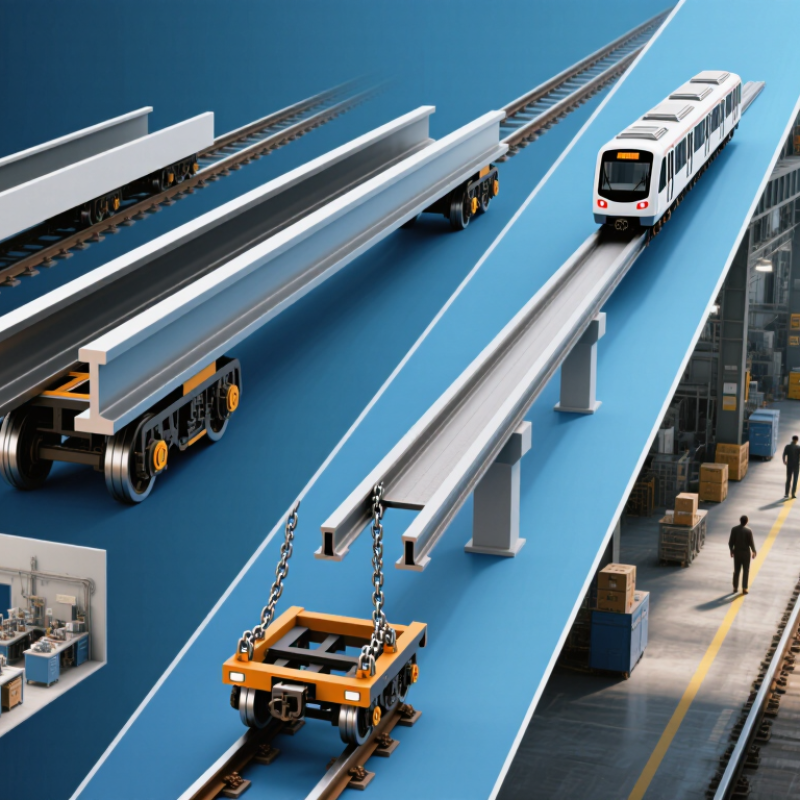
Trolley rails guide suspended loads through a facility, keeping movement above aisles, workstations, and floor traffic. Their role is practical: support the trolley, control its path, and transfer loads between tasks. Enclosed-track rails suit lighter, cleaner-duty handling and help limit debris buildup. I-beam rails commonly serve heavier loads, while monorail layouts move materials along a fixed route. The right choice depends on load, span, travel frequency, and the building’s structure.
Not just load.
MHI’s 2024 Annual Industry Report found that 55% of respondents planned to increase supply-chain technology and innovation investment within two years. That figure is not specific to trolley rails, but it reflects pressure to improve material flow.
A rail system should fit the actual route, not just a capacity chart. Check trolley wheel compatibility, curves, switches, runway alignment, and clearance around lights or ductwork. Measure the path under working conditions. A common blind spot is assuming a straight drawing represents a busy shift; operators may need different access or stopping points.
That matters.
Walk the route with the people who move the loads, then compare their needs with the rail’s rated capacity and installation limits.
The Main Trolley Rail Types Used in 2026
The main trolley rail types used in 2026 include I-beam rails, enclosed-track rails, and fabricated track systems. I-beam rails have an open profile, making the trolley wheels and rail easy to inspect. They suit many workshop and industrial lifting setups, but exposed surfaces can collect dust. Enclosed-track rails protect the running surface and often move smoothly under lighter loads. Their compact shape can also help in work areas with limited headroom.
Fabricated track systems use formed or welded steel sections to create curves, switches, and custom layouts. They can support more complex material-flow routes, though planning and installation require careful attention. Some systems use aluminum track, which is lighter but may not suit every load or environment. Check the rail’s rated capacity, span, suspension points, and trolley compatibility before choosing. A rail that looks sturdy is not proof of adequate capacity. There is no single best type; the details of the building and task matter.
Tips: Measure the available clearance and inspect the support structure before selecting a rail. Ask a qualified engineer to verify loads and hanger spacing. Keep access for inspection in mind. It is easy to overlook.
How Rail Designs Differ in Capacity and Performance
What Are the Top Trolley Rail Types in 2026?
How Rail Designs Differ in Capacity and Performance
Trolley rail design affects load capacity, travel smoothness, and maintenance needs. Enclosed-track systems keep the trolley wheels partly shielded from dust and contact. They often suit lighter loads, compact work areas, and frequent handling. But their smaller running surfaces may limit capacity, depending on the rail section and support spacing. Details matter.
I-beam rails provide an open, sturdy running surface for heavier loads and demanding duty cycles. Their exposed wheels are easier to inspect, though debris can collect around the track. Structural-channel or box-style rails can be configured for particular spans and load paths. That flexibility comes with a catch: alignment and installation quality matter greatly. A small mismatch can cause rough travel or uneven wheel wear.
Capacity is not determined by rail shape alone. Engineers also consider trolley spacing, rail span, hanger locations, load distribution, and forces from starts and stops. Curves and switches can reduce practical performance, even when the straight rail appears adequately rated. For a real installation, compare the rated system capacity with the actual load and operating pattern. This part is easy to overlook. A useful specification should include the rail, trolley, supports, and connections—not just the track profile.
Best Applications for Each Trolley Rail Type
Enclosed-track rails work well in light-duty assembly areas, packing lines, and smaller workshops. Their compact profile helps keep dust and debris away from the trolley wheels. They are also easy to suspend over workstations. Check the load rating and hanger spacing carefully; a neat-looking track can still deflect if support points are too far apart.
I-beam rails suit heavier loads and rugged settings such as fabrication shops, maintenance bays, and warehouses. Their open shape makes inspection straightforward, while standard sections can be practical for long, mostly straight routes. They need regular attention, though. Dust, wear, or a misaligned trolley may affect smooth travel, and sharp curves are generally a poor fit.
Patented track, often made from engineered steel sections, is useful for higher-capacity systems, longer spans, and routes with curves or switches. It can serve production lines where a trolley must move between work areas. Curved monorail layouts are especially useful when floor space is limited, but bends need to match the trolley and load. Small details matter. A frequent planning mistake is choosing rail by capacity alone; travel distance, mounting structure, and the actual load path deserve equal review. The right choice depends on the whole installation, not just the rail profile.
What Are the Top Trolley Rail Types in 2026? — Best Applications for Each Trolley Rail Type | Trolley Rail Type | Typical Design | Best Applications | Key Advantages | Planning Considerations |
| I-Beam Track | An exposed structural steel I-beam with trolley wheels running on the lower flange. | Heavy-duty overhead material handling, industrial hoists, workshops, fabrication areas, and applications where the track also serves as a structural beam. | Rugged construction; widely used with load-bearing trolleys; can support demanding service when correctly engineered. | Check beam strength, flange dimensions, trolley compatibility, and support spacing. The exposed running surface can collect dust and debris. |
| Enclosed Track | A formed track profile that surrounds or shields much of the trolley wheel path. | Light- to medium-duty overhead handling, assembly areas, workstations, and facilities where a compact, relatively clean-running system is useful. | Enclosed running surfaces help limit exposure to dust and debris; generally suited to modular layouts and frequent manual movement. | Confirm the system’s rated load, trolley and hanger compatibility, and suitability for the operating environment. Capacity varies by track design. |
| Patented Track | A purpose-designed, hardened track profile, commonly used with matching industrial trolleys and track components. | Industrial overhead conveyors, production lines, storage and transfer systems, and routes that require curves, switches, or other track components. | Designed for repeated trolley travel and integrated system components; can be configured for continuous material-flow routes. | Track, trolley, curves, switches, and supports need to be specified as a compatible system. Verify load ratings and duty requirements for the complete route. |
| Curved Track Sections | Purpose-made curved sections used as part of an otherwise compatible rail system; they are a route configuration rather than a separate rail profile. | Overhead routes that need to turn around equipment, connect work areas, or direct loads between process stations. | Enables directional changes without requiring a straight-line layout throughout the facility. | Use curves approved for the selected track and trolley. Consider curve radius, load behavior, clearances, and any effects on trolley movement. |
Selection note: Rail capacity depends on the complete system—including track, trolley, supports, connections, span, and operating conditions. Confirm rated loads and installation requirements with the system documentation and a qualified engineer.
Key Factors for Choosing a Trolley Rail System
Choosing a trolley rail system starts with the work, not the catalog. Common options include enclosed-track rails for compact handling, I-beam systems for heavier loads, and monorail layouts for fixed routes. Start with the load. Include the trolley, lifting device, and the heaviest item you expect to move. Then check the rail’s rated capacity and the support structure; a strong rail cannot compensate for weak mounting points.
Measure the route carefully. Note bends, changes in elevation, available headroom, and where workers need to load or unload. A tight turn may suit one rail profile but create binding or awkward movement in another. For repeated use, compare rolling resistance and the effort needed to start and stop a loaded trolley. Measure the route again. Small errors happen.
The environment matters, too. Dust, moisture, temperature changes, and abrasive debris can affect wheels, bearings, and maintenance intervals. Consider duty cycle: occasional light movement calls for different specifications than frequent shifts carrying near-capacity loads. Ask a qualified system designer to verify load calculations, clearances, and support spacing against site conditions. A tidy drawing can still miss a low beam or an inconvenient service access point. That is worth checking before installation.
