
What Is an IML Container Manufacturer?
An Iml Container Manufacturer produces containers with labels placed inside the mold during injection molding. The label becomes part of the container wall. This process creates sharp graphics, consistent alignment, and durable decoration. It is common in yogurt cups, food tubs, household products, and personal-care packaging.
Dr. Edward Kosior, a recognized packaging and recycling specialist, has stated, “Packaging design must consider what happens after use.” This idea matters when evaluating an Iml Container Manufacturer. A capable supplier should discuss resin selection, label compatibility, mold temperature, cycle time, and end-of-life recovery. The factory floor provides useful evidence. Watch how operators check label position, remove flash, and record rejected pieces. Small details reveal production discipline.
Quality is not only visual. The container must resist cracking, hold its shape, and protect the product during transport. Food-contact applications also require controlled materials, documented testing, and dependable traceability. A serious Iml Container Manufacturer can explain these controls without hiding behind vague promises. It should provide samples, dimensional data, and realistic production limits.
No factory is flawless. Labels can shift. Colors can vary slightly. A thoughtful manufacturer admits these risks and shows how it reduces them. This honesty builds trust. It also helps buyers compare suppliers fairly. The best choice may not offer the lowest quotation. It may offer stable output, responsive engineering, and practical support when a mold, label, or shipment causes trouble. Understanding these responsibilities makes the term Iml Container Manufacturer much clearer.
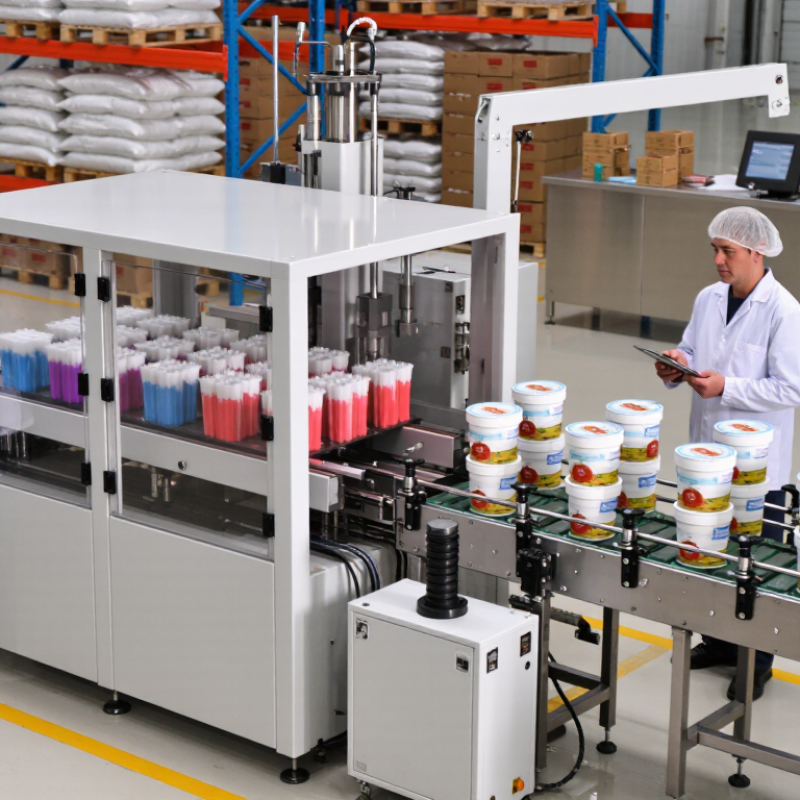
Table of Contents [Hide]
Definition and Role of an IML Container Manufacturer
What Is an IML Container Manufacturer?
Definition and Role of an IML Container Manufacturer
An IML container manufacturer produces rigid packaging with in-mold labeling technology. The label enters the mold before plastic is injected. It then becomes part of the container wall. This creates a clean surface, sharp graphics, and consistent positioning.
The manufacturer does more than mold containers. Its engineers select polymers, label films, inks, mold designs, and production settings. They also test heat resistance, moisture exposure, drop strength, and label adhesion. On a factory floor, this means checking a thin label stack, adjusting robotic placement, and inspecting every cavity. Small alignment errors can affect an entire shipment. The process looks simple. It is not.
Smithers’ The Future of Global Packaging to 2028 estimates that global packaging demand will continue growing toward more than one trillion dollars annually. Its analysis also identifies sustainability and production efficiency as major market pressures. An IML container manufacturer responds by reducing secondary labeling steps and improving material efficiency. However, IML does not automatically make packaging sustainable. Material choices, recycling systems, label compatibility, and container weight still matter. That point deserves more attention.
PMMI’s packaging workforce research also highlights labor shortages and rising automation needs. IML systems can reduce manual handling, but they require skilled setup and maintenance. A reliable manufacturer should provide process documentation, quality records, and realistic performance data. Claims without testing are weak. Experience matters, but careful measurement matters more.
What Is an IML Container Manufacturer? — Definition and Role of an IML Container Manufacturer
| Dimension | Definition or Activity | Role of the Manufacturer | Relevant Data or Verification Point |
|---|---|---|---|
| Industry Definition | An IML container manufacturer produces plastic containers that receive labels during the molding process. | Integrates container design, label preparation, molding, quality control, and delivery into one coordinated production system. | The label becomes part of the container surface during molding rather than being applied as a separate post-production labeling step. |
| IML Process | In-mold labeling places a pre-printed label inside a mold before plastic is formed around or against it. | Controls label positioning, mold setup, material flow, temperature, pressure, and cycle timing. | Typical process checks include label alignment, adhesion, surface appearance, container dimensions, and molding consistency. |
| Common Manufacturing Methods | Common methods include injection molding, thermoforming, and blow molding, depending on the container design. | Selects and operates the molding method that matches the required shape, wall thickness, material, volume, and performance. | Production specifications may include container capacity, neck finish, wall thickness, dimensional tolerances, and cycle time. |
| Materials | Suitable thermoplastics may include polypropylene, polyethylene, polyethylene terephthalate, or other application-approved polymers. | Matches resin properties with product compatibility, stiffness, impact resistance, transparency, temperature exposure, and regulatory requirements. | Material records can identify resin type, recycled-content percentage where applicable, colorant, batch number, and compliance documentation. |
| Container Design | Design covers the container geometry, opening, closure interface, label area, stacking features, and end-use requirements. | Uses design-for-manufacturing principles to reduce defects, simplify demolding, support efficient filling, and maintain structural performance. | Engineering reviews may assess capacity, top-load strength, drop performance, leak resistance, and compatibility with filling equipment. |
| Label Integration | The label is positioned in the mold and bonds or fuses with the container during forming. | Ensures accurate placement, suitable label material, correct artwork orientation, and reliable integration with the container surface. | Inspection points include registration, wrinkles, bubbles, scratches, color consistency, print legibility, and label edge condition. |
| Barrier and Protection | Some containers require protection against moisture, oxygen, light, chemicals, or product migration. | Recommends suitable structures, coatings, materials, or design features based on the product and storage conditions. | Validation may include seal integrity, permeability testing, chemical compatibility, shelf-life studies, and transport simulation. |
| Quality Control | Quality control verifies that containers and integrated labels meet agreed specifications. | Establishes inspection plans, sampling procedures, traceability records, corrective actions, and release criteria. | Typical measurements include weight, dimensions, capacity, appearance, leak rate, closure fit, and defect rate. |
| Food and Product Safety | Containers used for food, beverages, cosmetics, pharmaceuticals, or chemicals must meet the requirements applicable to their use. | Maintains material declarations, manufacturing hygiene controls, contamination prevention, and product-specific compliance documentation. | Documentation may cover certificates of analysis, migration testing, lot traceability, hygiene procedures, and change-control records. |
| Production Efficiency | IML can combine molding and labeling into a streamlined manufacturing operation. | Optimizes automation, mold utilization, cycle settings, material handling, and changeover procedures. | Useful operational indicators include output per hour, setup time, scrap percentage, equipment availability, and overall equipment effectiveness. |
| Decoration and Durability | In-mold labels can provide high-quality graphics and resistance to peeling because the decoration is integrated during molding. | Controls print quality, label surface protection, color reproduction, and resistance to handling and environmental exposure. | Testing may include abrasion, moisture, temperature, chemical exposure, and adhesion or delamination assessment. |
| Sustainability | Sustainability considerations include material efficiency, lightweighting, recycled content, energy use, and end-of-life recyclability. | Evaluates design and material choices while considering container performance and compatibility with available recycling systems. | Relevant data includes container weight, recycled-content share, production scrap, energy consumption, and material composition. |
| Supply Chain Support | The manufacturer supplies finished containers, labels, technical specifications, packaging information, and production documentation. | Coordinates forecasting, production scheduling, packaging, inspection release, logistics, and technical communication. | Performance can be tracked through lead time, on-time delivery, minimum order quantity, batch traceability, and complaint response time. |
| Customer Collaboration | IML container manufacturing typically requires cooperation between packaging designers, mold engineers, label suppliers, fillers, and regulatory teams. | Translates functional, visual, production, and compliance requirements into a manufacturable container specification. | Project records may include approved drawings, label proofs, color standards, testing protocols, samples, and engineering-change notices. |