
A vacuum coating machine can turn a surface into a product advantage. It applies thin films that may improve wear resistance, appearance, or functional performance. The details matter: coating material, chamber size, cycle time, and production volume all affect the investment. A polished sample is not enough. Buyers should also ask how consistently the machine coats a full batch and how much downtime maintenance may require.
Market data offers useful context, but not a guarantee of returns. Fortune Business Insights valued the global physical vapor deposition market at USD 20.36 billion in 2023 and projected growth to USD 34.83 billion by 2032. This figure covers the PVD market, not machine sales alone; it signals demand across applications rather than proving any single machine will pay for itself. Dr. Donald M. Mattox, a leading PVD authority, describes the process as “material vaporized from a solid or liquid source” and deposited onto a substrate in a vacuum, as outlined in his Handbook of Physical Vapor Deposition (PVD) Processing. The practical takeaway is control. A stable vacuum, repeatable recipes, and trained operators can matter as much as headline capacity. Real shop floors are less tidy than brochures. Before choosing a system, compare sample results, throughput, service support, and total operating costs against your actual production needs. A careful trial can reveal limitations early. That is worth the extra time.
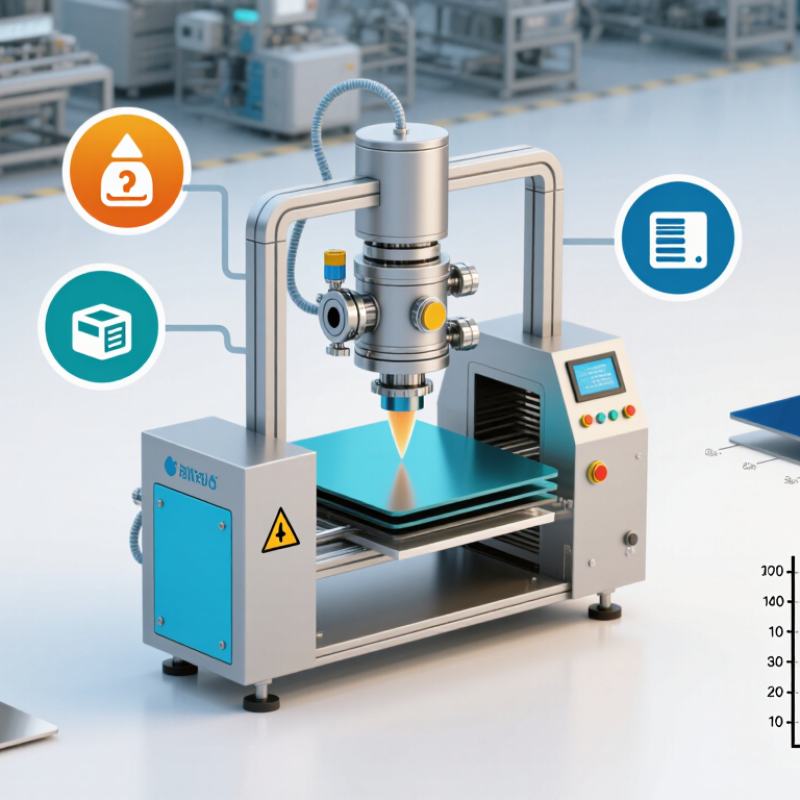
A vacuum coating machine deposits a thin functional layer inside a sealed chamber after air is pumped out. In physical vapor deposition, material is evaporated or sputtered from a source, then settles onto a prepared surface. The result may improve wear resistance, reflectivity, or appearance. Common substrates include metal parts, glass panels, and some plastics. Not every system uses the same process: chamber size, coating source, temperature, and fixture design all affect the finished layer. Small details matter.
SEMI’s 2024 mid-year World Fab Forecast projected global semiconductor manufacturing equipment sales of about $109 billion that year. This figure covers a broad equipment category, not vacuum coating machines alone, but it shows the precision and capital investment surrounding advanced manufacturing. For a business, the practical question is whether the machine can coat its actual parts consistently. Ask for sample runs using your substrate, target thickness, and production rate. Inspect the edges and recessed areas, not just the center. A glossy surface can still hide uneven coverage. Pump-down time and maintenance also deserve attention; they are easy to underestimate. That distinction matters.
How Does the Vacuum Coating Process Work?
A vacuum coating machine applies a thin layer of material to a prepared surface inside a sealed chamber. The part is cleaned, dried, and mounted so the coating can reach the intended areas. Small details matter. Fingerprints or leftover moisture may affect adhesion, even when the surface looks clean.
The chamber is then pumped down to low pressure. Depending on the coating method, the coating material is evaporated or sputtered into fine particles. These particles travel through the chamber and settle on the part, forming a thin film. The machine’s settings, such as power, time, and pressure, influence the coating’s thickness and uniformity. After deposition, the chamber returns to normal pressure, and the coated part is removed for inspection. Not every run behaves alike; part shape and surface preparation can change the result.
Tips: Keep parts clean and evenly spaced, and follow the equipment maker’s operating instructions. Test a sample when changing materials or settings. A quick visual check helps, but it cannot confirm every coating property.
What Business Benefits Can Vacuum Coating Provide?
Vacuum coating can help a business create durable, consistent surfaces on metal, plastic, glass, and other compatible parts. A thin film may improve wear resistance, reduce tarnishing, or add a controlled finish. For a production line, that can mean fewer appearance defects and less frequent replacement of coated components. Results depend on the material, coating process, and part design.
The commercial opportunity is growing. Grand View Research estimated the global physical vapor deposition market at USD 21.9 billion in 2023, with a projected 6.5% compound annual growth rate from 2024 to 2030. This forecast signals investment and demand, but it does not guarantee returns for an individual factory. A vacuum coating machine can also require substantial upfront spending, trained operators, and planned maintenance. That trade-off is easy to underestimate.
Tips: Test representative parts before committing. Track coating thickness, defect rates, cycle time, and cost per acceptable unit. Ask whether the finish solves a real production or customer problem. A glossy sample looks convincing; repeatable results matter more.
Typical PVD coating thickness ranges by application
PVD coatings are typically microns thin, enabling products to gain functional or decorative surface properties without adding substantial bulk. These approximate thickness ranges vary with coating material, equipment, and product requirements; they are not guaranteed performance or cost savings.
Vacuum coating machines serve businesses that need thin, consistent surface layers. Electronics makers use them on components and housings to improve appearance or functional performance. Automotive suppliers coat interior trim, reflectors, and selected metal parts. In optics, controlled coatings can help lenses and glass manage reflection or light transmission. Decorative goods, tools, and packaging components may also benefit. The exact result depends on the coating process, equipment setup, and part geometry.
Common substrates include stainless steel, aluminum, copper, glass, and some engineering plastics. Metals often accept coatings well after suitable cleaning and preparation. Plastics need careful temperature control because heat can warp or soften them. Glass surfaces also require thorough cleaning; even small fingerprints may affect the finish. Compatibility is not automatic, though. A material that works in one process may perform poorly in another, so production trials matter.
Tips: Test representative parts before committing to a large run. Check adhesion, appearance, and wear after coating. Keep records of cleaning steps and process settings; small changes can shift results. It is tempting to judge a coating by its shine alone, but that can miss weak bonding or uneven coverage. A few imperfect test pieces can reveal useful problems early.
| Industry | Typical materials and parts | Common vacuum coating approaches | Typical applications | Potential business benefits and considerations |
|---|---|---|---|---|
| Cutting tools and industrial components | Tool steel, stainless steel, cemented carbide, and selected ceramic parts | Physical vapor deposition (PVD), including cathodic arc and magnetron sputtering | Hard, wear-resistant coatings such as titanium nitride and related nitride coatings on cutting and forming tools | Can improve surface hardness and wear performance. Part cleanliness, temperature limits, coating selection, and fixture design must match the component and its use. |
| Automotive and transport | Metal components, glass, and suitable engineered plastics | PVD for functional or decorative layers; vacuum evaporation for reflective metallization | Decorative trim, reflectors, and selected wear- or corrosion-resistant components | Supports consistent surface finishes and functional layers. Adhesion depends on substrate preparation, and complex part shapes may need careful fixturing or multiple coating angles. |
| Optics and photonics | Optical glass, fused silica, and some optical polymers | Thermal or electron-beam evaporation and magnetron sputtering | Anti-reflection, reflective, and other optical thin-film stacks for lenses, filters, and mirrors | Enables precise multilayer films. Optical performance depends on layer thickness control, substrate cleanliness, and the coating design required for the wavelength range. |
| Electronics and electrical equipment | Silicon wafers, glass, ceramics, and metal parts | Magnetron sputtering and thermal or electron-beam evaporation | Thin conductive, resistive, or dielectric layers used in electronic devices, sensors, and electrical components | Provides controlled thin-film deposition for suitable production processes. Film composition, thickness uniformity, vacuum level, and substrate compatibility are critical. |
| Architectural and solar glass | Flat glass and glass panels | Large-area magnetron sputtering; other processes may be used for particular coating designs | Low-emissivity and solar-control glazing, as well as selected thin-film photovoltaic layers | Can deposit uniform functional layers across large surfaces. Production typically requires equipment sized for the glass format and careful control of process conditions. |
| Packaging and consumer products | Plastic films, bottles, cosmetic packaging, and selected metal or glass products | Vacuum evaporation, often used to deposit aluminum, with suitable substrate preparation | Reflective or metallic-looking finishes on packaging and consumer goods | Can create a bright metallic appearance without using a thick metal part. Heat-sensitive plastics may require process controls, and barrier performance depends on the full packaging structure. |
| Medical devices and instruments | Stainless steel, titanium, and selected engineering materials | PVD coatings selected for the device and its intended function | Surface modification of certain instruments and components, including wear- or friction-focused applications | May provide useful surface properties, but a coating is not automatically biocompatible or suitable for every medical use. Validation and regulatory requirements depend on the device and application. |
| Furniture, hardware, and decorative products | Stainless steel, brass, zinc alloys, and suitable plastics | Decorative PVD coatings and vacuum metallization | Decorative finishes on handles, fittings, fixtures, and product components | Offers a range of metallic appearances and can support repeatable production. Appearance and durability depend on the base material, pretreatment, coating stack, and service conditions. |
Selection note: Vacuum coating is a family of processes, not a single universal method. The best machine and coating process depend on the substrate, part geometry, required film properties, production volume, and quality targets.
A vacuum coating machine suits a business when its products need consistent, thin films and existing methods cannot meet that requirement. Start with a small production audit: record part dimensions, materials, weekly volume, reject rates, and required coating thickness. Then compare these figures with a supplier’s stated chamber capacity and cycle time. A glossy sample is not enough. Test representative parts, including awkward shapes and the materials you actually use.
Energy and utilization deserve close attention. The International Energy Agency’s Energy Efficiency 2023 report estimates that industry uses about 37% of global energy demand. That figure is not specific to coating, but it underlines why a machine’s power use and idle time belong in the cost model. Calculate cost per acceptable part, including maintenance, consumables, operator time, and downtime—not just the purchase price. Check whether your planned shifts can keep the chamber productive.
Ask for a trial run using your own parts. Measure coating uniformity, adhesion, cycle time, and the number of parts rejected. Compare those results with your current process over several batches. Small samples can mislead. A machine may fit the product but not the floor plan, staffing, or order pattern. Leave room for uncertainty: demand forecasts change, and maintenance needs are easy to underestimate.
| Cookie | Duration | Description |
|---|---|---|
| cookielawinfo-checkbox-analytics | 11 months | This cookie is set by GDPR Cookie Consent plugin. The cookie is used to store the user consent for the cookies in the category "Analytics". |
| cookielawinfo-checkbox-functional | 11 months | The cookie is set by GDPR cookie consent to record the user consent for the cookies in the category "Functional". |
| cookielawinfo-checkbox-necessary | 11 months | This cookie is set by GDPR Cookie Consent plugin. The cookies is used to store the user consent for the cookies in the category "Necessary". |
| cookielawinfo-checkbox-others | 11 months | This cookie is set by GDPR Cookie Consent plugin. The cookie is used to store the user consent for the cookies in the category "Other. |
| cookielawinfo-checkbox-performance | 11 months | This cookie is set by GDPR Cookie Consent plugin. The cookie is used to store the user consent for the cookies in the category "Performance". |
| viewed_cookie_policy | 11 months | The cookie is set by the GDPR Cookie Consent plugin and is used to store whether or not user has consented to the use of cookies. It does not store any personal data. |