China Best Concrete Grinding Tools Suppliers for Global Buyers?
China’s scale in cement production makes it an important place to investigate when sourcing concrete grinding tools. The U.S. Geological Survey’s Mineral Commodity Summaries 2024 estimates global cement production at about 4.1 billion metric tons in 2023, including roughly 2.0 billion metric tons in China. Cement output is not a direct measure of tool demand. Still, it shows the industrial context behind a large and varied supply base.
For global buyers, supplier selection should reach beyond a low quotation. Compare machine compatibility, diamond-bond options, segment dimensions, and documented quality checks. Ask for clear specifications, sample test results, and details on replacement-part availability. A tool that performs well on a polished showroom slab may behave differently on a hard, aggregate-rich floor. Small differences matter.
Look closely at the details.
A useful supplier review also checks communication, packaging, lead times, and the ability to explain which tooling suits a particular concrete hardness. Request consistent product labeling and written performance information, then verify claims through controlled site trials where practical. These steps do not guarantee a perfect purchase; abrasive performance can vary with the slab, machine, and operator. That uncertainty deserves more attention than glossy catalog language. This guide examines how buyers can compare Chinese suppliers with evidence, practical questions, and realistic expectations—without treating country of origin as proof of quality.
What Concrete Grinding Tools Are and How Diamond Segments Work
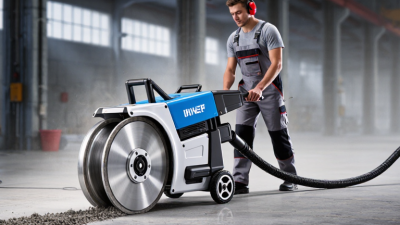
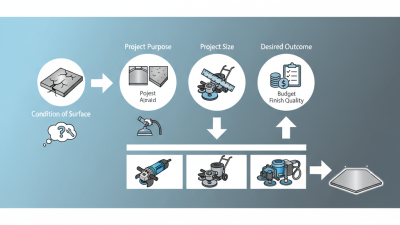
Concrete grinding tools prepare slabs by removing coatings, smoothing high spots, and exposing aggregate. Common options include handheld grinders for edges and floor machines for broad areas. The right tool depends on the surface, the task, and the finish required. Check the slab first. Paint, adhesive, and uneven patches can change how the machine behaves.
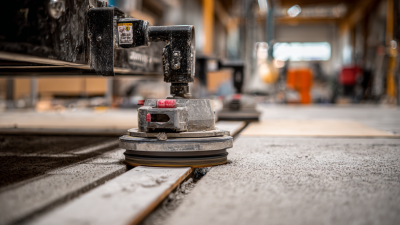
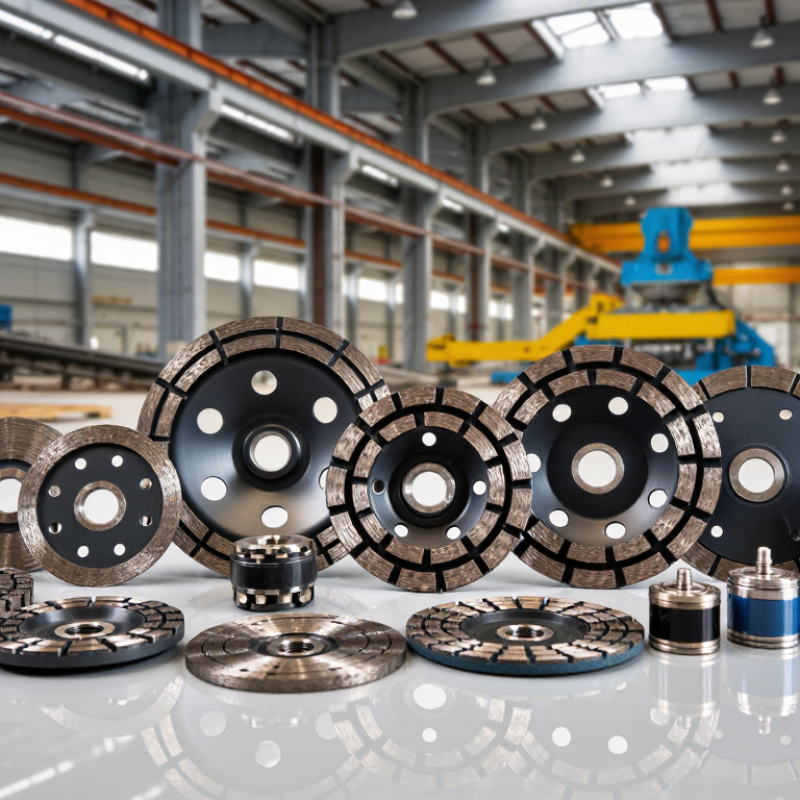
Diamond segments do the cutting. Small industrial diamonds sit within a metal bond attached to a grinding disc or cup wheel. As the tool rotates, exposed diamond edges abrade the concrete. The bond gradually wears and reveals fresh diamond particles. A bond that is too hard may hold dull diamonds; one that is too soft may wear away quickly. Concrete hardness and aggregate type both matter.
Grit size affects the finish. Coarse segments remove material faster but leave deeper scratches, while finer grits refine the surface. Operators often move through several grits and inspect the floor under angled light between passes. Keep the machine moving. Lingering in one spot can create visible rings or low areas. Dust control, suitable protective equipment, and steady pressure also matter. In practice, results are not always tidy; a test pass can reveal more than a product label. Brush away residue and check the concrete before choosing the next segment.
How Diamond Grit, Bond Hardness, and Segment Design Affect Performance
Diamond grit controls how quickly a concrete grinding tool cuts and how smooth the surface becomes. Coarse grit removes coatings and high spots faster, but can leave deeper scratches. Finer grit refines the surface and helps prepare it for polishing. Grit numbering can vary between manufacturers, so compare stated ranges and test results, not numbers alone.
Bond hardness determines how readily the metal matrix releases worn diamonds. A softer bond can expose fresh diamonds more quickly on hard, dense concrete. A harder bond often lasts longer on softer, more abrasive floors. Names can mislead. Check the slab, too: aggregate, curing, and previous treatments all affect wear.
Segment design changes contact area and debris clearance. Wide segments can support steady grinding on uneven patches, while narrower segments may cut more aggressively but show wear sooner. Dust buildup can also reduce cutting, even with suitable grit and bond. Ask for a small test run on the actual floor. Record removal rate, scratch pattern, and segment wear after a fixed area. One test will not predict every job, but it can reveal a poor match before a full purchase.
Which Tool Specifications Matter: Grit, Diameter, and Maximum RPM
For global buyers, grit, diameter, and maximum RPM should be checked together—not treated as isolated catalog figures. Coarse diamond tooling removes coatings and high spots quickly, but leaves deeper scratches. Finer grit refines the surface and may need several passes. Grit labels can vary across tooling systems, so a small test patch is more reliable than assuming two “50-grit” tools behave alike. It is a modest step, but it can prevent costly rework.
Diameter must match the grinder’s approved tooling range. Larger tools can cover open floors faster; smaller ones reach edges and tight corners. Check the tool’s maximum rated RPM against the machine’s operating speed, and never exceed the tool rating. OSHA’s 2016 silica rule estimated that about 2.3 million construction workers were exposed to respirable crystalline silica; its permissible exposure limit is 50 micrograms per cubic meter as an eight-hour average. Those figures make dust control part of tool selection, not an afterthought. Verify extraction compatibility, too. I still double-check the rating plate: listings can be confusing. A precise grit choice helps, but it cannot compensate for mismatched speed or poor dust collection.
How EN 13236 Helps Buyers Assess Superabrasive Tool Safety
For global buyers comparing concrete grinding tools, EN 13236 offers a practical reference for assessing superabrasive product safety. It covers safety requirements for tools using diamond or cubic boron nitride, including product information and operating limits. Check the tool’s marking and documentation for its intended use, dimensions, and maximum operating speed. Then compare that speed with the grinder’s rated spindle speed. They must be compatible. A clear label helps, but it does not prove that a tool suits every concrete surface or machine.
Ask the supplier for applicable conformity documents and instructions, then inspect the tool before use. Look for cracks, damaged segments, or signs of poor storage. A guard and correct mounting matter too. EN 13236 is a useful screening aid, not a guarantee against misuse or defects. That distinction is easy to overlook. Even experienced purchasers can focus on price and forget to verify the machine’s speed. I would also confirm that the product is designed for the planned grinding task; “concrete use” alone is not specific enough. Safety decisions need details.
How to Compare China Suppliers Against OSHA’s 50 µg/m³ Silica Limit
When comparing China concrete-grinding-tool suppliers, treat OSHA’s silica limit as a measurement target, not a marketing phrase. OSHA sets the permissible exposure limit for respirable crystalline silica at 50 µg/m³ as an eight-hour time-weighted average. Claims are easy. Ask how the supplier tested its grinder, dust shroud, and extraction system together.
Look for independent exposure data from realistic grinding tasks, including edge work and repeated passes on concrete. Personal samples near the worker’s breathing zone are more useful than dust readings taken beside an empty machine. Ask for the test duration, concrete type, extractor airflow, filter specification, and cleaning method. A clear report should state what equipment was used and who conducted the assessment. Small details matter.
Request demonstrations with the same shroud and vacuum setup you plan to use. Watch for dust escaping around the wheel, hose connections, or during filter cleaning. One clean showroom pass proves little. Compare written results across suppliers, but check that test conditions are similar; different setups can produce misleading comparisons. A supplier’s data cannot guarantee exposure below the limit at every jobsite. Site conditions, maintenance, and worker practices still matter, and even a careful test can miss a brief dust plume.