How to Choose the Best Hand Grinder for Your Needs
A good hand grinder can make a clear difference in your daily coffee, but the best choice depends on how you brew. The National Coffee Association’s 2024 National Coffee Data Trends report found that 67% of U.S. adults had coffee the previous day. That figure describes coffee drinking, not grinder ownership; still, it shows why practical brewing equipment matters to many households. Small details count. A loose adjustment ring, a slippery handle, or a grounds cup that sticks can turn a quiet morning into a fiddly one.
James Hoffmann, a World Barista Champion and coffee educator, has said, “The grinder is the most important piece of equipment in your coffee setup.” For a hand grinder, that idea points toward consistent burrs and adjustments that suit your brew method. Espresso usually calls for finer, more precise settings; French press needs a coarser range. Check how easily the dial moves, whether the handle folds for travel, and how much coffee the chamber holds. A compact model may fit a backpack but require multiple batches for guests.
Price alone is a poor guide. Look for durable burrs, a comfortable grip, accessible replacement parts, and a grind range that matches your routine. Read independent reviews, and compare tests made with similar beans and brewing methods; results can differ. No checklist is perfect. Even a well-reviewed grinder may feel awkward in your hand, so ergonomics deserve a real test whenever possible.
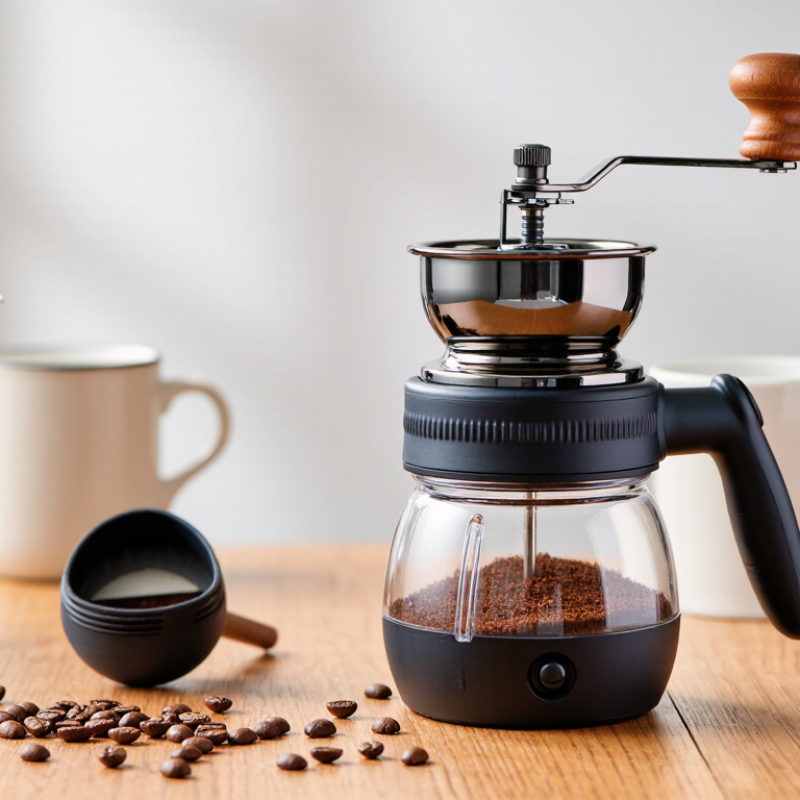
Identify Your Grinding Needs and Intended Use
Start with the drink you make most often, not the grinder’s feature list. For a daily pour-over, look for steady adjustments across medium to coarse settings. If you make espresso, you need finer steps and a rigid burr set; tiny changes can alter flow through the coffee puck. For travel, check the grinder’s weight, handle fit, and how easily grounds spill into a small cup.
Think about volume, too. Grinding one dose by hand is manageable; preparing coffee for several people can become tiring. A narrow catch cup may also slow you down when you are rushing. The Specialty Coffee Association’s Brewing Control Chart places brewed coffee around 18–22% extraction and 1.15–1.35% strength. These are useful reference ranges, not promises of good flavor. Your recipe, water, and beans still matter.
Match the tool to your routine. A compact grinder suits a backpack, but its small capacity may frustrate a busy kitchen. A larger model may feel steadier, yet take up more counter space. If possible, test the handle with the grind size you use; fine grinding often takes more effort. I would not choose by adjustment count alone. It is easy to admire many settings and rarely use them. Consider your hands, too: a slippery body or stiff handle can turn a pleasant morning task into a chore.
Understand Hand Grinder Types and Key Components
Hand grinders differ in how they break down coffee and how consistently they work. Burr grinders crush beans between two shaped surfaces, while blade grinders chop them with a spinning blade. Burr designs usually offer more control over particle size. For many brewing methods, that consistency can make extraction easier to manage.
Small parts matter.
A grinder’s burrs, central shaft, bearings, and adjustment mechanism all affect the result. A stable shaft helps keep the burrs aligned; loose movement can create uneven grounds. Some models use stepped adjustments, with clicks between settings, while others adjust continuously. Stepped settings are easier to repeat, though the gaps may feel limiting.
Feel the difference.
The handle and grip matter, too. A longer handle can make hard beans easier to grind, but may feel awkward in a small kitchen. Check that the catch cup fits securely and is simple to clean. Ceramic burrs resist corrosion, while steel burrs are often valued for speed and sharp cutting edges; design and build quality still matter more than material alone.
It is tempting to choose by grind settings alone. That can miss the point. Think about the coffee you make, how much effort feels comfortable, and whether you can keep the grinder clean. No single type suits everyone.
Compare Grind Quality, Adjustability, Capacity, and Materials
A good hand grinder should produce grounds suited to your brewing method, not just look precise. For pour-over, a fairly even mix helps water pass through steadily; for espresso, consistent fine particles matter more. Check the grounds for excess dust and noticeably large pieces. I find a small test grind revealing: uneven particles are easy to spot on a white saucer. That matters.
Adjustability is useful when you switch between brewing styles. A clear, repeatable adjustment mechanism makes it easier to return to a preferred setting. Some grinders have many tiny steps, but more settings do not automatically mean better control. Turn the adjustment ring and notice whether it feels secure. Capacity matters, too. If you usually brew one cup, a compact chamber may be enough; for several cups, frequent refilling gets old. I sometimes underestimate that hassle.
Materials affect weight, durability, and comfort. Stainless steel parts can handle regular use, while aluminum bodies often keep a grinder lighter. Ceramic burrs resist corrosion, but material alone cannot predict grind quality; shape and alignment matter as well. Hold the grinder if possible. Does the handle wobble? Is the body slippery with damp hands? A heavier model may feel reassuring at home, yet become annoying in a travel bag. There is no perfect trade-off, and my own preference changes with the trip.
Match Grinder Features to Your Budget and Brewing Method
A hand grinder’s price should reflect how often you brew and how much control your coffee needs. For pour-over or French press, prioritize consistent burrs and clear adjustment steps over a large number of settings. Coarser brews are usually forgiving, but uneven grounds can still make a cup taste both bitter and thin. That matters.
Espresso demands finer adjustment, often in very small increments. If espresso is your daily method, a grinder with stable settings and a comfortable handle may justify a higher budget. For occasional espresso, check that the grinder can reach the required fineness before paying extra for features you may rarely use. More settings are not automatically better.
Capacity and comfort count, too. A compact grinder suits travel or one cup at a time, while a larger chamber saves repeated filling for shared mornings. Check its stated capacity against your usual dose. Then consider how it feels: a narrow handle can tire your wrist, and a heavy body may be awkward to pack. A small catch: specifications cannot tell you whether the grip fits your hand. If possible, try turning the handle before buying. The best match is not necessarily the most expensive one; it is the grinder whose adjustments, capacity, and daily feel suit your brewing routine.
Check Ergonomics, Portability, Cleaning, and Long-Term Care
A hand grinder should feel steady, not merely compact. Before buying, hold it as you would during a slow morning brew. Turn the handle several times and notice whether your wrist twists or your fingers slip. Check the grip. A narrow body can be hard to hold with cold or wet hands. For travel, consider both weight and shape: a grinder that fits your bag but catches on everything may stay at home. Removable handles save space, though they can be easy to misplace.
Cleaning needs are easy to underestimate. Look for burrs and grounds chambers you can reach without special tools. Coffee dust gathers around threads and under the burr; a small, dry brush usually clears it. Avoid rinsing parts unless the maker’s care instructions allow it, since trapped moisture can encourage corrosion or stale odors. Small parts matter. If reassembly feels confusing on the first try, it may feel worse when you are tired.
For long-term care, check whether burrs and other wear parts can be replaced. Store the grinder dry, and brush away residue before it builds into a stubborn layer. A little upkeep protects flavor, but it does take time; be honest about whether you will do it. Even a durable grinder can disappoint if its handle loosens or its adjustment ring is awkward to clean. Inspect those details rather than assuming a higher price guarantees easier maintenance.
How to Choose the Best Hand Grinder for Your Needs - Check Ergonomics, Portability, Cleaning, and Long-Term Care
| Grinder Type |
Ergonomics |
Portability |
Cleaning |
Long-Term Care |
A Good Fit For |
| Compact ceramic-burr grinder |
Usually light to hold; a short handle can require more effort, especially with hard beans. |
Small body is easy to pack; check whether the handle detaches or folds for storage. |
Brush loose grounds from the burrs and chamber. Avoid washing burr parts unless the instructions allow it. |
Keep it dry, clear grounds from the adjustment mechanism, and replace worn parts if available. |
Occasional brewing, light packing, and buyers prioritizing a simple, budget-conscious design. |
| Compact steel-burr grinder |
A longer handle can provide more leverage; a textured grip and stable body help during grinding. |
Typically suited to a bag or travel kit; consider weight and whether the handle can be secured. |
A small brush can remove retained grounds. Take the grinder apart only as directed to avoid losing adjustment parts. |
Store completely dry and avoid impact that could affect burr alignment or adjustment settings. |
Daily use where compact size and a more substantial grinding feel are both important. |
| Large-capacity hand grinder |
A wider body may be easier to stabilize, though a full dose can take longer to grind by hand. |
Takes up more room and may weigh more than a compact model; check the dimensions before packing. |
A larger chamber can hold more residual grounds, so brush the chamber and burr area regularly. |
Check the catch cup, handle connection, and adjustment parts periodically for looseness or wear. |
Home brewing or preparing multiple servings without refilling the bean chamber as often. |
| Precision-adjustment hand grinder |
Clear, repeatable adjustment steps make setting changes easier; a smooth handle helps during longer sessions. |
Portability varies by construction; protect the adjustment dial and burr assembly from knocks. |
Clean gently with a dry brush, keeping the adjustment scale and moving parts free of trapped grounds. |
Record preferred settings, follow the maker’s disassembly guidance, and avoid changing the burr alignment. |
Brewers who switch between grind sizes and value repeatable adjustments. |
Comparison describes common design trade-offs, not specifications for a particular model. Capacity, weight, cleaning instructions, and replacement-part availability vary by grinder.