Superabrasive

What Are the Top Concrete Grinding Equipment Types in 2026?

Concrete floors rarely fail in one dramatic moment. More often, a coating lifts at the doorway, a warehouse slab holds unevenly, or a polished surface shows faint swirl marks under bright lights. Choosing concrete grinding equipment means matching the machine to the surface, removal depth, work area, and finish—not simply choosing the largest motor. OSHA’s construction silica standard sets an eight-hour permissible exposure limit of 50 micrograms per cubic meter and an action level of 25. That makes dust collection and compatible controls essential selection factors, not optional extras. Dust matters.

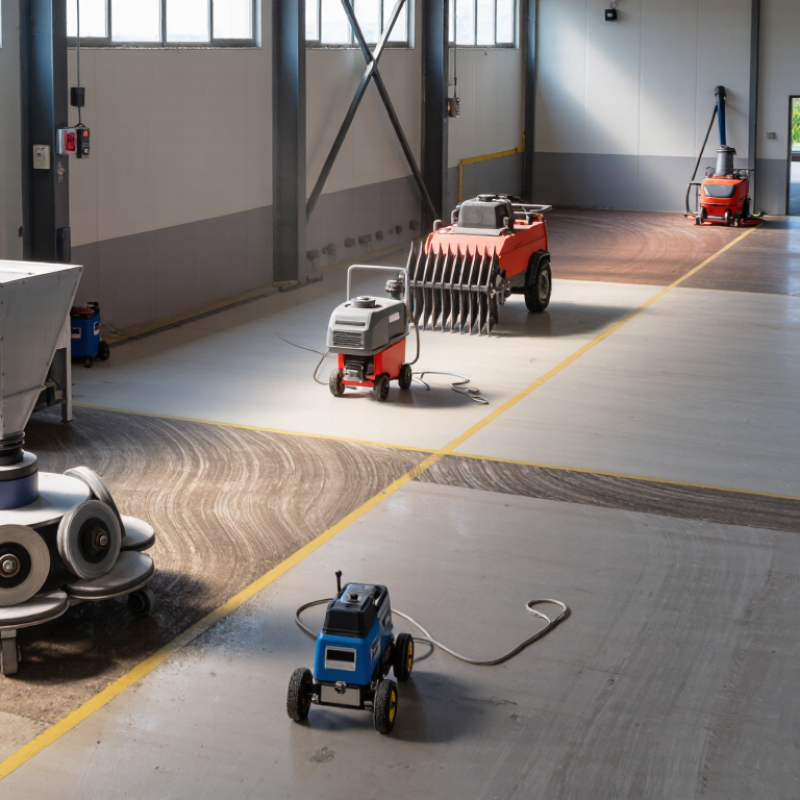
The main equipment types include planetary grinders for broad, consistent floor preparation; single-disc grinders for smaller areas and controlled removal; and edge grinders for corners and wall lines. Walk-behind scarifiers remove deeper material with an aggressive cutting action, while shot blasters prepare surfaces through impact rather than grinding. Each leaves a different profile. The U.S. Geological Survey’s Mineral Commodity Summaries 2025 documents the scale of cement production, but it does not rank floor-grinding machines or prove which type performs best. That distinction matters: broad construction data cannot replace a jobsite trial.

For a 2026 comparison, this guide considers removal rate, finish quality, dust management, tooling costs, operator control, and access to service. Manufacturer specifications help, but they rarely capture every slab condition. Results can change with aggregate hardness, coating thickness, and operator technique. Comparisons remain imperfect. Treat machine categories as a starting point, then confirm performance on a representative test area before committing to a full floor.
What Are the Top Concrete Grinding Equipment Types in 2026?

How Concrete Grinding Equipment Is Classified by Design and Scale

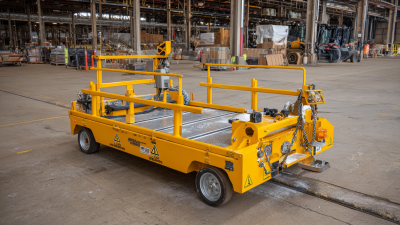
Concrete grinding equipment is best classified by working design and job scale, not by horsepower alone. Handheld grinders reach stair noses, columns, and wall edges, but their small discs cover floors slowly. Walk-behind machines use one or more rotating heads for rooms, garages, and retail spaces. Planetary heads counter-rotate, helping create an even scratch pattern across broad slabs. Ride-on grinders suit large warehouses and distribution floors, where coverage rate matters more than tight access.

Scale changes everything. A compact single-head machine may fit a doorway and run from ordinary site power; larger multi-head units need more power, heavier transport, and stronger dust collection. Match the machine to slab hardness, coating thickness, available power, and the finish specification.

OSHA’s 2016 Final Economic Analysis for its respirable crystalline silica rule estimated that about 2.3 million U.S. workers were exposed, including roughly 2 million in construction. That figure makes dust control a practical selection factor, not an accessory. Check shroud fit, vacuum airflow, and filter condition before grinding.

The figures do not tell you which machine is right for a specific slab. Field conditions vary, and that is easy to underestimate.

Walk-Behind Grinders for Large Concrete Floor Areas

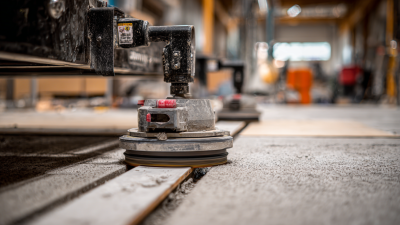
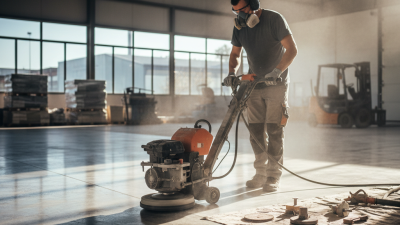
Walk-behind grinders are built for broad concrete floors where handheld tools would take too long. Their rotating heads cover more surface with each pass, helping crews maintain a steadier finish across warehouses, retail spaces, and garages. On a large slab, consistent movement matters. Pausing too long can leave visible marks.

A typical setup uses diamond tooling matched to the concrete and the job, such as coating removal or surface preparation. Start with a small test area. Check how quickly the floor cuts and whether the tooling leaves scratches that later passes can remove. Dust extraction helps keep the work area clearer, but connections and filters need regular checks. Fine dust travels. It settles on ledges and equipment.

Walk-behind machines can reduce fatigue, though they still demand attention. Operators must manage cords or power supply, control the machine near joints, and plan a route that avoids trapping themselves in corners. Edges usually need separate hand-tool work, so a fast pass across the center does not finish the whole floor. Slabs also vary in hardness and moisture. I would not assume yesterday’s settings will work today; a brief test can save a rough patch and a second grinding pass.

What Are the Top Concrete Grinding Equipment Types in 2026? — Walk-Behind Grinders for Large Concrete Floor Areas
Equipment type Typical working width Common power range Grinding-head setup Best suited to Key considerations
Large planetary grinder Approximately 32–40 in (810–1,020 mm) About 11–22 kW electric, depending on machine size Multiple satellite heads orbit a larger rotating plate; commonly three or four heads Large open floors, coating removal, surface preparation, and concrete polishing Provides broad coverage and an even finish. Requires suitable tooling, dust collection, and sufficient electrical supply.
Heavy-duty planetary grinder Approximately 40–48 in (1,020–1,220 mm) About 18–30 kW electric; some models use other power sources Large multi-head planetary assembly, often with adjustable head speed or operating pressure Very large warehouses, distribution centers, and other expansive slabs High coverage potential, but transport, access, power requirements, and operator experience should be considered.
Dual-head grinder Approximately 24–30 in (610–760 mm) About 7.5–15 kW electric Two counter-rotating heads Medium-to-large areas, edge work, and projects needing a maneuverable general-purpose machine Typically easier to move through restricted access than wider machines. The finish and cut depend on head design and tooling.
Single-head grinder Approximately 16–22 in (410–560 mm) About 3–7.5 kW electric One rotating head Small rooms, perimeter work, localized repairs, and areas that larger grinders cannot reach Flexible and compact, but usually covers broad floor areas more slowly than wider multi-head equipment.
Propane-powered walk-behind grinder Often approximately 25–40 in (635–1,020 mm), depending on configuration Engine output commonly ranges from roughly 15–30 kW Usually a dual-head or planetary arrangement Large sites where electrical capacity or cable management is a constraint Requires ventilation and careful exhaust management. Follow site rules and the equipment manual for indoor use.

Note: Widths and power ranges are representative of common walk-behind equipment classes, not specifications for a particular model. Actual performance depends on concrete hardness, tooling, coating thickness, floor condition, operator technique, and dust-control setup.

Handheld Grinders for Edges, Corners, and Detail Work

Handheld concrete grinders are useful where larger machines cannot reach: wall edges, stair noses, narrow corners, and spots around posts. Their compact heads offer close control, but they also make uneven pressure easier to notice. A slight tilt can leave a shallow crescent in the slab. Small tools can still bite.

Choose diamond tooling to suit the concrete and the finish you need, then test a discreet patch. Move the grinder steadily, overlap each pass, and keep its working face flat. For tight corners, use short, controlled movements rather than forcing the head against the wall.

Connect suitable dust extraction, and wear eye, hearing, and respiratory protection; concrete dust is a serious exposure hazard. Check the guard and tool condition before work.

The awkward part is matching speed to the surface: a soft, worn patch may respond differently from the surrounding concrete. There is no universal pass count, so inspect the area under good lighting and adjust gradually. A handheld grinder may leave slight transitions that need another careful pass; pretending every edge comes out perfect is not useful.

Single-Head and Planetary Grinders: Key Differences

In 2026, the practical difference between single-head and planetary grinders is how they move tooling across concrete. A single-head machine turns one large abrasive disc. It can remove thick coatings or level stubborn high spots, but its cutting action may leave visible arcs if the operator moves unevenly. The feel differs. On a small garage floor, that direct action can be useful around repairs and isolated rough patches.

A planetary grinder uses several smaller discs beneath a rotating head. The discs spin on their own axes while the head travels in the opposite direction, helping produce a more uniform finish across open areas. It often suits polishing and larger floors, though its extra moving parts and weight may make transport and setup less convenient. Not always. A planetary grinder is not automatically the better choice; tooling, concrete hardness, and coating thickness matter. Check a small test area and watch how quickly the abrasive cuts. If one pass leaves ridges or swirl marks, change the tooling or movement pattern before covering the whole slab. Dust extraction and steady walking speed also affect the result, sometimes more than the machine category.

Dust-Collection Systems and Grinding Tools for 2026 Equipment

What Are the Top Concrete Grinding Equipment Types in 2026?

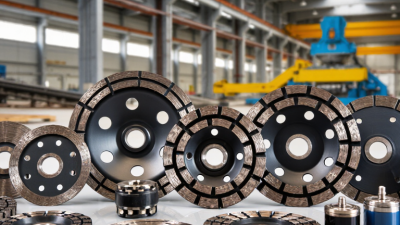
Dust collection and grinding tools work as a system. A powerful grinder cannot control fine dust if its shroud leaks or the extractor loses airflow. For broad floors, planetary grinders with multiple diamond heads can remove coatings and smooth uneven areas. Handheld edge grinders reach corners and wall lines. Match diamond bond and grit to the concrete; a hard slab may need a softer bond, while softer concrete often benefits from a harder one. The wrong choice can glaze the tool. It happens.

A close-fitting shroud captures dust near the grinding point. Pair it with an extractor rated for the tool’s airflow, and check filters before each shift. A pre-separator can catch heavier debris and reduce filter loading. Fine filters help contain airborne particles, but they still need inspection and correct installation. Watch for dust escaping around the shroud, pulsing suction, or a visible haze. These signs suggest the setup needs attention, not more pressure on the machine.

Tips: Test a small area first. Keep the shroud flat, move at a steady pace, and inspect the surface under good light. If suction drops, stop and check the hose, filter, and connections. Small gaps matter. Dust control is easy to underestimate.

Top Concrete Grinding Equipment Types in 2026

Typical working width by equipment type. Values show the midpoint of each approximate range; actual widths vary by model and tooling.

Handheld grinders suit small areas and edges, while walk-behind and planetary machines cover larger floor sections. Use a compatible shroud and dust-collection system, such as a HEPA-filtered vacuum, and follow applicable silica-dust control requirements.

All search results